Kirkland Signature ionized alkaline water: what the label says, and what pH 9.5 doesn’t mean
We sell water ionizers, which makes us a competitor of every bottled alkaline water, including this one. You should weigh everything below with that in mind, and we would rather say it in the first line than bury it at the bottom.
Kirkland Signature ionized alkaline water is Costco’s private-label alkaline water, sold in cases of 1-liter bottles. Most of what you will find about it online is a retail listing or a forum thread. Very little of it reads the label closely. That is what this post does: what the bottle says, what the pH 9.5 number means and doesn’t mean, and whether it is worth buying.
What is in Kirkland Signature ionized alkaline water
Here is the product as Costco describes it on its own Costco Business Delivery listing (read October 14, 2026):
- “Purified water with electrolytes added for taste”
- “Ionized to a pH of 9.5”
- “Processed by electrolysis and reverse osmosis”
- Ingredients: “Purified Water, <1% of Calcium Chloride, Magnesium Chloride, Potassium Bicarbonate”
- Nutrition panel, per 12 fl oz serving: sodium 0 mg, calcium 0 mg, potassium 0 mg
So the recipe has three parts: reverse osmosis to purify the water, a small amount of three mineral salts, and electrolysis to raise the pH. The listing does not say who bottles it, and we won’t guess. If that matters to you, check the bottle itself.
We also looked for a published water quality report with milligram-per-liter figures for this product, the kind some bottlers post. As of October 2026, we could not find one. That gap matters more than it sounds, for reasons the next two sections explain.
What “ionized” and “pH 9.5” actually mean on a bottle
“Ionized” on a water bottle is marketing shorthand for “made alkaline by electrolysis.” It describes the pH. It does not mean the water contains dissolved hydrogen gas (H₂), which is a separate property that gets confused with pH constantly. Kirkland’s label makes no hydrogen claim. We wouldn’t expect a meaningful amount anyway, because hydrogen is the smallest gas molecule and leaves water readily. Our post on molecular hydrogen water covers how fast that happens.
pH 9.5 is a real, measurable number. It is also a fragile one. pH tells you how alkaline the water is right now. It does not tell you how much acid the water can neutralize. That second property, called alkalinity or buffering capacity, comes mostly from dissolved minerals, especially bicarbonate. A water with very few minerals can read pH 9.5 and still carry almost no buffering capacity.
That matters the moment you drink it. Your stomach is strongly acidic by design, and your blood pH is held in a narrow range by your lungs and kidneys whatever you drink. A lightly mineralized alkaline water does not change that. The idea that a drink can shift your body’s pH is the myth this category was built on, and it doesn’t hold up. Our post on what pH drinking water should be covers where pH 9.5 sits against ordinary drinking water.
The minerals matter more than the pH number
The best recent review of this subject is a 2026 narrative review in Frontiers in Medicine titled “The health benefits of alkaline water: is it a fact or marketing myth?” (Alebrahim et al.). It covered human studies, experimental work, and animal models, and it concluded that alkaline water has “limited clinical utility.” The modest effects it did find were “likely driven more by mineral composition than pH alone,” particularly in bicarbonate-rich waters.
That shifts the useful question from “what is the pH?” to “what minerals are in it, and how much?” On that question, the Kirkland label says very little.
The “0 mg” figures on the nutrition panel are not measurements of zero. Under the FDA’s labeling rule, 21 CFR 101.9, sodium is declared as zero when a serving contains less than 5 mg. Calcium and potassium may be declared as zero when they are under 2% of the Daily Value. For adults, that is under 26 mg of calcium and under 94 mg of potassium per serving. So the panel tells you each mineral is below a reporting threshold. It doesn’t tell you how much is actually there. The “<1%” in the ingredients list is also a ceiling, not an amount.
The ingredient list does tell you something useful. It contains potassium bicarbonate, the kind of mineral the review associates with what effects there are. But without a published mineral analysis, there is no way to know whether the amount is meaningful. If minerals are what you are after, a spring or mineral water that prints its bicarbonate and total dissolved solids on the label tells you more. Our guide to naturally ionized water explains how to read those numbers, and alkaline vs. spring, purified, and distilled water compares the categories side by side.
Honest answers, weekly
The research, without the sales pitch
One short email a week: what a study actually found, what it didn't, and what's worth your attention. No spam. Unsubscribe anytime.
Is Kirkland Signature ionized alkaline water good for you?
As drinking water, yes, in the ordinary sense. It is purified, it is low in sodium, and nothing on the label is a concern for a healthy adult. If you like how it tastes and you drink more water because of it, that’s a real benefit. It’s an unglamorous one, but it’s honest.
As a health product, the evidence for alkaline water is thin, and the pH number on this bottle is the least important thing about it. The specific claims you may have heard (better hydration, bone health, longevity, a change in your body’s pH) either rest on small or industry-funded studies, rest on animal work, or aren’t supported at all. We go through that literature claim by claim in is alkaline water good for you?, so we won’t repeat it here.
Who should be cautious
Ordinary alkaline bottled water is low-risk for most healthy adults. But the people who should check first are the people competitors tend to leave out. The Alebrahim review lists four groups for caution:
- People with chronic kidney disease. Your kidneys do much of the work of balancing minerals and acid. If you have CKD, ask your nephrologist before drinking alkaline or mineral-added water regularly, and if they say no, that’s the answer. Our post on alkaline water and kidney health goes further.
- People on acid-suppressing medication, such as proton pump inhibitors. The review flags this group. If you take one, mention it to your doctor before making alkaline water a daily habit.
- Pregnant women, who should run any change in drinking habits past their own clinician.
- Children. There is no reason to give a child alkaline water in place of ordinary water. For infants, use whatever water your pediatrician recommends for formula.
If you would rather make it at the tap
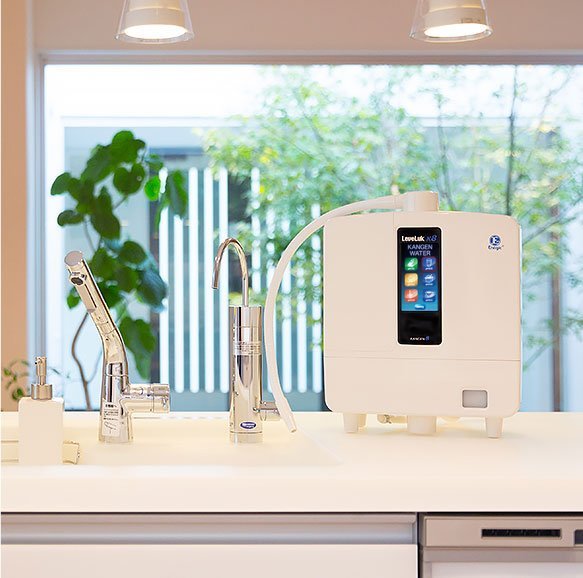
The LeveLuk K8 is the eight-plate ionizer we sell. It filters your tap water and makes alkaline water by electrolysis as you pour, so there are no cases to carry. Specs and documentation are on the product page.
Is it the same as Smartwater, and is it worth it?
It is not the same product. The two come from different companies. The only thing they verifiably share is the headline number: Coca-Cola’s smartwater page describes its alkaline version as “ionized to a 9.5 ph” (as of October 2026). We could not open a full ingredient panel for that product, so we won’t compare their minerals. And as the sections above explain, a shared pH number is the least informative thing two waters can have in common.
Whether Kirkland Signature ionized alkaline water is worth paying for depends on what you want from it. If you want convenient, purified bottled water you enjoy drinking, it does that, and you can judge the price yourself. If you are paying extra for the pH, you are paying for the one property that matters least once you swallow it. If you want alkaline water mainly for the idea of it, our post on making alkaline water at home shows cheaper ways to raise pH, and why that alone isn’t worth chasing. And if you want water you trust and like the taste of, a good filter on your own tap may get you there for less.
This article is for general information and is not medical advice. Talk to your doctor before changing what you drink, especially if you have kidney disease, are pregnant, or take medication.
Before you go
Get the next honest answer by email
We'd rather tell you when the answer is no. One email a week, written the same way as this post.