What is Kangen water? The trademark, the chemistry, and the one setting you drink
We sell Enagic water ionizers, the machines that make Kangen water. You should weigh everything below with that in mind, and we would rather say it in the first line than bury it at the bottom.
So, what is Kangen water? The short answer: it is a brand name, not a different kind of water. Kangen Water is Enagic’s trademark for the drinkable alkaline water its machines make by electrolysis. Chemically, it belongs to the same category as the water from any other ionizer. This post covers what the name refers to, what the machine actually does, which of its five settings Enagic itself says to drink, and what the “medical-grade” language around it does and doesn’t mean.
What is Kangen water? A trademark for a type of water
“Kangen Water” is a registered US trademark. Enagic’s certifications page lists it under US Patent and Trademark Office registration number 4,063,154 (as of October 2026). The word itself is Japanese: kangen (還元) is the ordinary chemistry term for reduction, the gain of electrons. That is also where the research name for this water comes from: electrolyzed reduced water, or ERW.
The distinction matters because dealers often describe Kangen water as if it were its own substance, with properties no other water has. It isn’t. A trademark protects a name. It doesn’t describe chemistry, and it isn’t evidence of anything. Any ionizer that runs filtered tap water past electrodes makes water in the same category. What differs between machines is hardware: plate count and size, filtration, flow rate, and how well the unit holds up. Those are real differences, and worth comparing. But “Kangen” tells you which company made the machine, not what is in the glass.
What the machine does to your tap water
An Enagic machine filters tap water, then passes it through an electrolysis cell divided by a membrane. Water on the cathode side, where the reduction happens, comes out alkaline and carrying a small amount of dissolved hydrogen gas. Water on the anode side comes out acidic and goes to a separate outlet. We explain the cell itself, and the claims about it worth ignoring, in what a water ionizer actually is, so we won’t repeat it here.
The five waters, and which one Enagic says to drink
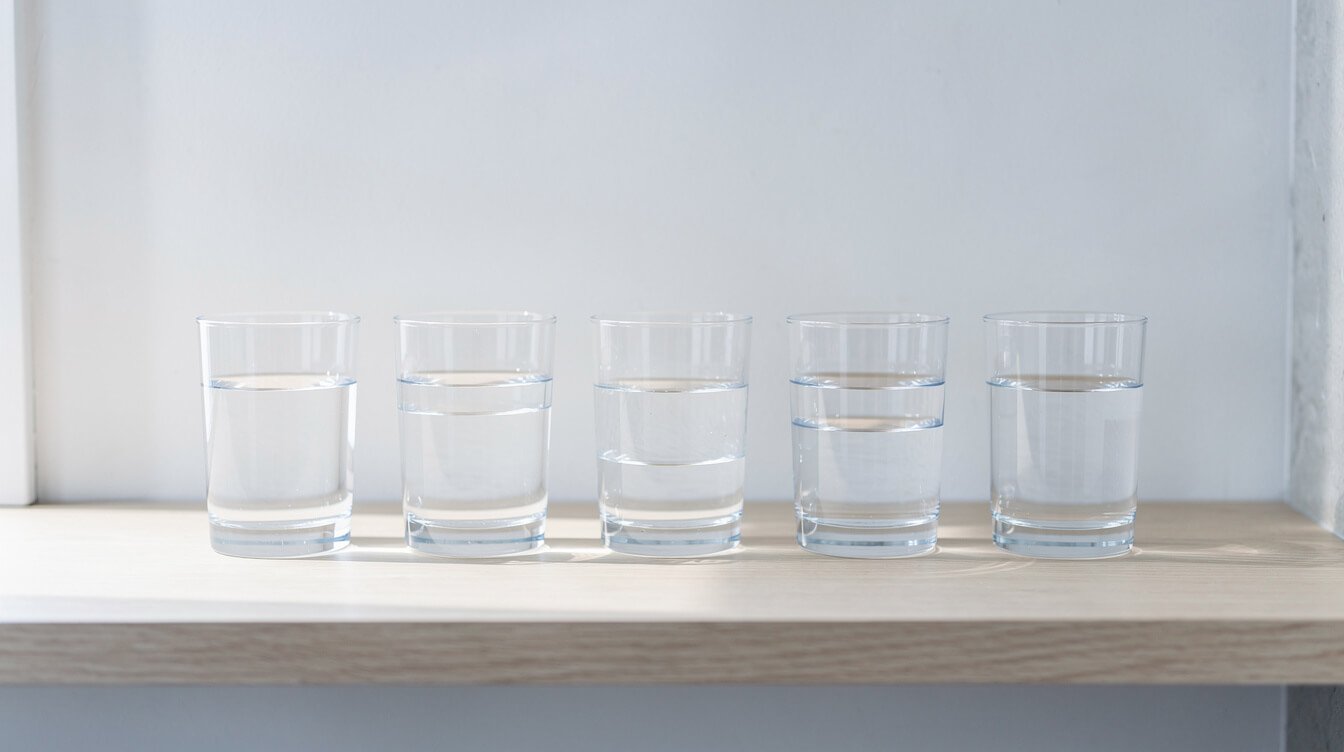
By varying the voltage, the flagship machine makes five kinds of water. Enagic’s own K8 product page lists them (read October 19, 2026):
- Strong Acidic Water, pH 2.5 or lower, for cleaning surfaces
- Beauty Water, pH 6.0
- Clean Water, pH 7.0, neutral filtered water
- Kangen Water, pH 8.5 to 9.5, for drinking and cooking
- Strong Kangen Water, pH 11.0 or higher, for heavy-duty cleaning
Here is the line most explainers leave out. The same page’s FAQ says: “Kangen Water at pH 8.5 to 9.5 is intended for daily drinking and cooking. Strong Kangen Water, Beauty Water and Strong Acidic Water are not intended for drinking.” So strictly, only one of the five settings is “Kangen water” in the drinking sense.
Enagic’s owner’s manual goes further. As quoted in a 2022 review of electrolyzed reduced water by LeBaron, Sharpe and Ohno (Int J Mol Sci, PMID 36498838), it says: “when drinking KANGEN water, adjust the pH value to 9.5 or lower. It is not recommended to drink water with a pH over 10.0.” The same review notes that Japanese and Korean regulations cap alkaline drinking water from these machines at pH 9.8, because of reported hyperkalemia (high blood potassium) above that level.
One more practical point from that review: the pH buttons on most ionizers change the voltage applied to the plates. They do not measure the result. If your source water is mineral-rich or already slightly alkaline, the “9.5” setting can produce water above 10. Check the output with a pH test now and then, rather than trusting the label on the button.
What “medical-grade” and ISO 13485 mean
You will see Kangen machines described as “medical-grade” or “medical devices,” usually with ISO 13485 cited as proof. Enagic’s certifications page states that the company is certified to ISO 9001, ISO 14001, and ISO 13485. Those certifications are real. Here is what they cover.
ISO describes ISO 13485 as the standard for “quality management systems in the design and manufacture of medical devices.” It certifies how a company runs its processes: documentation, consistency, risk management, and an outside auditor checking all of it. It is a certificate about the manufacturer’s quality system. It is not a regulator approving a product, and it says nothing about what drinking the water does for anyone. A well-run factory is worth something. It just isn’t a health claim, and nobody should present it as one.
Honest answers, weekly
The research, without the sales pitch
One short email a week: what a study actually found, what it didn't, and what's worth your attention. No spam. Unsubscribe anytime.
What is in a glass of Kangen water: pH, hydrogen, and how long it lasts
Two separate properties come out of the cathode side, and they get conflated constantly.
- pH. The water is alkaline, at whatever pH the machine actually produces. Your body keeps blood pH in a tight range whatever you drink, so the water does not change it.
- Dissolved hydrogen (H₂). A colorless, tasteless gas that doesn’t change the pH at all. The LeBaron review (a narrative review; LeBaron is affiliated with the Molecular Hydrogen Institute) reports that most ionizers, when new and with good source water, produce 0.2 to 1.2 mg/L of H₂ at pH 8.5 to 10.5. Output depends on the electrodes, flow rate, minerals, and how clean the plates are.
The hydrogen does not keep. It starts escaping as soon as the water leaves the machine, which is why claims that the water stays “active” for days don’t hold up. The bubbles you sometimes see in a fresh glass aren’t a measure of it either, because dissolved hydrogen is invisible. Nor is an ORP reading: the same review warns that ORP meters cannot estimate how much H₂ is in the water. We cover the differences between hydrogen, alkaline, and Kangen water and the numbers on molecular hydrogen in their own posts.
On health effects, our starting position is the 2026 Frontiers in Medicine narrative review by Alebrahim and colleagues (PMID 42433989). It concludes that alkaline water has “limited clinical utility,” that its modest effects are “likely driven more by mineral composition than pH alone,” and that claims of systemic alkalinization, enhanced immunity, and anti-aging “are not supported by robust clinical evidence.” That applies to Kangen water as much as to any other alkaline water.
Who should skip it
This is the section dealers leave out, and it is the one we would most like you to read.
- Anyone with kidney problems. Enagic’s own manual, as quoted in the LeBaron review, says: “Do not drink KANGEN Water if you have kidney problems such as kidney failure or trouble processing potassium.” The review recommends that people with impaired kidney function avoid electrolyzed water without medical supervision. Our post on alkaline water and kidney health goes further.
- People on acid-suppressing medication, such as proton pump inhibitors, plus pregnant women and children. The Alebrahim review lists all of these for caution. Ask your own clinician first.
- Anyone who mainly wants better-tasting water. A good filter on your tap may get you there for much less. Ionizers also cost money to run, as our filter replacement cost breakdown shows.
For the full list of side effects and who should be careful, see alkaline water side effects.
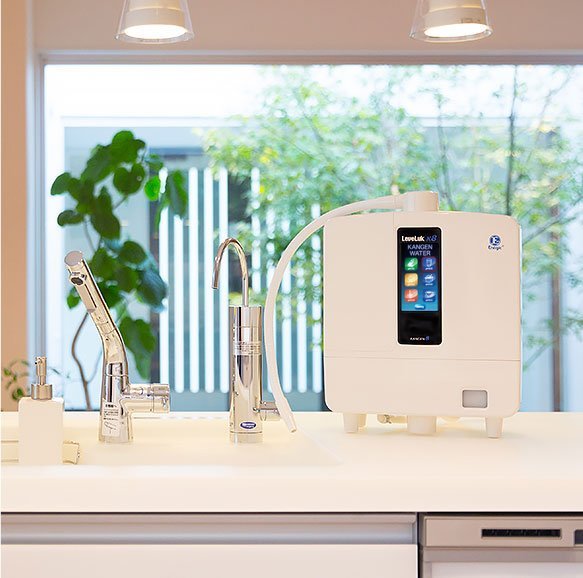
The machine this post is about
The LeveLuk K8 is Enagic’s eight-plate flagship ionizer. It filters your tap water and makes all five water types described above. Specs and documentation are on the product page.
What is Kangen water? The short version
What is Kangen water, in four sentences? It is Enagic’s trademark for the alkaline, hydrogen-carrying water its ionizers make by electrolysis, and chemically it is the same category of water any ionizer produces. Of the five waters the machine makes, Enagic says only the pH 8.5 to 9.5 setting is for drinking, and its manual says to keep that at 9.5 or lower. “Medical-grade” refers to the manufacturer’s certified quality system, not to any health effect. And the honest evidence picture is that alkaline water has limited clinical utility, while the dissolved hydrogen is real but modest and short-lived.
If you are deciding whether to buy one, that is the version we would want to hear first. Our post on whether Kangen water is a scam covers the rest of the skeptical questions.
This article is for general information and is not medical advice. Talk to your doctor before changing what you drink, especially if you have kidney disease, are pregnant, or take medication.
Before you go
Get the next honest answer by email
We'd rather tell you when the answer is no. One email a week, written the same way as this post.