Naturally ionized water: what spring water actually contains (and what “ionized” is doing in that sentence)
We sell water ionizers. That is worth knowing before you read any further, because the honest answer to the question in the title is partly inconvenient for us.
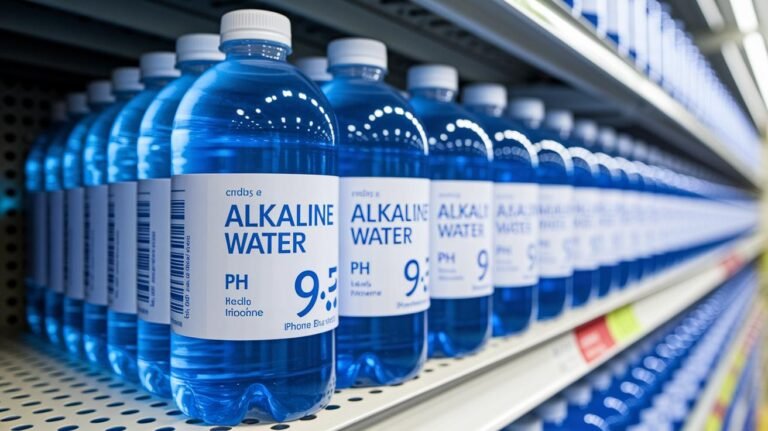
Naturally ionized water is one of the most common phrases in this category and one of the least informative. The phrase is not a lie. It is something more slippery: it is true of almost every water you have ever drunk, which means on its own it tells you nothing.
What “ionized” actually means in chemistry
An ion is an atom or molecule carrying an electrical charge. Water produces a few of its own ions continuously: a tiny fraction of H₂O molecules split into a hydrogen ion and a hydroxide ion, then recombine.
On top of that, any mineral that dissolves in water dissociates into ions. Tap water, spring water and bottled “alkaline” water all contain ions. The only common drinking water that is close to ion-free is distilled water, because distillation leaves the minerals behind.
So “naturally ionized” describes chemistry that is real and universal. It does not tell you the pH, how much mineral is dissolved or which minerals, or whether there is any dissolved hydrogen gas. Those are three separate measurements, and the phrase covers none of them. Elsewhere in this industry, “ionized” means water run through electrolysis. We use it that way ourselves, in how water ionization works and what the pH number on water really measures. One word, two meanings, and most of the confusion lives in the gap.
How spring water becomes alkaline: minerals and residence time
Rainwater starts out slightly acidic. It picks up carbon dioxide from the air, forming weak carbonic acid, and typically reaches the ground around pH 5.5 to 6.
What changes it is rock. As that water percolates through soil and stone, it dissolves what it touches. Carbonate rock such as limestone, chalk and dolomite releases calcium, magnesium and bicarbonate. Bicarbonate is the important one: it buffers the water, neutralizing acid and holding the pH higher. The longer the water stays in contact with the rock, the more mineral it carries. That residence time is why two springs a few miles apart can bottle very different water.
Alkalinity and pH are not the same measurement. pH describes how acidic or basic the water is right now. Alkalinity is its capacity to absorb acid without the pH moving much, and in drinking water it is mostly bicarbonate. When a spring water is sold as “naturally alkaline”, the claim is usually about pH, while the chemistry doing the work is alkalinity.
Why naturally ionized water carries no meaningful dissolved hydrogen
pH and dissolved molecular hydrogen are two different properties. Dissolved H₂ is a colorless, tasteless gas held in the water, and it does not change the pH. Electrolysis produces it as a by-product: at the negative electrode, water is reduced and hydrogen gas is released. Percolating through limestone dissolves minerals; it does not generate hydrogen. A naturally alkaline water is alkaline, and that is all it is.
Even if a spring did deliver hydrogen, it would not survive bottling. Water holds only about 1.6 mg of H₂ per liter at room temperature and pressure, and hydrogen, one of the smallest molecules there is, escapes from an open container within hours, let alone weeks in a warehouse. If a bottled water is sold as naturally hydrogen-rich, the claim describes something that cannot survive its own supply chain. We set out how the alkaline and hydrogen stories differ in hydrogen water vs alkaline water vs Kangen water.
Mineral alkalinity and electrolytic alkalinity, side by side
| Property | Naturally alkaline spring water | Ionizer water |
|---|---|---|
| What raises the pH | Bicarbonate and other minerals from rock | An electrical current at electrode plates |
| Dissolved minerals | Whatever the geology provided | Those already in your tap water, concentrated in the alkaline stream |
| Dissolved hydrogen | None to speak of | Present at the tap, declining once poured |
| Buffering capacity | Usually substantial | Variable, depends on your source water |
| Needs power | No | Yes, and produces a second, acidic stream |
Now the inconvenient part. The best current review of this subject, published in Frontiers in Medicine in 2026 and drawing on human, experimental and animal studies, concludes that alkaline water has limited clinical utility and that whatever modest effects exist are likely driven more by mineral composition than by pH alone, with bicarbonate-rich waters the case it points to.
That does not favor the expensive option. Mineral-driven spring water is squarely the bicarbonate-rich case. If mineral composition is doing more of the work than the pH number, spring water is not the poor relation of electrolysis on the current evidence.
Honest answers, weekly
The research, without the sales pitch
One short email a week: what a study actually found, what it didn't, and what's worth your attention. No spam. Unsubscribe anytime.
Where naturally ionized water marketing overreaches
Treating the phrase as a product category
“Nature’s own ionized water” implies a spring does quietly what a machine does loudly. The two share a vocabulary, not a mechanism, and they produce measurably different water.
The body-pH claim
You will still see naturally alkaline bottled water sold on the idea that it changes your body’s pH. It does not. Blood pH is held between roughly 7.35 and 7.45 by the lungs and kidneys, and it does not move because of what is in your glass. The same 2026 review finds claims of systemic alkalinization, enhanced immunity and anti-aging unsupported, and that applies to spring water and machine water equally.
Animal evidence dressed as human evidence
One paper that surfaces in search results for this phrase is Magro and colleagues (2016, Evidence-Based Complementary and Alternative Medicine), “Alkaline Water and Longevity: A Murine Study”, which reported longer survival in mice given alkaline water. That is an animal study. A survival result in a mouse colony does not transfer to a human drinking habit. Ask which species a longevity finding came from, and whether anyone has reproduced it in people.
When bottled naturally alkaline water is the better buy
Sometimes it is. Bottled water needs no appliance, power or filters. The mineral profile is fixed by the geology, and on the review’s reading that is the part most likely to matter.
The arithmetic decides it, and you can do it yourself. Our flagship machine is listed at $3,580 as of October 2026. Two liters a day is about 730 liters a year. If the bottled water you would otherwise buy costs a dollar a liter, the machine takes about five years of daily use to break even on water alone. At $1.50 a liter, a little over three years. At $2.50, about two. Replacement filters on the machine side push each of those out further, by an amount that depends on your source water and usage.
So: if you drink modest amounts, rent, are unsure about the taste, or mainly want the mineral profile, buy the bottle. This may not be worth it for you. A machine starts making sense when volume is high, the household is more than one person, you want control over pH, and you want dissolved hydrogen at the tap, the one thing bottled spring water genuinely cannot give you. If you have chronic kidney disease, take acid-suppressing medication, are pregnant, are buying for a child, or are on a sodium-restricted diet, talk to a clinician before drinking alkaline water of any kind; we cover why in alkaline water and kidney health. And if you are still choosing a category at all, see alkaline water vs regular, spring, purified and distilled water.
If a machine is the right fit
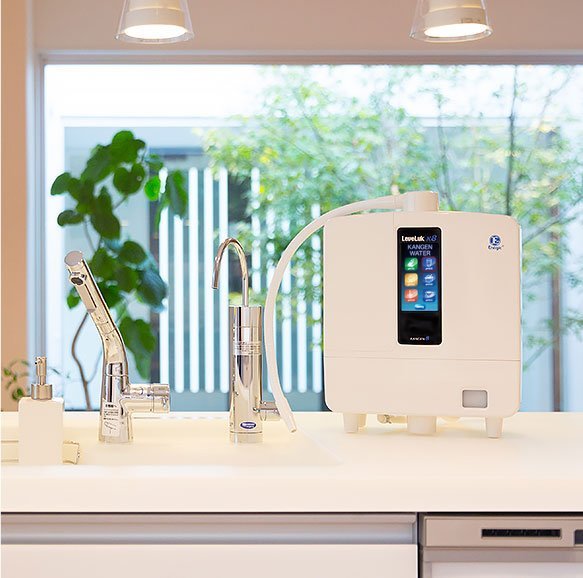
The LeveLuk K8 is our eight-plate flagship ionizer: filtration, adjustable pH, and dissolved hydrogen at the tap. Specs, documentation, and current pricing are on the product page.
Reading a spring water label: TDS, bicarbonate, and source pH
Most waters sold as naturally ionized publish a mineral analysis, on the bottle or the brand’s website.
- Source pH. Anything from about 7.5 upward is on the alkaline side of neutral. It can drift in the bottle, so treat it as an indication.
- Bicarbonate (HCO₃). The number that tracks buffering capacity. High pH with almost no bicarbonate is a weaker version of what is being advertised.
- Total dissolved solids (TDS). How much is dissolved, never what. A high TDS could be calcium and bicarbonate, or mostly sodium chloride.
- Sodium. Some naturally alkaline waters are sodium-rich. On a sodium-restricted diet, that figure matters more than the pH.
A spring water label has nothing real to report on dissolved hydrogen or ORP. If you see either printed on a bottle, treat it as a signal about the marketing rather than the water. For what pH you should be aiming at in the first place, see what pH drinking water should be.
This article is for general information and is not medical advice. Talk to your doctor before changing what you drink, especially if you have kidney disease or take medication.
Before you go
Get the next honest answer by email
We'd rather tell you when the answer is no. One email a week, written the same way as this post.