Alkaline Water vs Regular, Spring, Purified and Distilled Water
Every one of these is drinkable. The differences are smaller than marketing implies and larger than skeptics allow, and they mostly come down to two things: what minerals are in the water, and what was done to it.
The quick comparison
| Typical pH | Minerals | Filtered | Notes | |
|---|---|---|---|---|
| Tap water | 6.5 – 8.5 | Varies by region | Treated | Free, regulated, wildly variable |
| Spring water | 6.5 – 7.5 | Naturally present | Minimal | Mineral profile depends on source |
| Purified / RO | 5.0 – 7.0 | Mostly removed | Heavily | Very clean, mineral-stripped |
| Distilled | 7.0 → 5.5 | None | Fully | Drifts acidic on air exposure |
| Alkaline (ionized) | 8.5 – 9.5 | Concentrated | Yes | Requires minerals in the source |

Regular tap water
Regulated, cheap, and more variable than people assume. The EPA’s secondary standard recommends pH 6.5 to 8.5, but that’s about taste and pipe corrosion rather than safety. What you actually get depends on local geology, your treatment plant, and your own plumbing.
For most people in most places, tap water is safe. The reasons to filter it are usually taste, chlorine, hardness, older pipes, or a specific local contaminant — not a general belief that tap water is dangerous.
Spring water
Bottled from a natural source, minimally treated, retaining whatever minerals the local rock provided. Mineral content varies enormously between brands, and “spring water” tells you about origin rather than composition. Usually slightly acidic to neutral.
Purified and reverse osmosis water
RO pushes water through a membrane that strips out nearly everything — contaminants and minerals alike. The result is very clean and often slightly acidic, since removing alkaline minerals lowers pH.
Two consequences worth knowing. It tastes flat to many people, because minerals are much of what we perceive as taste. And RO water makes poor input for an ionizer — electrolysis separates minerals that are already present and cannot add what isn’t there. Feeding an ionizer RO water produces weak results, which is a genuinely useful thing to know before combining the two.
Honest answers, weekly
The research, without the sales pitch
One short email a week: what a study actually found, what it didn't, and what's worth your attention. No spam. Unsubscribe anytime.
Distilled water
Boiled and recondensed, leaving essentially nothing behind. Starts at pH 7 and drifts toward 5.5 within hours as it absorbs atmospheric CO₂ — pure water is chemically unstable in air.
Fine to drink, though flat-tasting and mineral-free. Its usual jobs are appliances and medical equipment rather than daily hydration.
Alkaline ionized water
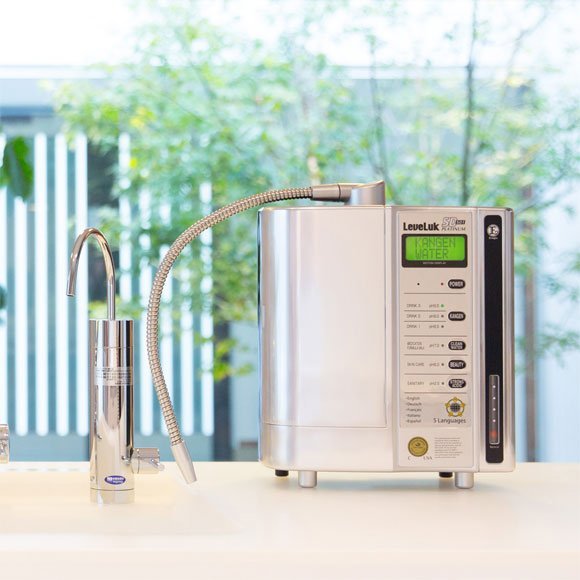
Filtered, then electrolysed to concentrate alkaline minerals into a drinking stream at pH 8.5 to 9.5, carrying dissolved hydrogen, with an acidic stream diverted for cleaning.
Two honest limits. Its output depends on your source water’s mineral content. And the health case is narrower than usually advertised — the better-supported findings concern pepsin and reflux, not the systemic benefits often claimed. We go through that in Is Alkaline Water Good for You?
Does the difference matter?
For hydration, no. Water hydrates you. There is no meaningful difference between these for simply meeting fluid needs.
For taste, yes, and more than people expect — mineral content drives most of it. This is less trivial than it sounds, because people drink more of water they enjoy, and mild dehydration is common.
For reflux, alkalinity is the property with evidence behind it.
For cost, the spread is enormous: tap is effectively free, a filter jug is cheap, RO is moderate, an ionizer runs to thousands. If clean water is your only goal, the cheaper options do that job well, and we’d rather say so plainly.
Choosing
- Want cheap and safe? Tap, filtered if the taste bothers you.
- Want maximum purity? RO or distilled — accept flat taste and no minerals.
- Want mineral taste with no equipment? Spring water, checking the mineral profile.
- Want filtration plus the ionizer properties, and can afford it? Alkaline ionized — but check your source water first.
General information only, not medical advice.
Before you go
Get the next honest answer by email
We'd rather tell you when the answer is no. One email a week, written the same way as this post.