Where to Buy Alkaline Ionized Water: Your Three Real Options
“Where can I buy alkaline ionized water?” is really two questions wearing one coat. If you want a bottle for the gym bag this afternoon, that is a shopping question. If you want it to be what your household drinks every day, that is a supply question, and the answer is completely different.
Here are the three real routes, what each costs over time, and one distinction that most buying guides skip entirely.
First, a distinction worth understanding
Not all “alkaline water” is ionized water, and the labels rarely make this clear.
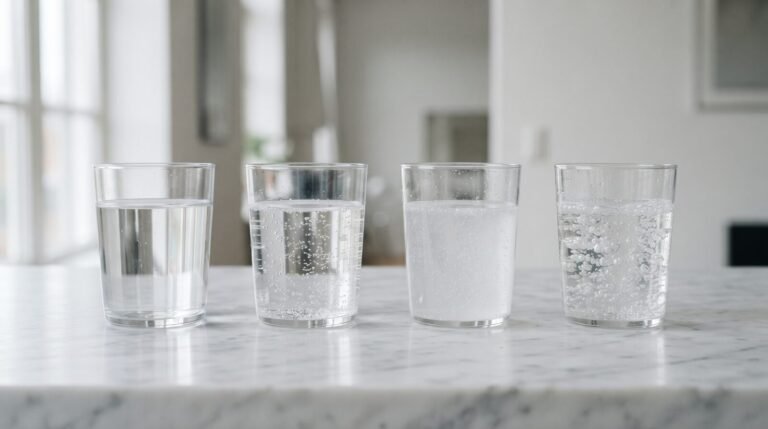
Mineral-added alkaline water — most bottled alkaline water — reaches a higher pH because minerals or electrolytes have been added to it, or because it came from a naturally alkaline source. The pH is real. That is where it ends.
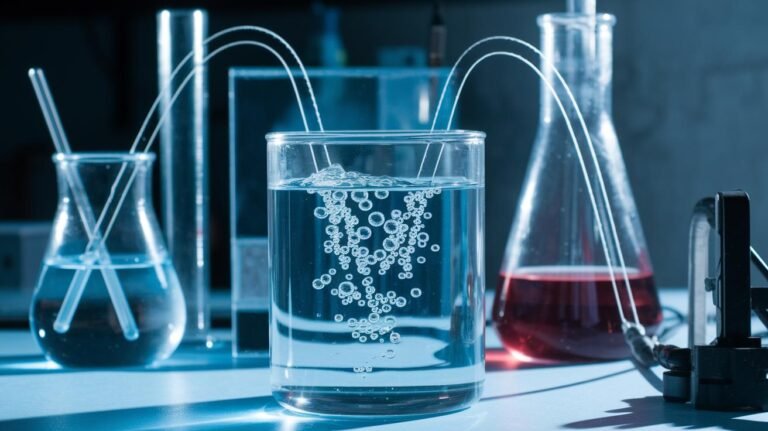
Electrolysed ionized water is produced by running water across charged plates. That process separates the water into alkaline and acidic streams, and the alkaline stream carries dissolved molecular hydrogen and a negative oxidation-reduction potential (ORP). Those two characteristics come from the electrolysis, not from the pH.
This matters for your buying decision because dissolved hydrogen dissipates. It begins leaving the water as soon as it is poured, and it does not survive weeks in a bottle on a shelf. If hydrogen-rich water is specifically what you are after, a bottled product is structurally the wrong format for it, whatever the label says.
Option one: buy it bottled
Widely available, no commitment, and genuinely convenient for travel or an occasional preference.
The trade-offs are cost and plastic. Bottled alkaline water typically runs several times the price of ordinary bottled water, and a household that drinks it daily is buying it again every week, forever. In Hawaii, where almost everything on a shelf arrived by barge, that premium is steeper than on the mainland.
Reasonable choice if: you drink it occasionally, or you want to try alkaline water before committing to anything.
Option two: refill stations and water stores
Cheaper per gallon than bottled, and it cuts down on single-use plastic. You bring your own containers and fill up.
Two things to check before relying on one. First, ask what the machine actually does — many refill stations dispense reverse-osmosis or filtered water, sometimes with minerals added afterwards for pH, which puts you back in the mineral-added category above. Second, factor in the trip. A household drinking three litres a day is moving roughly twenty gallons a month, which is a standing errand and a lot of jug handling.
Reasonable choice if: you are near a store you trust, and you would rather not spend on equipment.
Option three: make it at home
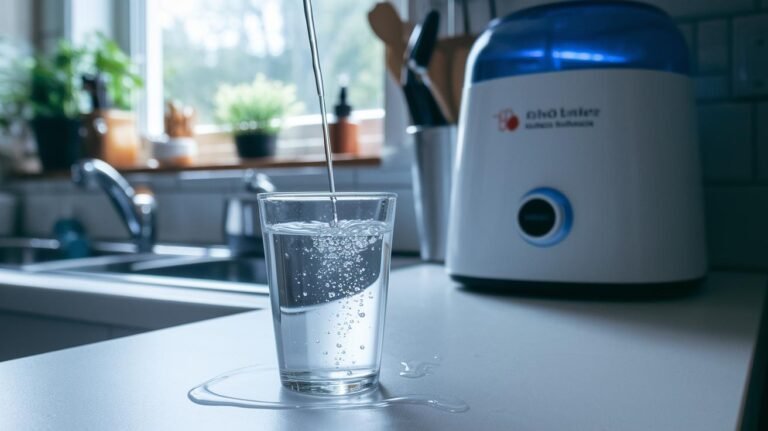
A water ionizer connects to your own tap and produces ionized water on demand. The cost structure inverts: a significant amount up front, then very little per litre after that.
Two things change beyond cost. The water is fresh at the moment you pour it, which is the only way dissolved hydrogen is any use to you. And a machine produces more than drinking water — the units we sell produce five water types across a pH range of 2.5 to 11.5, so the same appliance covers cooking, skincare rinsing, and cleaning water as well.
Reasonable choice if: your household drinks it daily and expects to keep doing so.
Honest answers, weekly
The research, without the sales pitch
One short email a week: what a study actually found, what it didn't, and what's worth your attention. No spam. Unsubscribe anytime.
Running the numbers on your own situation
Rather than quote figures that will be wrong for your household, here is the arithmetic to do yourself. It takes two minutes and it settles the question better than any review.
- Litres per day. Count what your household actually drinks, not what you intend to drink.
- Your current cost per litre. Take it off the receipt, including the bottles you buy outside the house.
- Multiply by 365. That is your annual spend on the status quo.
- Compare against the machine. Our ionizers run from $3,530 for the LeveLuk JRIV up to $7,080 for the Super 501, with the K8 at $5,890. Ongoing cost is a replacement filter — the FC1 filter is $153 — plus a small amount of electricity.
- Divide. Annual spend into machine price gives you the year the two lines cross.
For a household drinking bottled alkaline water daily, that crossover typically lands within a few years. For someone who drinks it twice a week, it does not, and we would rather you worked that out on a napkin than after a purchase.
Whichever route you choose, check these before you buy a machine
- Authorised dealer. Ionizers bought through unauthorised channels frequently arrive with no valid warranty and no service path. Ask the seller directly whether they are authorised by the manufacturer, and whether the serial number will be registered to you.
- Plate construction. The electrode plates do the work. Ask how many, what they are made of, and how they are coated.
- Certifications. Look for independently verifiable quality-management standards rather than marketing language.
- Warranty length, and what voids it.
- Filter cost and availability. A cheap machine with scarce filters is not cheap.
- Whether you can taste it first. At these prices, “no” is an answer in itself.
Buying locally on O‘ahu
We are an authorised Enagic dealer with a showroom at 3457 Waialae Ave #201 in Honolulu. You can taste all five water types from a working machine before deciding anything, and we will tell you honestly if your household is better served by a bottle habit than by an appliance.
If you are off-island, you can see the full range and current pricing here, or get in touch with a question before you commit to anything.
FAQ
Is bottled alkaline water the same as ionized water?
Usually not. Most bottled alkaline water reaches its pH through added minerals or a naturally alkaline source. Electrolysed ionized water is produced by running water across charged plates, which also gives it dissolved molecular hydrogen and a negative ORP. Both can be labelled “alkaline water”.
Does ionized water keep if I bottle it myself?
The alkaline pH holds reasonably well in a sealed container, but dissolved hydrogen begins dissipating immediately and is largely gone within hours. Drink it fresh if hydrogen content is what you are after.
Are refill stations a good source of ionized water?
It depends entirely on the equipment behind the counter. Many dispense reverse-osmosis or filtered water, sometimes with minerals added for pH. Ask what the machine does before assuming it ionizes.
How much does a home water ionizer cost?
Our range runs from $3,530 for the LeveLuk JRIV to $7,080 for the Super 501, with the K8 at $5,890. Ongoing costs are a replacement filter and a small amount of electricity.
Can I try it before buying?
Yes. Our Honolulu showroom runs tastings of all five water types from a working machine, with no obligation.
These statements have not been evaluated by the Food and Drug Administration. Kangen Water® systems are intended for general wellness purposes and are not intended to diagnose, treat, cure, or prevent any disease. Individual results may vary. Prices are current at the time of writing and subject to change.
Before you go
Get the next honest answer by email
We'd rather tell you when the answer is no. One email a week, written the same way as this post.