The pH of Water, Explained
pH is one of those measurements everyone half-remembers from school and almost nobody uses correctly afterwards. Since it’s the number this entire industry is built on, it’s worth getting right.
What pH actually measures
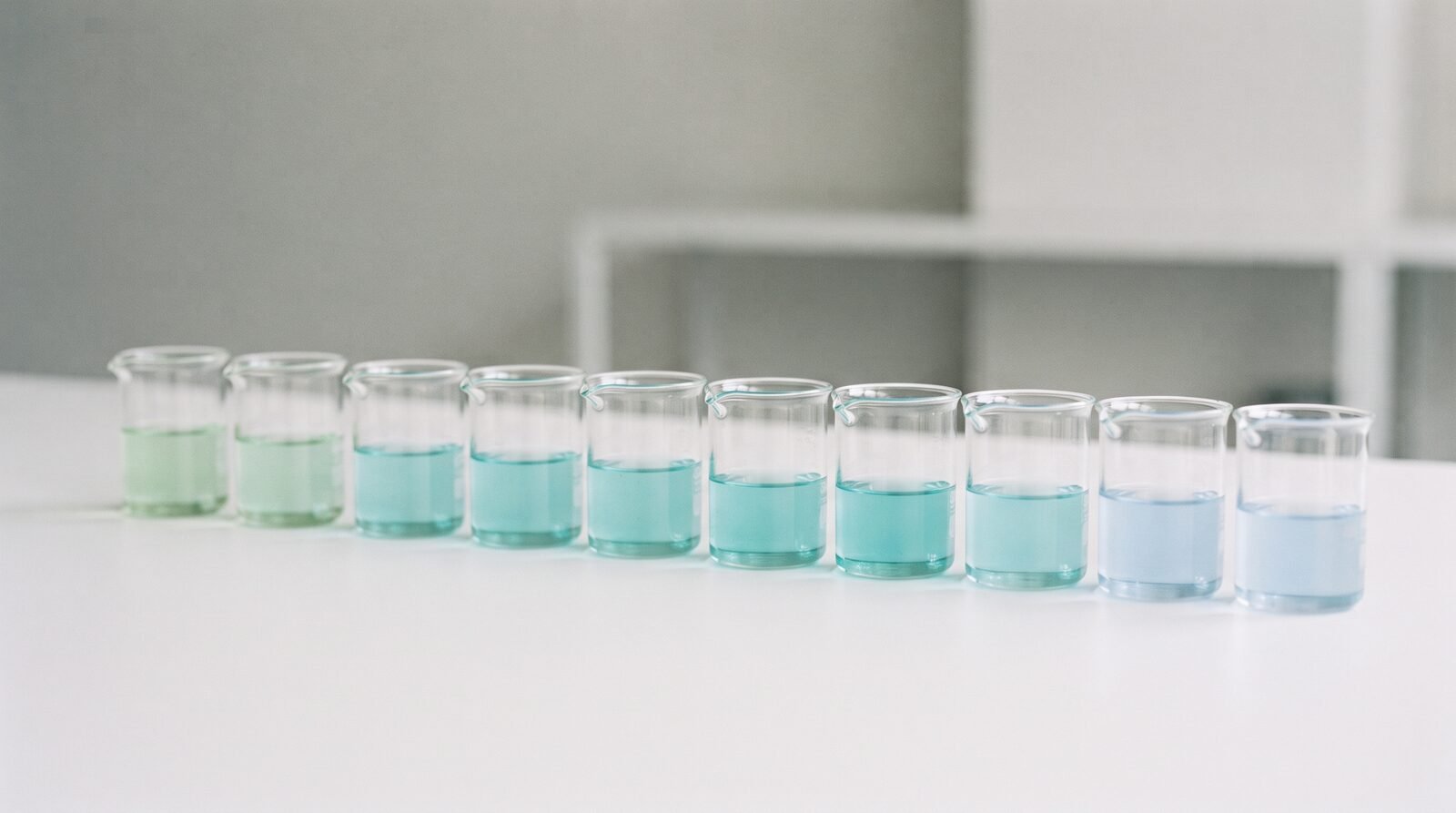
pH measures how acidic or alkaline a liquid is, on a scale from 0 to 14. Seven is neutral. Below seven is acidic; above seven is alkaline (also called basic).
The part most people miss: the scale is logarithmic. Each whole number is a tenfold change. Water at pH 5 is ten times more acidic than pH 6, and a hundred times more acidic than pH 7. This is why small-sounding pH differences aren’t small, and equally why a dramatic-sounding number doesn’t always mean much in practice.
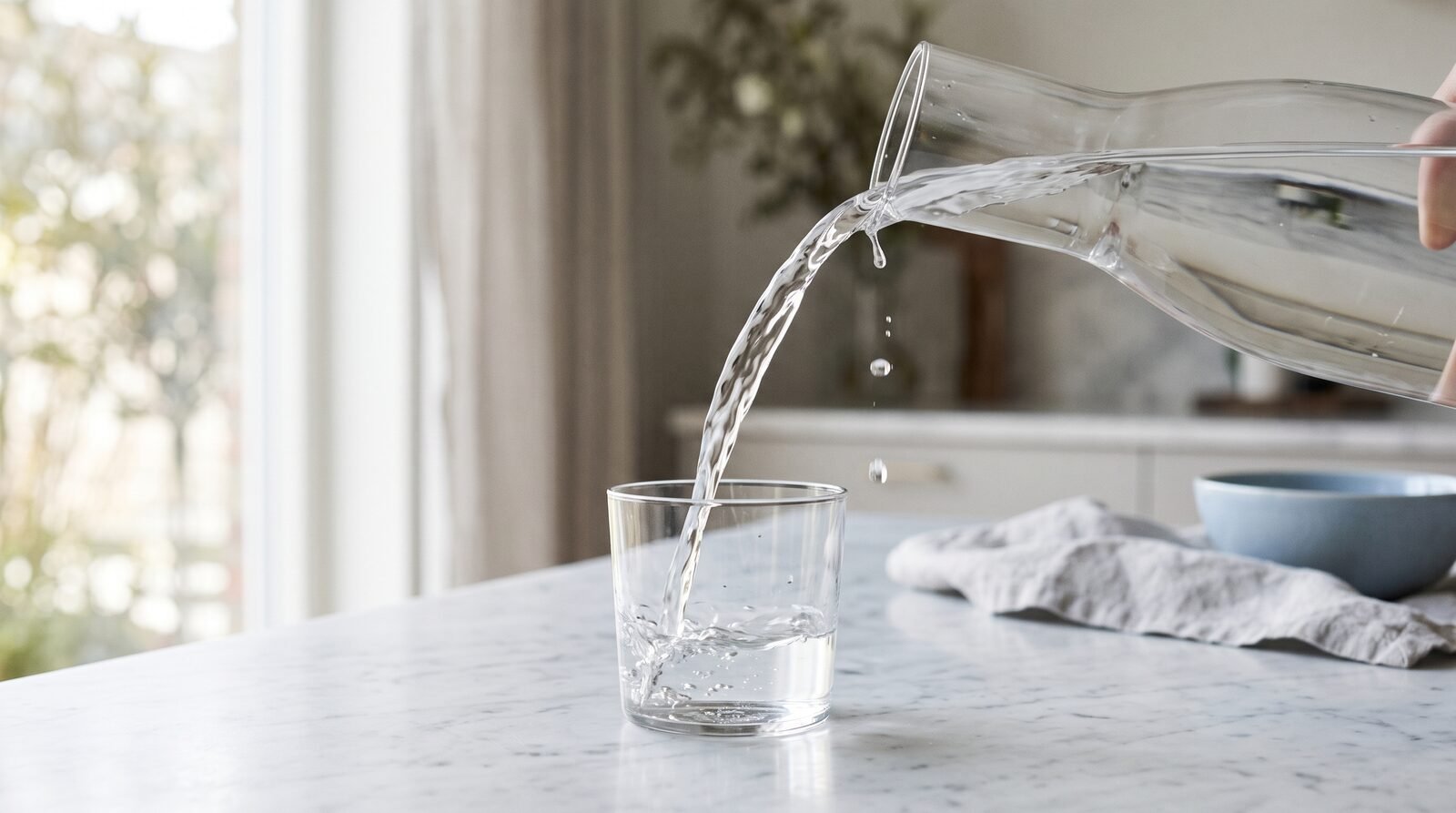
The pH of common water
| Water | Typical pH |
|---|---|
| Distilled water | 7.0 when fresh, drifting to about 5.5 |
| Tap water (US) | 6.5 – 8.5 |
| Bottled spring water | 6.5 – 7.5 |
| Reverse osmosis water | 5.0 – 7.0 |
| Rainwater | about 5.6 |
| Seawater | about 8.1 |
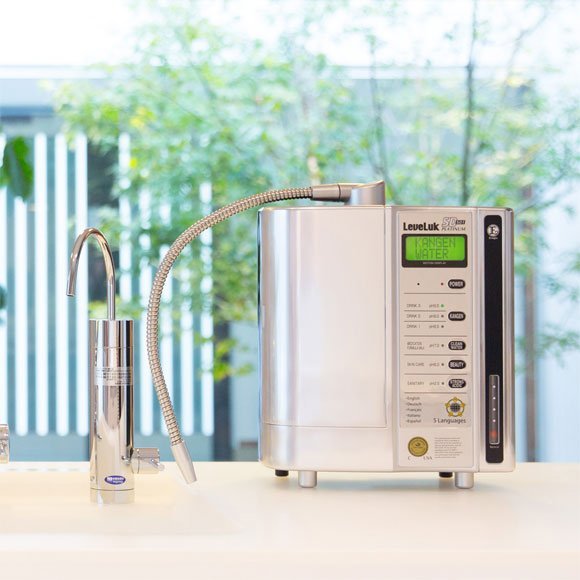
| Ionized alkaline water | 8.5 – 9.5 for drinking |
Two of those surprise people.
Distilled water doesn’t stay at 7. It starts neutral, but within hours of exposure to air it absorbs carbon dioxide, which forms carbonic acid and pulls it down toward 5.5. Pure water is unstable in an atmosphere, chemically speaking.
Rain is naturally acidic at around pH 5.6, for the same reason — atmospheric CO₂ — before any pollution is involved. “Acid rain” refers to values well below that, driven by sulphur and nitrogen oxides.
What sets your tap water’s pH
The EPA’s secondary standard recommends 6.5 to 8.5 for drinking water. It’s a secondary standard, meaning it’s about taste, odour and pipe corrosion rather than safety.
Three things drive where you land in that range: the geology your water passes through (limestone raises pH, granite lowers it), your treatment plant’s deliberate adjustment, and your own plumbing. Utilities often nudge pH slightly alkaline on purpose — mildly acidic water corrodes pipes and can leach metals into it.
Which means the answer to “what’s the pH of tap water” is local. If you want to know yours, test strips cost very little, and your utility publishes an annual water quality report.
How pH is measured — and why the number might be wrong
Three methods, in ascending order of trustworthiness:
- Litmus paper — tells you acidic or alkaline, not much more.
- Test strips — accurate to roughly 0.5 pH. Fine at home.
- Digital pH meter — accurate to about 0.01, but only if calibrated. An uncalibrated meter drifts and will confidently report nonsense.
Worth knowing before trusting any pH claim on a label: a quality-control study by Pitale and colleagues found five of six tested alkaline water brands measured a lower pH than their packaging stated. If the number matters to you, measure it yourself.
Honest answers, weekly
The research, without the sales pitch
One short email a week: what a study actually found, what it didn't, and what's worth your attention. No spam. Unsubscribe anytime.
pH and taste
You can taste this. High-pH water reads as slightly smooth or soapy; low-pH water reads as crisp or faintly sour. Neither indicates quality — carbonated drinks sit around pH 2.5 to 3.5, and coffee near 5, without either being a problem.
Taste matters more than it sounds, though, for an unglamorous reason: people drink more of water they enjoy, and mild dehydration is common.
Does drinking water pH affect your body’s pH?
Briefly, because this is where the topic usually goes wrong: no, not systemically. Blood pH is held between about 7.35 and 7.45 by your lungs and kidneys, and drinking water doesn’t override that. Stomach acid sits around pH 1.5 to 3.5 and re-acidifies whatever you drink within minutes.
There are narrower, better-supported effects — mainly around pepsin and reflux — and there are people who should be cautious with high-pH water, including anyone with kidney disease. We go through that evidence, including the parts that don’t favour us, in Is Alkaline Water Good for You?
The short version
pH tells you one specific thing: the concentration of hydrogen ions in a liquid. It’s a logarithmic scale, it’s local to your supply, it’s frequently mislabelled on bottles, and it is not a measure of how healthy water is. Useful number. Routinely oversold.
General information only, not medical advice.
Before you go
Get the next honest answer by email
We'd rather tell you when the answer is no. One email a week, written the same way as this post.