
Is Kangen Water a Scam? A Straight Answer From a Dealer
We sell these machines. You should weigh everything below with that in mind — and we’d rather say it in the first line than bury it.
That said, “is Kangen water a scam” is one of the most-searched questions about this product, and the answers you find are mostly written by people with something to sell in either direction: dealers who won’t acknowledge a single criticism, and affiliate sites paid to send you to a competitor. Here is a more careful answer.
The short version
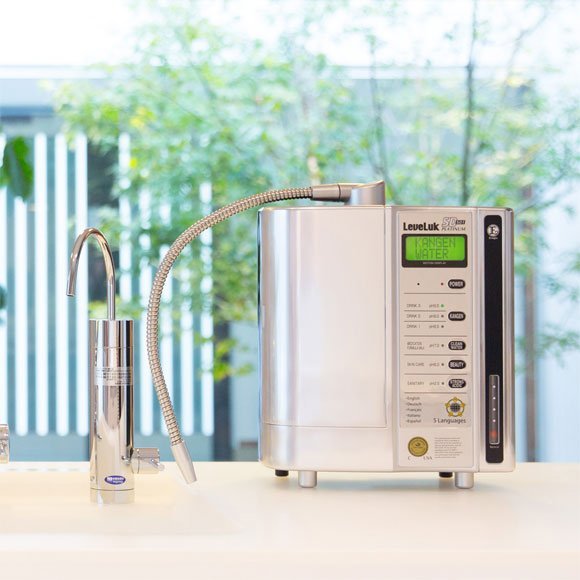
No, it isn’t a scam in the fraud sense. The machines exist, they do what the physics says they do, and Enagic has manufactured them since 1974 with the kind of regulatory paperwork you’d expect of a real appliance maker.
But several things commonly said about Kangen water are not true, and the price is high relative to what the hardware does. Whether that adds up to a bad purchase depends entirely on why you’re buying.
Let’s separate the claims from the product, because that’s where nearly all the confusion comes from.
What critics get right
The “alkalize your body” claim is wrong. Your blood pH sits between roughly 7.35 and 7.45, and your lungs and kidneys defend that range continuously. Drinking high-pH water does not move it. A 2026 review in Frontiers in Medicine concluded that blood pH homeostasis prevents any clinically meaningful change from drinking alkaline water, and that claims of systemic alkalinization, immunity enhancement and disease prevention are not supported by robust clinical evidence. When you see a dealer claim otherwise, the criticism is fair and you should discount that dealer accordingly.
The health claims are frequently oversold. The same review found benefits are “modest and likely driven more by mineral composition than pH alone.” Anyone promising that this water cures, treats or prevents disease is making a claim the evidence doesn’t carry — and in most jurisdictions, one they’re not permitted to make.
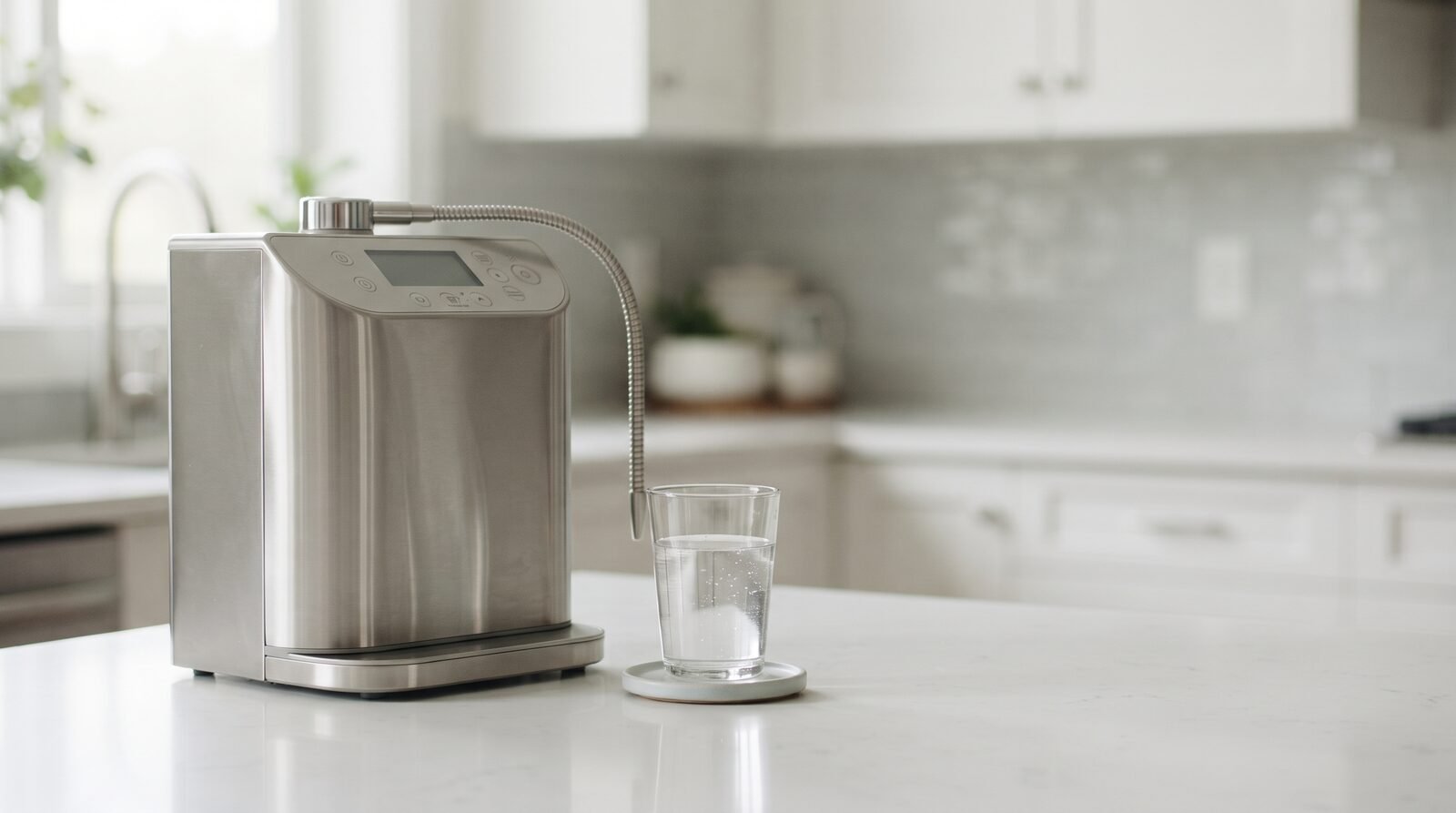
The price is genuinely high. These machines cost several thousand dollars. A good carbon or reverse-osmosis filter delivers clean water for a fraction of that. If clean water is your only goal, this is not the efficient way to buy it, and any dealer who won’t say so plainly isn’t being straight with you.
The multi-level sales structure is a legitimate reason for suspicion. Enagic sells through independent distributors who earn commission. That model attracts people who oversell, and it’s why so much bad information about this product exists. It’s a fair thing to hold against the category.
What critics get wrong
“It’s just expensive tap water” isn’t accurate either. Electrolysis measurably changes the water: it separates mineral ions into two streams and generates dissolved molecular hydrogen at the electrode. Those are real, measurable physical changes, not marketing. Whether they matter to your health is the open question — but “nothing happens” is untrue.
The reflux research is real, and often ignored by critics. Koufman and Johnston (Annals of Otology, Rhinology & Laryngology, 2012) demonstrated that water at pH 8.8 irreversibly denatures pepsin — the stomach enzyme responsible for much of the tissue damage in reflux — while ordinary tap and bottled water at pH 6.7–7.4 does not. That was a laboratory study on the enzyme rather than a clinical trial on patients, so it isn’t proof that a home machine resolves reflux. But it’s a genuine, published, mechanistically sensible finding, and dismissing the whole category as pseudoscience skips over it.
Enagic itself is not a fly-by-night operation. Whatever you think of the sales model, the manufacturing is long-established and the units are durable, which is more than can be said for much of the cheap ionizer market.
Honest answers, weekly
The research, without the sales pitch
One short email a week: what a study actually found, what it didn't, and what's worth your attention. No spam. Unsubscribe anytime.
So who is it actually for?
Being honest about the fit is the only way this article is worth anything.
It’s a reasonable purchase if you want thoroughly filtered water that tastes good enough that you actually drink more of it; you want the separate acidic stream for cleaning and topical use; you find the reflux research interesting enough to try; and you can afford it without strain.
It’s a poor purchase if you’re buying because someone told you it treats a medical condition; you’re buying primarily to sell it to other people; clean drinking water is your only goal and budget matters; or you have chronic kidney disease or take acid-suppressing medication, in which case talk to your doctor before drinking any high-pH water at all.
How to judge any dealer, including us
- Do they tell you the pH-alkalizing claim is unsupported? If not, walk away.
- Do they mention who shouldn’t use it? Kidney disease and PPI users belong in every honest conversation.
- Will they give you direct hydrogen measurements rather than ORP estimates? Dissolved H₂ is routinely overstated when inferred from ORP readings instead of measured.
- Do they lead with the product, or with the business opportunity? We sell machines to people who want water.
The verdict
Not a scam. Frequently oversold. Genuinely useful to a narrower group of people than the marketing implies — and worth exactly nothing to anyone hoping it will treat an illness.
If you want to know whether it makes sense for your household and your local water supply, ask us. We’ll tell you when the answer is no.
General information only, not medical advice. Nothing here is intended to diagnose, treat, cure or prevent any disease. If you have kidney disease, take acid-suppressing medication, or are pregnant, consult your physician before changing what you drink.
Before you go
Get the next honest answer by email
We'd rather tell you when the answer is no. One email a week, written the same way as this post.