
Molecular hydrogen water: what it is, how much dissolves, and what the evidence supports
We sell water ionizers. You should weigh everything below with that in mind, and we would rather say it in the first line than bury it at the bottom.
Molecular hydrogen water is water with hydrogen gas dissolved in it. It is not a new kind of water, and it is not alkaline water, though the two are sold side by side in nearly identical language. The amount of hydrogen a glass can actually hold is set by a physical limit that almost nobody selling it mentions.
What molecular hydrogen water actually is
Water is H₂O. The hydrogen atoms already in each water molecule are not what is being sold. What is being sold is H₂: two hydrogen atoms bonded to each other as a separate gas molecule, dissolved in the water the way carbon dioxide is dissolved in sparkling water. It is a physical mixture, not a chemical change to the water.
H₂ is colorless, odorless and tasteless, and it is one of the smallest molecules there is. Those properties explain most of the product’s practical behavior: you have no sensory way of knowing whether your glass contains any, and because the molecule is so small and light it escapes through materials and surfaces that hold almost any other gas. A sealed can of sparkling water keeps its carbonation for months. An open glass of hydrogen water does not keep its hydrogen for an afternoon.
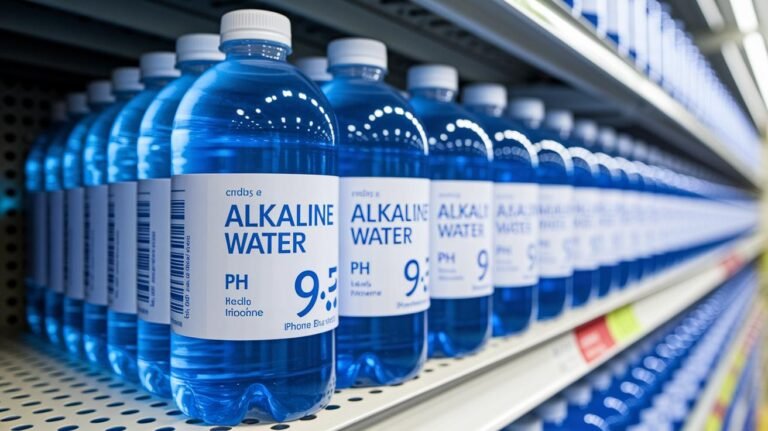
Molecular hydrogen water is not alkaline water
pH measures how acidic or basic water is: the concentration of hydrogen ions (H⁺). Dissolved hydrogen is a concentration of hydrogen gas (H₂). One tells you nothing reliable about the other. You can have high-pH water with essentially no dissolved H₂, and neutral water with a meaningful amount of it.
Electrolysis happens to produce both at once on the alkaline side, which is why this industry welded them together. They have separate evidence bases. The most-cited laboratory finding for alkaline water, Koufman and Johnston (2012, Annals of Otology, Rhinology & Laryngology), found that water at pH 8.8 irreversibly denatured human pepsin. That result is real, it is in vitro (laboratory glassware, not a person), and it is a pH effect. Citing it for a hydrogen product cites the wrong property entirely. For the longer version, see what the pH of water actually measures and our comparison of hydrogen water, alkaline water and Kangen water.
How much hydrogen water can hold
At one atmosphere of pressure and around 25 °C, water holds roughly 1.6 milligrams of H₂ per liter at saturation, or 1.6 parts per million. That figure follows from the published Henry’s law constants for hydrogen, which describe how much of a gas dissolves in water at a given temperature and pressure. Above that concentration, at that temperature and pressure, the water cannot retain more hydrogen, and the excess leaves.
Hold that number next to the packaging. Tablets and bottled products routinely advertise 5, 8, even 12 ppm. There are two ways to read those claims:
- Transient supersaturation. Under pressure, inside a sealed generator or a closed bottle with a dissolving tablet, water can briefly hold more H₂ than its atmospheric ceiling. The moment the pressure drops, which is the moment you open it and pour, it starts shedding the excess.
- Overstatement. Some figures describe hydrogen generated rather than hydrogen retained, which differ by a lot.
Either way, the number on the box is not the number you drink. A product advertising 1.5 ppm and delivering it is doing better than one advertising 10 ppm.
Outgassing: why the concentration falls the moment it is made
H₂ is the lightest gas, so it effuses faster than any other. Dissolved hydrogen in an open container is leaving continuously. In an open glass it escapes quickly: a large share is gone within an hour, and little is left after a few hours. Treat that as a rough guide rather than a constant: agitation, warmth, a wider surface and a sloshing bottle all make it faster.
- Hydrogen water is a drink-it-now product.
- A glass left out overnight has essentially no dissolved hydrogen left. It is water.
- Most plastics lose hydrogen faster than glass or metal.
Honest answers, weekly
The research, without the sales pitch
One short email a week: what a study actually found, what it didn't, and what's worth your attention. No spam. Unsubscribe anytime.
What the research supports, and at what level of evidence
The human evidence for drinking hydrogen water is small, short, and mostly measures surrogate markers rather than outcomes people would notice. That is not the same as saying it does nothing.
Dhillon and colleagues (2024, International Journal of Molecular Sciences) ran a systematic review of 25 articles on hydrogen-rich water. They described the results as preliminary and called for larger, more rigorous studies, noting that the mechanisms behind any benefit are not yet fully explained.
Li and colleagues (2024, Frontiers in Nutrition) ran a systematic review and meta-analysis of exercise-induced oxidative stress in healthy adults, pooling hydrogen taken as drinking water, as inhaled gas and in baths. The whole literature they could pool came to six studies, seven experiments and 76 participants. On the primary oxidative-stress measure, hydrogen was not significantly different from placebo. The other primary measure, antioxidant potential, showed a small improvement.
The early result this industry gestures at most was an animal study using inhaled hydrogen gas, not people drinking hydrogen water. Inhaled gas and a glass of water at 1.6 ppm are different interventions, and a rodent is not a person. Extrapolating from one to the other is the most common dishonesty in this field.
Anyone telling you more than this is ahead of the evidence. We go further in where the hydrogen water claims hold up and where they do not.
How the hydrogen gets into your glass
| Route | How it works | H₂ at the point of drinking |
|---|---|---|
| Countertop electrolysis unit | Current across a membrane; dissolved H₂ on the alkaline stream | Good if drunk at the tap; falls on standing |
| Portable generator bottle | Small electrolysis cell in the base | Good at generation; depends on cell quality and sealing |
| Dissolving tablets | Magnesium reacts with water to release H₂ | High briefly, then falls once the glass is open |
| Pre-bottled | Dissolved at the factory and sealed | Weakest case; depends on packaging and shelf time, rarely disclosed |
If a pre-bottled product comes in clear plastic, treat its concentration claim with real skepticism. For how electrolysis produces all this, see how water ionization works.
Who should be skeptical, and who should skip it
H₂ does not change the water’s pH, mineral content or taste, there is no established contraindication to the dissolved gas itself, and the safety signal in the trials that exist is unremarkable. The cautions in this category attach to the alkaline and mineral side. People with chronic kidney disease or at risk of calcium-alkali syndrome, people taking proton pump inhibitors, anyone on a sodium-restricted diet, and infants and people who are pregnant should speak to a clinician first. We set that out in alkaline water and kidney health.
- Skip it if you are buying for a specific health outcome. The human trials are not there yet.
- Be skeptical of any concentration claim above roughly 1.6 ppm that does not explain pressure or timing.
- It may be reasonable if you find the mechanism plausible, understand the evidence is early, and are comfortable spending on something that might do very little.
- This may not be worth it for you, and that sentence is allowed to be the conclusion.
What we sell are alkaline water ionizers. They produce dissolved hydrogen on the alkaline stream, but they are designed and priced as ionizers and filters, not as dedicated hydrogen generators. If maximizing dissolved H₂ per dollar is your only goal, a purpose-built hydrogen unit is the more direct purchase.
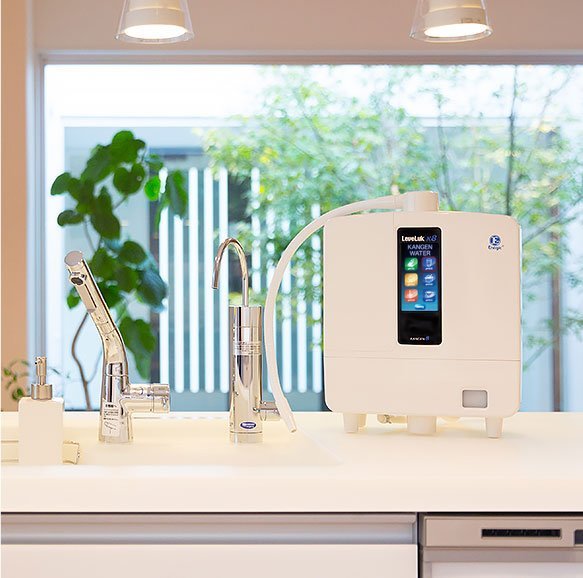
If you want an ionizer, not just hydrogen
The LeveLuk K8 is our eight-plate flagship machine: filtration and adjustable pH, with dissolved hydrogen as a by-product of the electrolysis rather than the reason to buy it. Specs and documentation are on the product page.
Final thoughts
Molecular hydrogen water has real chemistry behind it. H₂ dissolves in water, it is measurable, and the proposed mechanism is coherent. What is not settled is whether drinking it produces an effect you would notice. The human literature is small and early, and labels routinely advertise concentrations water cannot hold at the moment you drink it.
If you buy it, drink it fresh, and ignore any number above about 1.6 ppm unless the seller can explain the pressure and timing behind it. If you do not, you are not missing something the evidence has established.
This article is for general information and is not medical advice. Talk to your doctor before changing what you drink, especially if you have kidney disease or take medication.
Before you go
Get the next honest answer by email
We'd rather tell you when the answer is no. One email a week, written the same way as this post.