Best alkaline water: what actually separates a good bottle from a marketing claim
Search “best alkaline water” and you get one of two things: an affiliate roundup ranking bottled brands by taste, or a dealer site using the ranking as a pretext to sell you a machine. Neither one tells you what “best” should actually mean before you spend money. This is the honest version, written by a retailer that sells water ionizers and says so upfront — we’re an authorized Enagic dealer, and one section below will mention that. Everything before it is just the evidence.
Short version: the best alkaline water for most people is whichever safe option they’ll actually drink consistently — naturally sourced or ionized, bottled or made at home. The differences between brands matter less than the marketing suggests, and there are people who should be cautious with any of it.
What “best alkaline water” actually means
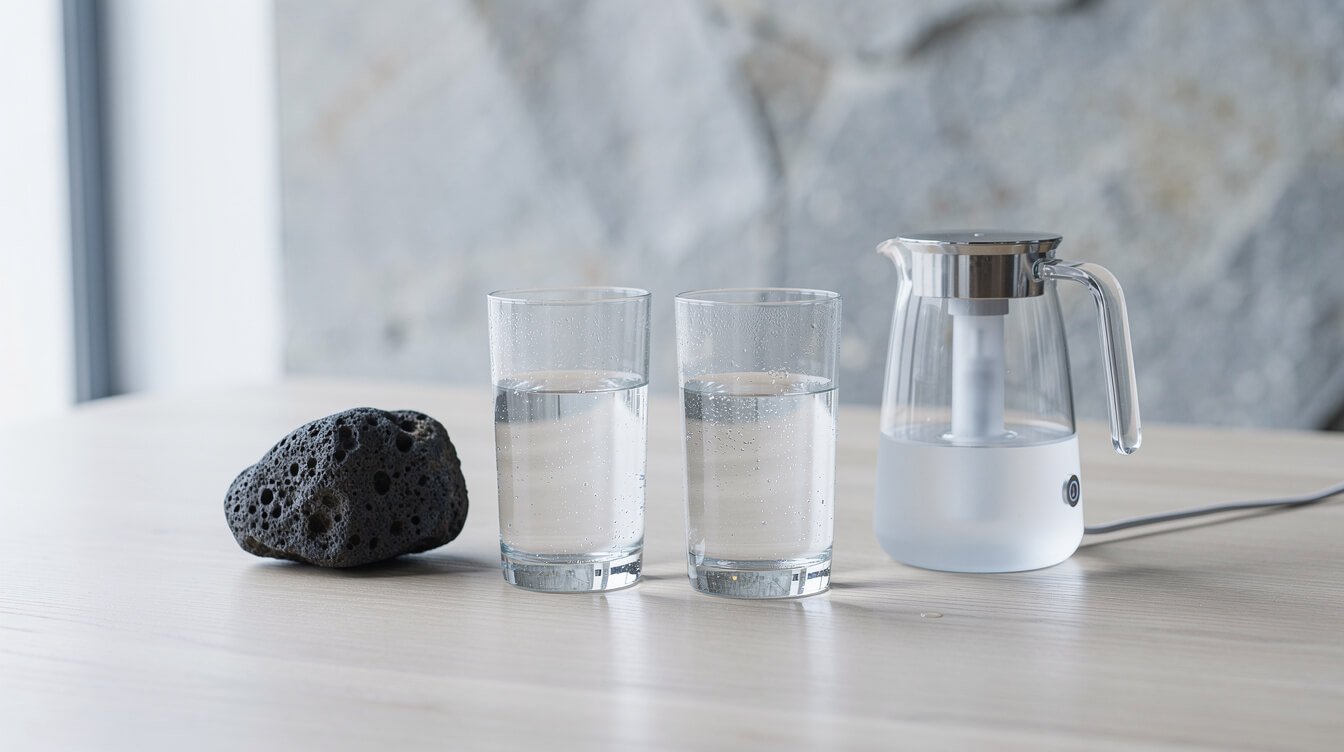
Alkaline water is any water with a pH above 7. There are two distinct ways a bottle gets there, and the difference matters more than the brand name on the label.
Naturally alkaline water picks up its pH from the rock it passes through — volcanic basalt, limestone, artesian aquifers — and carries real dissolved minerals such as calcium, magnesium, and silica as a side effect of the source, not an additive.
Ionized alkaline water starts as purified or municipal water and is run through an electrolysis chamber, which separates it into an alkaline stream and an acidic stream. Bottlers using this method typically add electrolytes back for taste. The pH can be higher and more tightly controlled than most natural sources, but the mineral content is engineered, not native to a spring.
Neither method is more legitimate than the other, and for healthy adults neither one does anything to your body’s pH. “Best” should be judged on source transparency, verified pH, mineral disclosure, and price per liter. A printed pH number is a manufacturing spec, not always an independently verified one. If a brand’s entire pitch rests on a pH number with no published water-quality report behind it, notice that before you notice the price. Our what pH should drinking water be post covers the scale itself.
Bottled brands worth considering

If you’re buying bottled, these are the names that show up most often. We haven’t independently tested any of them, so check each label’s stated pH and look for a published water-quality report before you treat any number as fact.
- Essentia (ionized): the most widely available ionized option, with a consistent, smooth taste. Mechanically, it is purified water run through electrolysis.
- Waiakea (natural): Hawaiian volcanic source with modest natural alkalinity and a strong sustainability story if that matters to you.
- Evamor (natural): an artesian source with native silica and no ionization step.
- Icelandic Glacial (natural): spring water with moderate alkalinity.
- Store-brand ionized water: often functionally similar to the premium ionized brands at a lower price, since the ionization process itself isn’t proprietary.
Price per liter varies more than the pH numbers do, and none of that price difference tracks with any measurable difference in health outcome — it tracks with packaging, marketing spend, and distribution. Notice what’s missing: any claim about what these do inside your body. That’s deliberate.
What the research actually supports

A 2026 review in Frontiers in Medicine examining alkaline water’s clinical evidence base concluded that its clinical utility is limited, that any observed benefits are driven more by mineral composition than by pH itself, and that claims about changing the body’s pH, immune support, or anti-aging effects are not supported. That’s our starting point, not a footnote we bury.
Your blood pH is regulated by your kidneys and lungs to stay between 7.35 and 7.45 regardless of what you drink. No beverage changes that number in a healthy person.
What does hold up is narrower. A 2012 study (Koufman & Johnston, Annals of Otology, Rhinology & Laryngology) found that water at pH 8.8 can deactivate pepsin, an enzyme involved in acid reflux, in vitro — in a laboratory dish, not in people. It is a real mechanistic finding, but no trial has isolated alkaline water’s effect on reflux symptoms, so it can’t tell you what a bottle will do for you.
Beyond that, people reliably drink more water when it tastes better to them — a real, if unglamorous, hydration benefit. The review’s point about minerals also reframes “which brand is best”: if minerals matter more than pH, a natural source with a modest pH and real dissolved minerals could reasonably be the better pick over a higher-pH bottle with electrolytes added back. No study has tested that head-to-head, so treat it as a reasoned inference, not a conclusion.
pH and hydrogen are not the same thing

pH measures acidity or alkalinity. Dissolved molecular hydrogen (H₂) is a different property, produced by the same electrolysis that raises pH in an ionizer, but not present in naturally alkaline bottled water at any meaningful concentration. Hydrogen is a small, volatile molecule that escapes standard plastic bottles, so if a listing claims both “high pH” and “hydrogen-rich” without explaining how the hydrogen is retained, be skeptical of the second claim. Even where hydrogen is present, the human research on drinking it is still thin. We go deeper in our comparison of hydrogen water, alkaline water, and Kangen water.
Honest answers, weekly
The research, without the sales pitch
One short email a week: what a study actually found, what it didn't, and what's worth your attention. No spam. Unsubscribe anytime.
Who should be careful with alkaline water
Almost nobody in this category leads with this section, and that omission is the industry’s biggest honesty gap.
- Chronic kidney disease — impaired kidneys have a harder time handling mineral load; check with a nephrologist first. We cover this in alkaline water and kidney health.
- Long-term proton pump inhibitor (PPI) use — combining acid-suppressing medication with extra alkaline intake hasn’t been well studied and warrants a conversation with your prescriber.
- Sodium- or mineral-restricted diets — electrolyte-enhanced brands add minerals back in. Check the label.
- Infants and pregnancy — there isn’t a robust safety literature specific to alkaline water in these groups, so stick with plain filtered or tap water unless a physician says otherwise.
- Regular calcium supplement or antacid users — heavy calcium intake plus alkali has, rarely, been associated with calcium-alkali syndrome. It is uncommon and mostly tied to antacid overuse, but it is documented.
None of this makes alkaline water dangerous for a healthy adult in ordinary amounts. It does mean “best” should include “not right for everyone.”
Bottled vs. making it at home: the real tradeoff
If you drink alkaline water occasionally, bottled is a reasonable, low-commitment choice. If you drink it daily, the per-bottle cost adds up, and a countertop ionizer becomes a household-budget question rather than a health one. An ionizer isn’t free to run either: its filter needs replacing roughly every six months on the maker’s guidance, sooner with hard water, plus a little electricity. Do the math with your own consumption and local bottle prices before deciding.
We sell these machines, so weigh the comparison with that in mind. One advantage worth naming is that on-demand ionization avoids the hydrogen-loss problem bottled water has, since there’s no time between production and drinking. It does not change any of the evidence above; a machine doesn’t make an unsupported systemic claim true. And if a case of bottles a week covers your needs, you don’t need a machine.
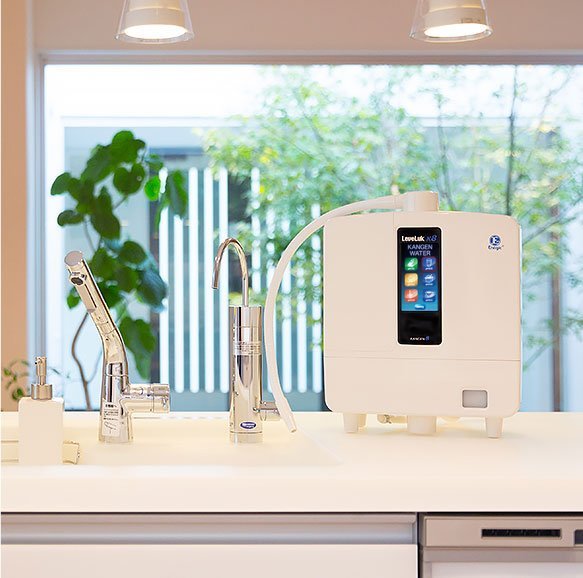
See the machine we’re talking about
The LeveLuk K8 is our flagship countertop ionizer, with adjustable pH settings for drinking and household uses. Take a look and decide for yourself whether it fits your situation.
Frequently asked questions
Is the highest-pH bottled water automatically the best?
No. A higher number doesn’t mean more benefit, and very high pH water with no mineral disclosure deserves more scrutiny, not less.
Is bottled alkaline water a waste of money?
Not if you like the taste and drink more water because of it. It is if you’re buying it expecting a health outcome the research doesn’t support.
Can I make alkaline water at home without a machine?
Yes. A small pinch of baking soda in a liter of water will raise its pH modestly, though it adds sodium. Lemon won’t work — lemon juice is acidic and lowers the water’s pH.
Is naturally alkaline water better than ionized alkaline water?
Neither is categorically better. Natural water carries native minerals; ionized water offers more consistent pH and, if produced fresh, some dissolved hydrogen. Pick on source transparency and your own priorities.
Final thoughts
The best alkaline water comes from a source that discloses its pH and mineral content, that you’ll actually drink consistently, and that you’re buying for reasons the evidence supports — taste and drinking more water, not a cure for anything. Skip any brand or dealer, including one that sells machines, that tells you it does more than that.
This article is for general information and is not medical advice. Talk to your doctor before changing what you drink, especially if you have kidney disease or take medication.
Before you go
Get the next honest answer by email
We'd rather tell you when the answer is no. One email a week, written the same way as this post.