Ozonated water: what ozone does in water, how fast it fades, and what the FDA says
We sell water ionizers and replacement filters. None of them is an ozone generator, and none of our product listings makes an ozone or disinfection claim. Weigh what follows knowing that we are in the drinking-water business. We would rather say it in the first line than bury it at the bottom.
Ozonated water is water with ozone gas dissolved in it. Search for it and you land in two different worlds. In one, water-treatment engineers use ozone to disinfect water at a plant. In the other, sellers describe drinking or bathing in it as a therapy. Below: the chemistry, the legitimate uses, the byproduct that rarely gets mentioned, and what federal rules say.
What ozonated water is
Ozone (O3) is three oxygen atoms bonded together instead of the usual two. FDA’s food-ingredient rule for ozone, 21 CFR 184.1563, calls it “an unstable blue gas with a pungent, characteristic odor” that is made commercially “by passing electrical discharges or ionizing radiation through air or oxygen.”
It has to be made on the spot because it does not keep. The EPA’s ozone disinfection fact sheet says ozone “is generated onsite because it is unstable and decomposes to elemental oxygen in a short amount of time after generation.” The Australian Drinking Water Guidelines describe it as “a very strong biocide and oxidising agent,” effective at reducing color, taste, and odor and at oxidizing iron and manganese.
Ozone is not a stronger form of oxygen, and ozonated water is not the same thing as oxygenated water. The EPA calls marketing terms such as “energized oxygen” misleading: “Ozone is a toxic gas with vastly different chemical and toxicological properties from oxygen.”
How fast ozone disappears from ozonated water
You will see a single half-life figure for ozone in water quoted online, usually without a source. There is no single figure, because the rate depends on pH, temperature, and what else is dissolved in the water. The Australian guidelines give one useful marker: ozone is unstable above pH 9, and “at pH 8, half of the ozone is lost in less than 30 minutes.”
That instability is the point of ozone in treatment, and also its limit. The EPA fact sheet lists as an advantage that “there are no harmful residuals that need to be removed after ozonation because ozone decomposes rapidly.” The flip side, in the Australian guidelines’ words: “an ozone residual cannot be maintained in a distribution system, particularly as temperature increases.”
Water travels through pipes before it reaches a tap, and federal rules for systems that treat surface water require a detectable disinfectant residual throughout the distribution system. Ozone cannot provide one, so a plant that uses ozone still needs a longer-lasting disinfectant afterward. We explain that residual, and which kind your utility likely uses, in our guide to chlorine in tap water.
The same applies to anything sold as ozonated water: an ozone level measured at the moment of ozonation says little about the glass later.
Where ozone is used legitimately
Two uses are well established, and both disinfect water before anyone drinks it.
- Drinking-water treatment. According to the Australian guidelines, ozone “has a long history of use for disinfection, and for the control of taste, odour and colour.” Their published figures show it is more effective than chlorine, chloramine, or chlorine dioxide against viruses and protozoa.
- Bottled water. FDA lists ozone as generally recognized as safe for one food use: as an antimicrobial agent in bottled water that already meets FDA’s quality standards before ozonation. Good manufacturing practice under that rule “results in a maximum residual level at the time of bottling of 0.4 milligram of ozone per liter.” The rule is about disinfecting water before it is sealed, not about delivering ozone to the person drinking it.
The byproduct nobody mentions: bromate
Most pages about ozonated water skip this part. Some source waters contain bromide, a naturally occurring ion. The Australian guidelines explain that ozone “can convert naturally-occurring bromide to bromine,” which can lead to several brominated byproducts, including bromate. Citing a 2003 review by von Gunten, they add that bromate becomes “a serious problem” in water with bromide above 0.1 mg/L, and that it “is very difficult to remove once formed.”
Bromate is regulated. The EPA’s national primary drinking water regulations list it as a disinfection byproduct with a maximum contaminant level of 0.010 mg/L and a health goal of zero. The EPA’s table lists the health concern, and we would point you there rather than restate it. FDA’s bottled-water standard, 21 CFR 165.110, sets the same 0.010 mg/L allowable level. Australia’s health-based guideline is 0.02 mg/L.
If your utility uses ozone, its annual water quality report is the place to look for a bromate result. A home generator comes with no such check. Whether bromate forms depends on the bromide in your water and on how the ozone is applied, and nobody is measuring it at your sink.
Honest answers, weekly
The research, without the sales pitch
One short email a week: what a study actually found, what it didn't, and what's worth your attention. No spam. Unsubscribe anytime.
Drinking it, and the therapy claims: what the FDA says

Some sellers promote ozone or ozonated water for wounds, infections, “detox,” or immunity. We don’t make those claims and won’t repeat them. The clearest federal statement on ozone and medicine is FDA’s regulation 21 CFR 801.415:
“Ozone is a toxic gas with no known useful medical application in specific, adjunctive, or preventive therapy. In order for ozone to be effective as a germicide, it must be present in a concentration far greater than that which can be safely tolerated by man and animals.”
This regulation governs devices that produce ozone and the ozone they release into the air. It caps that ozone at 0.05 parts per million in occupied indoor spaces. It is not a ruling on a glass of ozonated water. It is, though, FDA’s plain position on ozone as a therapy, and it treats a device used “in any medical condition for which there is no proof of safety and effectiveness” as adulterated or misbranded.
For a home user, the real hazard is the gas that escapes from the water. The same regulation warns that inhaled ozone can irritate the lungs enough to cause pulmonary edema, that the onset “is usually delayed for some hours after exposure,” and that “the odor of ozone is not a reliable index” of how much is in the air, because your sense of smell tires quickly. The EPA’s page on ozone generators adds that “relatively low amounts can cause chest pain, coughing, shortness of breath and throat irritation,” and that ozone may worsen asthma.
Home ozone generators: labels, and who should skip them
The EPA’s consumer guide to pesticidal devices lists “ozonation units (gaseous or aqueous)” and “ozone bubble generation technology” among water-treatment devices. Devices need no EPA registration, and the guide says their makers “generally … do not submit their claims or efficacy and safety data to EPA.” An EPA establishment number on the box “does NOT indicate” that EPA reviewed the product. We cover how to read those labels in our hypochlorous acid generator guide. The same rules apply here.
Skip a home ozone generator, or ask a clinician first, if any of these apply:
- You have asthma or another chronic lung condition. The EPA notes that ozone may worsen chronic respiratory disease, and exercise increases how much you inhale.
- You would run it in a small, closed room. In one study the EPA cites, a large ozone air-cleaning unit in a 350-square-foot room pushed indoor ozone to 0.50 to 0.80 ppm, 5 to 10 times public health limits.
- You are counting on it to make unsafe water safe. Ozone leaves no residual, and a home unit comes with no verified performance data. If you are on a private well, test the water first. Our guide to whether tap water is safe to drink covers where to start.
- You were told to use it on skin, wounds, or in the mouth. That is a medical question for your doctor or dentist, not a seller.
If you are choosing equipment for your tap
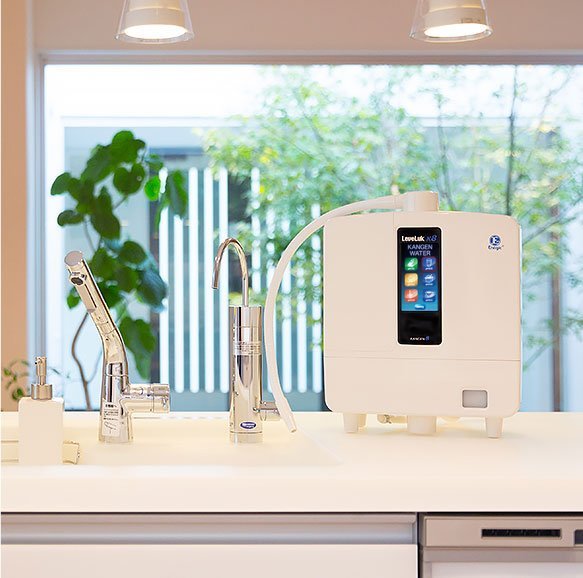
The LeveLuk K8 is the eight-plate water ionizer we sell. It filters tap water and makes water across a range of pH settings, from 2.5 to 11.5 according to the manufacturer. It is not an ozone generator, and we make no disinfection or health claim for it. Specs are on the product page.
The bottom line on ozonated water
Ozone is a strong, short-lived disinfectant with a real job in water treatment and bottling, where it is used up before the water reaches you. It leaves no lasting residual, it can form bromate in water that contains bromide, and the gas itself is a lung irritant. FDA’s position on ozone as a therapy is that it has no known useful medical application. The ozone worth relying on is the kind your utility or bottler already manages, measures, and lets dissipate before the water reaches you.
This article is for general information and is not medical advice. Regulatory references are current as of November 19, 2026, and may change. If you have a lung condition or any question about your health, talk to your doctor. For questions about your water, contact your water utility or state health department.
Before you go
Get the next honest answer by email
We'd rather tell you when the answer is no. One email a week, written the same way as this post.