PFAS in water: where the EPA limits stand now, and how to check your own tap
We sell water ionizers and replacement filters, and none of our product listings makes a PFAS claim, so we have no PFAS product to push. Weigh what follows knowing that we are in the drinking-water business. We would rather say it in the first line than bury it at the bottom.
PFAS in water is one of the most confusing stories in drinking water. One headline says the EPA set strict national limits, the next says they were delayed, a third says they were dissolved. This post sorts that out with dates and primary sources, then covers what matters at your sink: how to find out what is in your water, and what a filter has to prove.
What PFAS are, briefly
PFAS (per- and polyfluoroalkyl substances) are a family of synthetic chemicals that have been used since the 1940s. According to the EPA, they repel oil and water and resist heat, which is why they ended up in nonstick cookware, food packaging, waterproof clothing, stain-resistant furniture, and firefighting foam. The USGS counts more than 12,000 types. PFOA and PFOS are the two best known.
The nickname “forever chemicals” refers to persistence: PFAS break down very slowly. The EPA says many of them are found in water, soil, and fish, and in the blood of people and animals around the world. On health, we will stick to one sentence from the EPA: “Scientific studies have shown that exposure to some PFAS in the environment may be linked to harmful health effects in humans and animals.” The EPA’s own pages are the place to read more.
Where the EPA limits on PFAS in water stand as of November 2026

The sequence, from the EPA’s rule page and the Federal Register:
- April 10, 2024: the EPA finalized the first national drinking-water rule for PFAS. Its enforceable limits (MCLs) are 4.0 parts per trillion (ppt) each for PFOA and PFOS, and 10 ppt each for PFHxS, PFNA, and HFPO-DA (sold as “GenX”). A “hazard index” of 1 covers mixtures of PFHxS, PFNA, GenX, and PFBS. Utilities must finish initial monitoring and start telling customers their PFAS levels by 2027. If levels exceed the limits, they have until 2029 to fix it.
- May 14, 2025: the EPA announced it would keep the PFOA and PFOS limits.
- May 20, 2026: two proposed rules were published. One keeps the PFOA and PFOS limits but would let water systems request two more years, to 2031, to comply. The other would rescind the limits for PFHxS, PFNA, GenX, and the hazard index. Public comment on both closed July 20, 2026.
As of November 18, 2026, the Federal Register shows no final action on either proposal. The EPA’s rule page, last updated May 18, 2026, still lists the 2024 standards as the final rule. So “delayed” and “dissolved” both describe proposals, not the rule. That could change, so check the EPA page for the date before you rely on any of this.
For scale, a limit of 4.0 ppt for PFOA in water equals 0.000004 milligrams per liter.
How to find out if there is PFAS in your water
If you are on a public water system, start with the data that already exists. Under the EPA’s fifth Unregulated Contaminant Monitoring Rule (UCMR 5), every community system serving 3,300 or more people, plus 800 randomly selected smaller systems, tested for 29 PFAS (and lithium) between 2023 and 2025. The EPA released the final dataset in August 2026. You can search it by utility name in the UCMR 5 Data Finder.
Community water systems also have to report UCMR results in their annual Consumer Confidence Report when a contaminant is found at or above the reporting level. That report goes out by July 1 each year. Our guide to reading your tap water report walks through it. Two cautions: a blank result means “below the reporting level,” not “zero,” and the EPA notes that UCMR results do not by themselves decide whether a system is in compliance.
If you are on a private well, nobody has tested for you. The EPA does not regulate private wells. In announcing its 2023 tap water study, the USGS put it plainly: “Testing is the only way to confirm the presence of these contaminants in wells.” The EPA advises using a state-certified laboratory that runs EPA-developed methods. Your state environmental or health agency can give you a list.
For context, that USGS study sampled tap water at 716 locations between 2016 and 2021, testing for 32 PFAS. It estimated that at least 45% of US tap water could contain one or more of them. Detections clustered near cities and known PFAS sources, and levels were similar in public supplies and private wells.
What a filter for PFAS in water has to prove
Start with the EPA’s home filter fact sheet, which makes a point most filter marketing skips: “If PFAS have not been measured in your water, or if PFAS have been measured but are below federal limits, a filter may not be useful to you.” Find out first. Buy second.
If you do need one, the EPA names three technologies that can work: activated carbon, reverse osmosis, and ion exchange resins. Which technology a filter uses matters less than whether it is certified for PFAS reduction to NSF/ANSI 53 or NSF/ANSI 58 (the reverse osmosis standard). Five ANSI-accredited bodies certify filters for this: CSA Group, IAPMO, NSF, UL, and WQA. Each keeps a searchable product directory. Check the listing for PFOA and PFOS by name.
Read the fine print here. NSF’s consumer page says that to make a PFAS reduction claim, a filter must reduce PFAS to below 20 ppt. That is higher than the 4.0 ppt federal limit for PFOA and PFOS. NSF says its committees are working to update both standards to match the EPA rule. The EPA’s fact sheet makes the same point: current certification standards (as of April 2024) “do not yet indicate that a filter will remove PFAS down to the levels EPA has now set.” A certified filter reduces PFAS, but certification does not yet prove a filter gets you under the federal limit.
Filters only work if you change the cartridge on schedule. Do not boil water to deal with PFAS: NSF says “Boiling water that contains PFAS will not reduce exposure risk.” On showers, the EPA says only a small amount of PFAS gets through skin, so bathing and washing dishes are “unlikely to significantly increase your risk.”
About the carbon pre-filter inside a water ionizer: as we explain in what is inside an ionizer filter, certification is per contaminant. If a listing does not name a PFAS certification, assume the filter has none.
Honest answers, weekly
The research, without the sales pitch
One short email a week: what a study actually found, what it didn't, and what's worth your attention. No spam. Unsubscribe anytime.
What a pH, TDS, or taste check cannot tell you

- pH: PFAS do not show up as a pH change at these concentrations. A pH reading says nothing about them (what pH drinking water should be).
- TDS meter: it reads in parts per million. PFAS limits are in parts per trillion, a million times smaller. A TDS reading cannot detect them (what a TDS tester can’t detect).
- Taste and smell: no. Clear, good-tasting water can still carry PFAS.
The only way to measure PFAS in water is a lab test using EPA methods, or your utility’s published results.
Who should pay closest attention
- Private well owners, especially near cities or known PFAS sources, such as the industry and waste sites the USGS gives as examples. Nobody has tested it unless you did.
- Households preparing infant formula. For wells with a PFAS concern, the EPA lists preparing baby formula among the uses for which you should consider an alternate water source.
- Pregnant and breastfeeding people. The EPA says that based on current science, the benefits of breastfeeding “appear in most cases to outweigh the risks” of PFAS exposure. It also advises talking to your doctor. Follow that advice rather than anything on a blog, including this one.
- Anyone whose utility reports PFAS in water above the federal limits. Ask the utility and your state agency what they recommend.
If you are choosing equipment for your tap
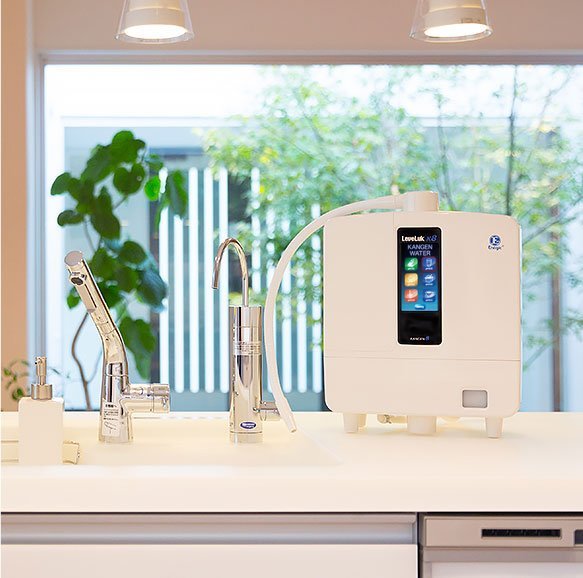
The LeveLuk K8 is the eight-plate water ionizer we sell. It filters tap water and makes water across a range of pH settings, from 2.5 to 11.5 according to the manufacturer. Its listing carries no PFAS-reduction certification, and we make no PFAS or health claim for it. If PFAS is your concern, use a filter certified for it. Specs are on the product page.
The bottom line on PFAS in water
As of November 18, 2026, the 2024 federal limits for PFAS in water are the rule on the EPA’s books, and the 2026 changes are still proposals. Most larger utilities already have UCMR 5 data you can look up today. On a well, test before you buy a filter. If you need one, choose one certified for PFOA and PFOS reduction under NSF/ANSI 53 or 58, knowing certification does not yet prove it meets the 4.0 ppt limit. Boiling, a TDS meter, and taste will not help.
This article is for general information and is not medical or legal advice. Regulatory status is current as of November 18, 2026, and may change. For questions about your own water, contact your water utility or state health department. For questions about your health, talk to your doctor.
Before you go
Get the next honest answer by email
We'd rather tell you when the answer is no. One email a week, written the same way as this post.