Fluoride water filters: which types actually reduce fluoride, and how to check the claim
We sell water ionizers and replacement filters, and the filter inside an ionizer is not the right tool for fluoride. Weigh what follows knowing that we are in the drinking-water business. We would rather say it in the first line than bury it at the bottom.
A fluoride water filter is a narrower thing than most product pages suggest. Search “fluoride in water filter” and nearly every answer comes from a company selling one, each quoting its own removal percentage. This guide covers how much fluoride is in your water, which filter types actually reduce it, which do not, and how to check a fluoride water filter claim against a public listing instead of a sales page. Whether fluoride in drinking water is good or bad for you is a separate question, and not one we answer here.
Start with your number: how much fluoride is in your water
Before choosing a filter, find out what you are filtering. If you are on a public water system, your utility’s annual water quality report (the Consumer Confidence Report) lists the fluoride level it measured. We explain how to find and read that report in our guide to checking whether your tap water is safe to drink. If you are on a private well, nobody tests it but you, and fluoride is one of the things a certified lab can measure.
Three numbers give that reading context:
- 4.0 mg/L is the EPA’s enforceable limit (the maximum contaminant level) for fluoride in public water. It is listed in the EPA’s national primary drinking water regulations.
- 2.0 mg/L is the EPA’s non-enforceable secondary standard. According to the EPA’s secondary standards page, a community system that exceeds 2.0 mg/L but stays under 4.0 mg/L still has to notify the people it serves within 12 months.
- 0.7 mg/L is the U.S. Public Health Service’s recommended level for systems that add fluoride. The CDC says this recommendation is not an enforceable standard, and CDC does not require any community to fluoridate.
The rule itself is under review. In a Federal Register notice published January 28, 2026, the EPA began a fluoride toxicity assessment that it says “will be used to inform future decisions about potential revisions to the existing fluoride drinking water standard.” As of November 20, 2026, the 4.0 mg/L limit is still the one in force.
Which fluoride water filter types actually reduce fluoride
Fluoride in tap water is a dissolved ion, not a particle and not a gas. Most common filters work by catching particles or by trapping organic chemicals and chlorine on carbon. Neither of those mechanisms is built for fluoride. Four technologies are.
Reverse osmosis
Reverse osmosis (RO) pushes water through a membrane that holds back most dissolved substances. The World Health Organization’s monograph Fluoride in Drinking-water (Fawell et al., 2006) names activated alumina and RO as the most common defluoridation technologies, and says RO “achieves significant removal of virtually all dissolved contaminants.” It is also the only filter type that NSF’s consumer guide lists as certified for fluoride reduction.
Distillation
A distiller boils water and condenses the steam. Fluoride salts do not evaporate with the water, so they stay behind in the boiling chamber. Distillers are slow and use electricity, and they do not appear in NSF’s fluoride listings, so ask the maker for an independent test report rather than taking the box at its word.
Activated alumina
Activated alumina is aluminum oxide grains that fluoride sticks to. The WHO monograph says its capacity “is highly dependent on pH, the optimum being about pH 5.” Your water report lists your pH, and water well above 5 is outside alumina’s best range. The medium also saturates, and once it does, the fluoride level coming out rises to match what goes in.
Bone char
Bone char is charred animal bone. According to the WHO, it is mostly calcium phosphate, and it takes up fluoride because the mineral in bone swaps its hydroxyl groups for fluoride. Like alumina, it saturates and has to be replaced on schedule. It is not plant-based, which matters to some buyers.
Filters that don’t reduce fluoride
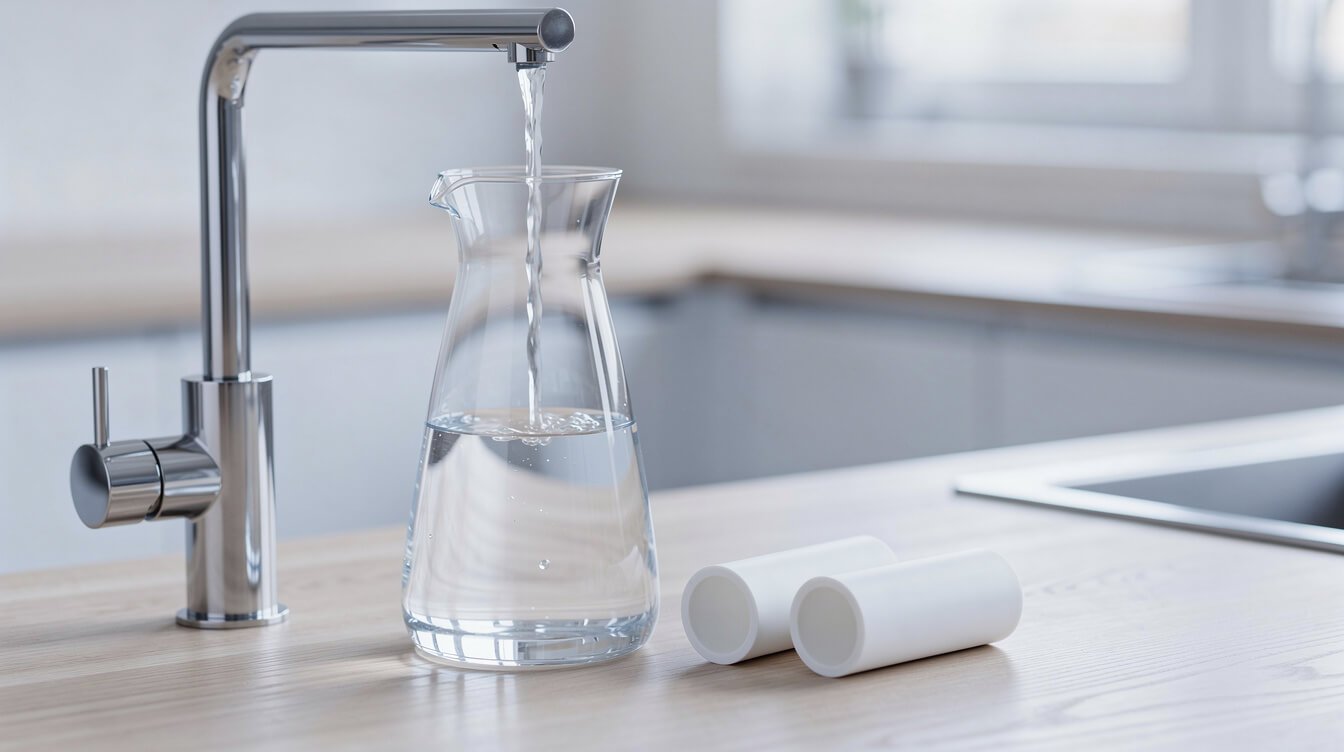
Standard carbon pitchers, faucet-mount filters, and refrigerator filters are good at chlorine taste and odor, and some are certified for lead. None of them appears in NSF’s fluoride-reduction listings. NSF notes that if a filter type is not listed for a contaminant, there may be no certified products of that type for it.
That includes ours. The filter in a water ionizer is not on that list, and as we explain in our breakdown of what is inside an ionizer filter, it is not the tool for fluoride. Boiling tap water does not help either: the water evaporates and the fluoride stays.
Honest answers, weekly
The research, without the sales pitch
One short email a week: what a study actually found, what it didn't, and what's worth your attention. No spam. Unsubscribe anytime.
How to check a fluoride water filter claim
Claims like “removes up to 99% of fluoride” usually come from the seller’s own testing, at one water condition, on a new cartridge. Here is how to check one:
- Look for a named standard and a named contaminant. “NSF certified” on its own tells you nothing about fluoride. You want the exact model listed for fluoride reduction. For RO systems, that is NSF/ANSI 58.
- Look the model up yourself. NSF publishes a searchable listing of RO systems certified for fluoride reduction. If the model number is not there, the certification claim is not verified by NSF. Other accredited certifiers, such as IAPMO, UL, WQA, and CSA Group, keep their own directories. Our guide to PFAS in water explains how those certifiers work.
- Separate “tested to” from “certified to.” “Tested to NSF standards” can mean the company ran its own test. Certification means an accredited third party tested it and lists the model publicly.
- Check the cartridge or membrane life. A removal figure applies to a filter used within its rated capacity. Past that, especially with alumina or bone char, the number no longer holds.
The trade-offs of removing fluoride with a filter
The technologies that remove fluoride are not selective. Reverse osmosis and distillation also take out calcium, magnesium, and most other dissolved minerals. A TDS meter will show a much lower reading afterward, which is expected and is not a sign of “purer” water in any health sense. We explain what that number does and doesn’t measure in our guide to TDS in water, and what minerals in water do and don’t add in our look at mineral water.
RO systems also send part of the incoming water down the drain to flush the membrane, and both the membrane and its pre-filters need replacing on schedule. Alumina and bone char need replacing before they saturate, and you won’t see or taste the difference when they do.
Who should think twice before buying one:
- People whose water report shows a low fluoride level and who are buying mainly on the strength of a sales page. Read your number first.
- Parents. If you remove fluoride from the water your children drink, tell their dentist, because it changes what the dentist knows about their fluoride sources.
- Anyone on a medically supervised fluid or mineral plan. Changing what is dissolved in your drinking water is worth mentioning to the clinician who set that plan.
If you are choosing equipment for your tap
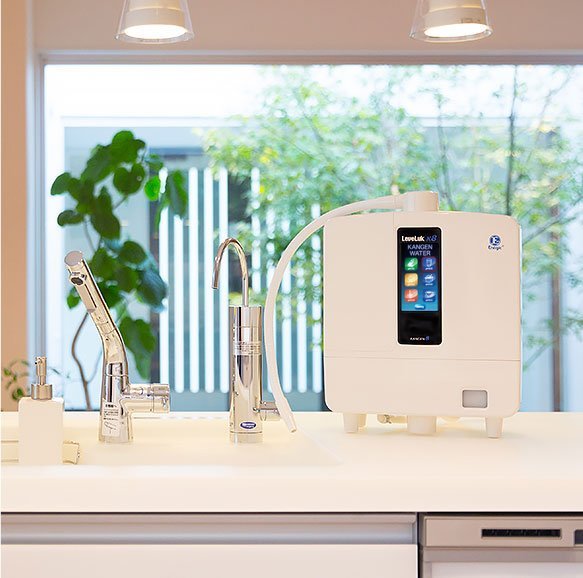
The LeveLuk K8 is the eight-plate water ionizer we sell. It filters tap water and makes water across a range of pH settings, from 2.5 to 11.5 according to the manufacturer. Its listing makes no fluoride-reduction claim, so do not buy it for that. If fluoride is your concern, start with a certified reverse osmosis system. Specs are on the product page.
The bottom line on fluoride water filters
Find your fluoride level before you shop for a fluoride water filter. If you decide to reduce it, reverse osmosis is the technology with public certification behind it, and you can look the exact model up in NSF’s listing. Distillation works by simple chemistry but lacks that listing. Activated alumina and bone char can work, but they depend on pH and saturate quietly. Carbon pitchers, fridge filters, and ionizer pre-filters are not fluoride filters, whatever else they do well.
This article is for general information and is not medical or dental advice. Regulatory references are current as of November 20, 2026, and may change. If you have questions about fluoride and your health or your children’s teeth, talk to your doctor or dentist. For questions about your water, contact your water utility or state health department.
Before you go
Get the next honest answer by email
We'd rather tell you when the answer is no. One email a week, written the same way as this post.