Chlorine in water test: free vs. total chlorine, and why your strip might read zero
We sell water ionizers, and every one of them has a carbon filter in it, so we have a commercial interest in whether you decide your tap water needs filtering. Weigh what follows with that in mind. We would rather say it in the first line than bury it at the bottom.
A chlorine in water test is easy to run and easy to misread. The most confusing result people get, a reading of zero on ordinary city water, usually does not mean the test is broken or the water is untreated. It comes down to which kind of chlorine the test measures and which kind your utility uses.
One thing first, so the rest reads in proportion. Chlorine in tap water is there on purpose, to keep the water disinfected on its way through the pipes. EPA’s legal maximum is 4.0 milligrams per liter (mg/L) for chlorine and 4.0 mg/L for chloramines. That is a ceiling, not a target, and the CDC describes levels up to 4 mg/L as “considered safe in drinking water.”
Chlorine in water test basics: free chlorine vs. total chlorine

Most kits can report two different numbers, and they answer different questions.
- Free chlorine is chlorine present as hypochlorous acid or hypochlorite ion. It is the more reactive of the two forms.
- Combined chlorine is chlorine that has reacted with ammonia to form chloramines.
- Total chlorine is the sum of the two.
Those definitions come from Hach, which makes and sells chlorine test kits. The practical point: a free-chlorine result sees one part of the disinfectant, and a total-chlorine result sees all of it.
Why a test can read zero on normal city water
US utilities disinfect with one of two things: chlorine, or chloramine, which is chlorine deliberately combined with a small amount of ammonia. We explain how to find out which one your utility uses in our guide to removing chlorine from drinking water.
If your utility uses chloramine, the disinfectant in your tap is mostly combined chlorine. A free-chlorine test can read at or near zero on that water, and that is what you would expect. The total-chlorine reading is the one that shows the disinfectant. That explains most “my strip says 0 ppm” threads online.
The federal rules point the same way. For utilities that treat surface water, the residual in the distribution system is measured “as total chlorine, combined chlorine, or chlorine dioxide,” and it cannot be undetectable in more than 5 percent of a month’s samples for two months in a row (40 CFR 141.72).
So if a fresh, properly taken sample of city water shows zero total chlorine, repeat it with reagent that is in date. If the result holds, your utility is the right place to ask. It may be nothing more than water that sat in the pipes. As the Minnesota Department of Health puts it, “old water will rapidly lose chlorine residual.” A private well is different. It carries no utility residual unless the well has its own chlorination system.
Strips, drops, or a meter: what each method can tell you
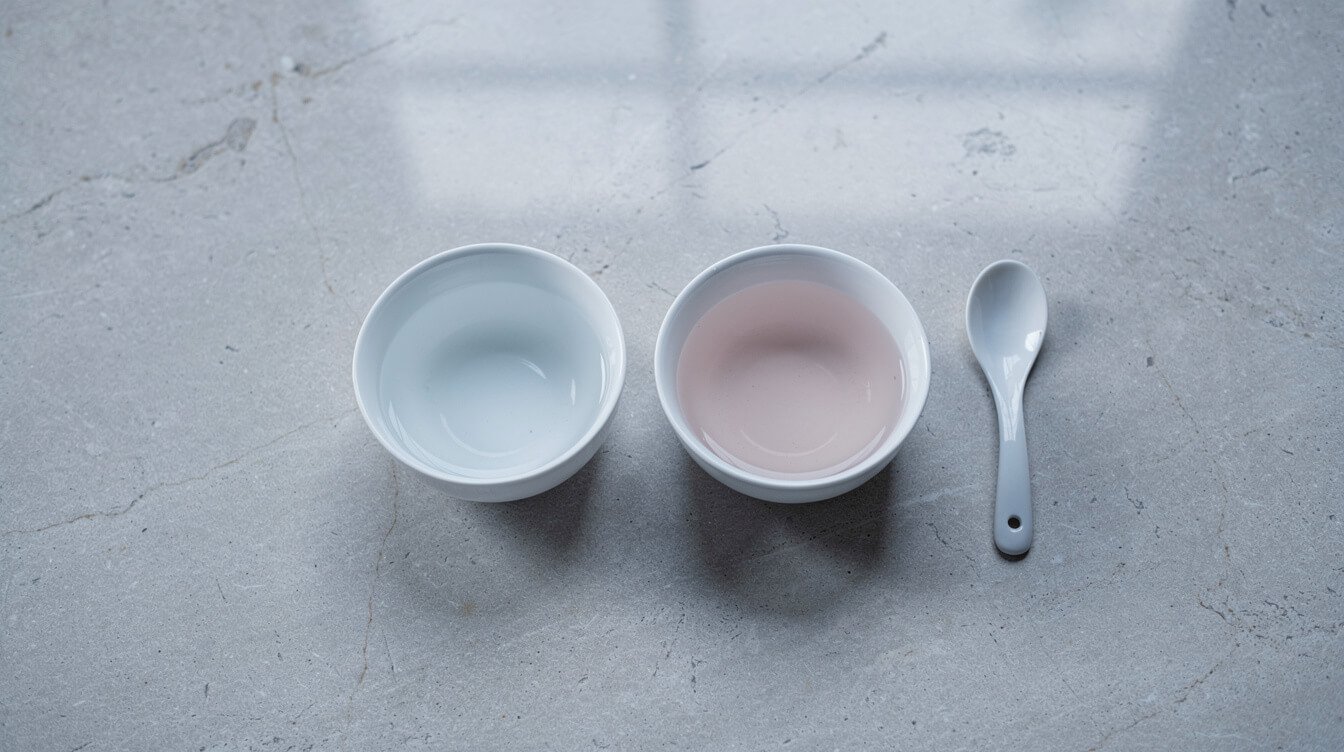
Nearly every home kit uses the same chemistry. DPD (N,N-diethyl-p-phenylenediamine) reacts with free chlorine to form a pink color, and the depth of the color tracks the concentration. Hach calls DPD “the most widely used colorimetric method to measure chlorine.” It appears on EPA’s list of approved methods for utilities as Standard Methods 4500-Cl G. Kits differ in how they turn that pink into a number.
Color comparators (drops, powder, or a color wheel)
You add reagent to a measured sample and match the color by eye. The Washington State Department of Health is blunt about the limits. In real-world testing, different people reading the same water differed by 0.4 to 0.6 mg/L, any reading below 0.2 mg/L is “essentially equivalent to zero,” and color wheels are hard to use if you are color-blind.
Test strips
Strips are the quickest option and the least exact. Minnesota does not allow test strips for compliance measurements at the small public systems it oversees, and Washington does not approve them for its systems either. Treat a strip as a yes/no check with a rough level attached.
Digital colorimeters
A pocket colorimeter reads the same DPD color with a light sensor instead of your eye. Washington requires one for systems that disinfect at the source. These meters are zeroed before each reading, and their ranges are finite. If you want a number you can compare week to week, this is the tool.
All three share DPD’s blind spots. Washington lists them: oxidized manganese can push the reading up, cloudy or discolored water can throw off the color, and other oxidants such as ozone and permanganate also register.
What the numbers mean
Kits often label results in ppm. For tap water, 1 ppm and 1 mg/L are effectively the same thing. Two regulatory figures frame what you will see:
- 4.0 mg/L is EPA’s maximum residual disinfectant level for chlorine and, separately, for chloramines. It is a legal ceiling.
- 0.2 mg/L is the floor for water leaving treatment at utilities that treat surface water. It cannot fall below that “for more than 4 hours” (40 CFR 141.72).
Your own utility’s range sits somewhere between those figures, and it is printed in the annual water quality report under the disinfectant line. Our guide to whether your tap water is safe to drink shows how to find and read that report.
Honest answers, weekly
The research, without the sales pitch
One short email a week: what a study actually found, what it didn't, and what's worth your attention. No spam. Unsubscribe anytime.
How to take the sample so the reading means something
Most bad readings come from the sample, not the reagent. The state health departments and Hach’s method notes agree on the basics:
- Use the cold tap. Washington says to take samples only from cold-water taps.
- Let it run first. Minnesota says to flush the tap for at least 1 minute. Hach’s lab method says at least 5 minutes. Water that has sat in your pipes overnight has lost some of its residual, so a first-draw sample tells you about your plumbing, and a flushed sample tells you about the supply.
- Rinse the container with the sample water before filling it. Washington says three times.
- Test immediately. Hach notes that free chlorine is unstable and breaks down with sunlight, temperature, and pH.
- Time the read. For free chlorine, read within 1 minute of adding the reagent. Chloramine slowly darkens the color, so a late reading drifts high. For total chlorine, follow the kit’s wait time. Hach’s CN-80 kit, for example, says to wait 3 minutes and read within 6.
- Check the expiry date. Both Minnesota and Washington tell operators to confirm the reagent is in date. If it has expired, Washington’s advice is simple: “don’t use it.”
Read color in good light, and follow your kit’s own instructions over any general advice, including ours.
Using a chlorine in water test to check your filter
This is where a home test earns its keep for most people. Test the unfiltered tap, then the filtered output, with the same kit, timing, and lighting. If your utility uses chloramine, compare total chlorine, not free. If the filtered reading sits near the unfiltered one, the cartridge is either past its rated life or was never certified for what you are asking of it.
That last point matters because certification is claim by claim, and a chlorine claim is not a chloramine claim. We cover how to read those claims in our post on what is inside an ionizer filter. Two other meters will not help here. A TDS meter measures dissolved minerals, not disinfectant, as our TDS water tester guide explains. A pH test answers a different question again, covered in our guide to testing water pH at home.
A carbon filter you can test
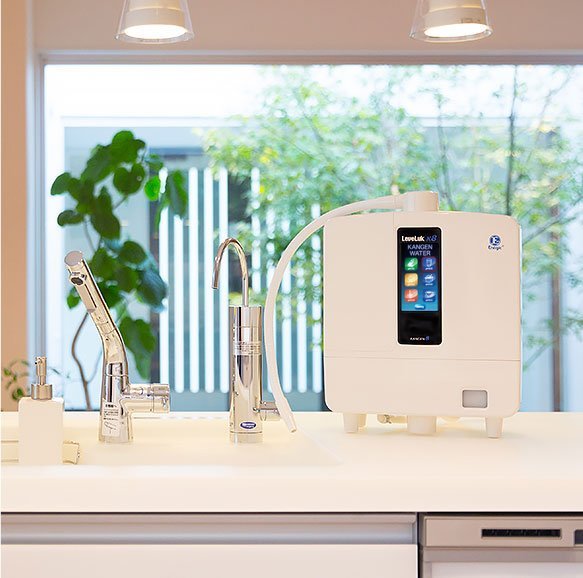
The LeveLuk K8 is the eight-plate ionizer we sell. Tap water passes through a replaceable carbon cartridge before it reaches the plates, and Enagic’s current cartridge is listed for residual chlorine. No chloramine claim is made for it. Specs are on the product page.
Chlorine in water test: the bottom line
Know which disinfectant your utility uses before you read the result. On chloraminated water, free chlorine can read near zero while total chlorine shows the real residual, so test total. Flush the cold tap, test right away, and use in-date reagent. Strips give a rough answer and a digital colorimeter the best one a household is likely to need. Compare what you find with your utility’s published range. A home test is a useful check, not a lab analysis.
This article is for general information and is not medical advice. If you do dialysis at home, have a medical condition, or are preparing water for an infant, follow the guidance of your care team or equipment manufacturer, and talk to your doctor before changing how you treat your drinking water.
Before you go
Get the next honest answer by email
We'd rather tell you when the answer is no. One email a week, written the same way as this post.