Alkaline water ionizer filter: what is inside it and how to read the claims
We sell water ionizers and the filters that go in them — Kangen Health is an authorized Enagic dealer — so weigh what follows with that in mind. If you searched for an alkaline water ionizer filter, you probably want to know what the cartridge does, what it doesn’t, and how to tell a real performance claim from packaging copy. That is what this post covers.
The short version: an ionizer filter is a carbon-based pre-filter. It reduces chlorine and some other things before the water reaches the electrolysis plates. It does not make the water alkaline, it is not built to remove dissolved minerals, and the only claims worth trusting are the ones you can check.
Two different products called an alkaline water ionizer filter
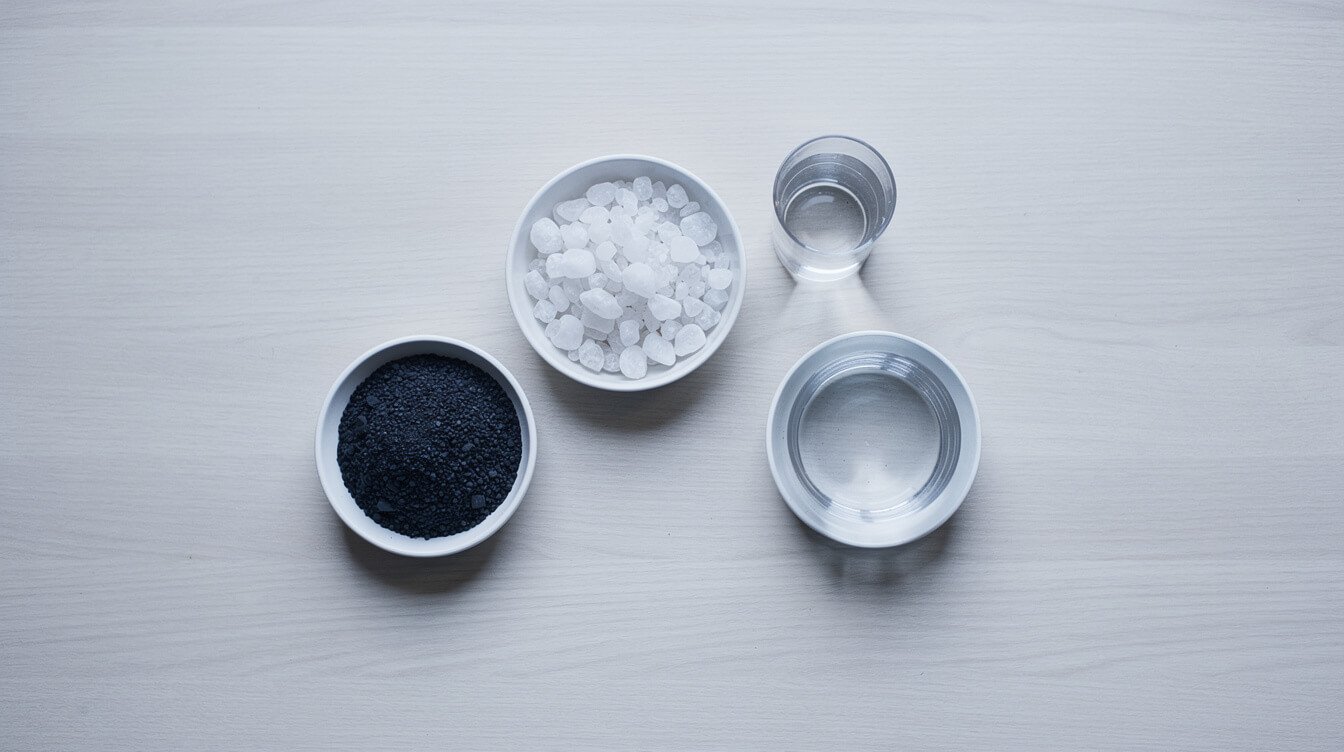
Search results for this phrase mix two things that work in completely different ways.
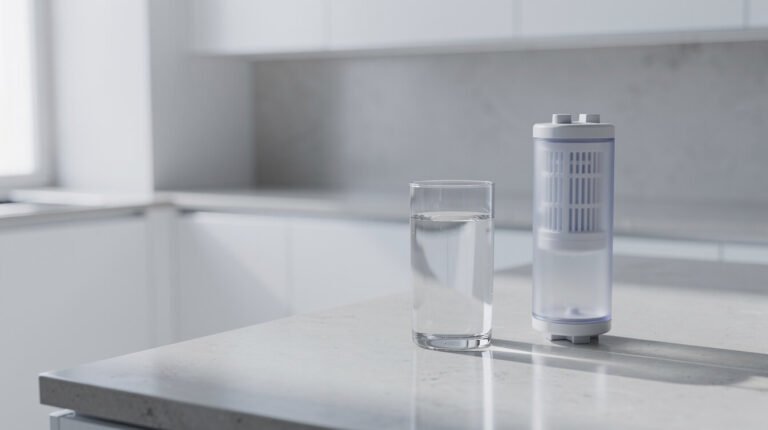
The filter inside (or ahead of) an ionizer. In an electrolysis machine, the cartridge is pre-treatment. Water passes through it first, then reaches the plates, where electrolysis splits it into an alkaline stream and an acidic stream. The pH change and the dissolved hydrogen both come from the plates. The filter’s job is to reduce what you don’t want in the water and protect the machine’s internals.
The “alkaline filter” sold instead of an ionizer. These are pitcher or under-sink cartridges packed with mineral media. Water picks up calcium, magnesium, or similar minerals as it passes through, and the pH rises a little. No electricity is involved. Some of these products are fine filters. But copy suggesting a filter can keep your body at a healthy pH is wrong. Blood pH stays in a tight range whatever you drink; we explain why in what pH drinking water should be.
This post is about the first kind: the cartridge an ionizer depends on.
What is inside an ionizer filter
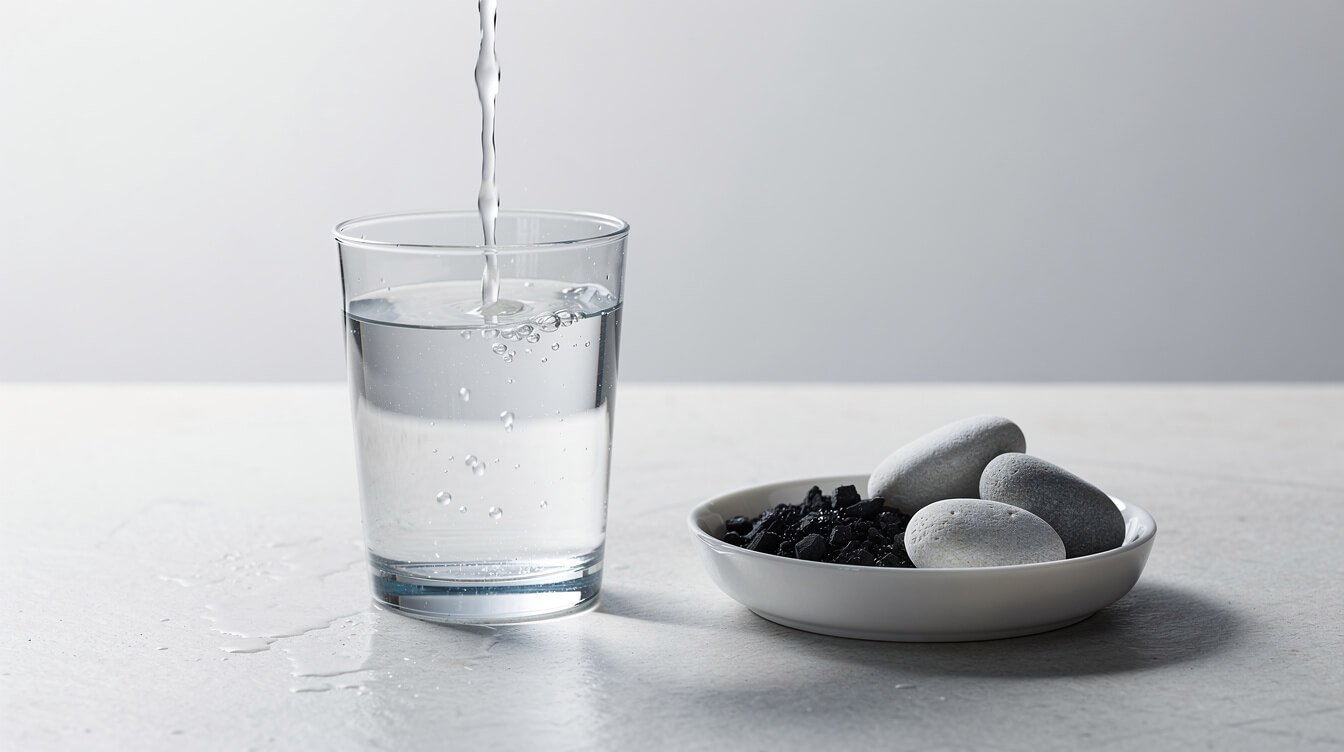
Most ionizer cartridges are built around activated carbon. NSF, one of the bodies that certifies home water filters, describes this as adsorption: dissolved or suspended matter sticks to the surface and pores of the media. Carbon is good at chlorine, taste, and odor, and at some organic chemicals.
Around that core, manufacturers add other layers. Some cartridges add calcium sulfite, which also reacts with chlorine. A mechanical or non-woven fabric layer catches sediment. Some brands add copper-zinc redox media, ion-exchange resin, or ceramic stages. The mix differs, but the principle is the same: grab specific things and let the rest through.
What it is designed to leave in
An ionizer filter is not meant to strip out dissolved minerals. That is deliberate. Electrolysis needs dissolved ions to carry current, so water with almost no minerals in it, such as reverse osmosis or distilled water, gives the plates very little to work with. Enagic says as much in its own cartridge descriptions: the filter is meant to let natural minerals through to support ionization.
The flip side matters if you have a specific worry. NSF’s consumer guide lists only reverse osmosis systems as certified to reduce fluoride, and only reverse osmosis systems for nitrate and nitrite. If one of those is your concern, a carbon ionizer filter is the wrong tool.
How to read an alkaline water ionizer filter claim
This is where most marketing falls apart, so it is worth being precise.
Certified is not the same as tested. According to NSF, no federal regulations exist for residential water filters. The standards that do exist are voluntary. A product is certified when an independent body checks it against a standard and lists it. Phrases like “tested in a certified lab” mean the lab was accredited to run an analysis. They don’t mean the filter itself was certified for anything.
Know which standard covers what. NSF/ANSI 42 covers aesthetic effects such as chlorine, taste, and odor. NSF/ANSI 53 covers contaminants with a health effect, such as lead. NSF/ANSI 401 covers a set of emerging contaminants. NSF notes the numbers reflect the order the standards were written and are not a ranking.
Certification is per contaminant. A filter certified to reduce chlorine is not certified for lead unless that claim is listed too. The Minnesota Department of Health advises choosing a unit certified by NSF, UL, or the Water Quality Association for the specific contaminant you care about, and says no single unit removes everything.
Chlorine and chloramine are separate claims. Many US utilities disinfect with chloramine instead of chlorine. The EPA says more than one in five Americans drinks water treated with it. NSF lists chloramine reduction as its own claim. A cartridge that says “reduces chlorine” tells you nothing about chloramine. Your utility’s annual water quality report says which one it uses.
Read big percentages as questions. “Removes 99.9% of 200 contaminants” should prompt four more: which contaminants, at what starting level, over how many gallons, and checked by whom. That applies to the filters we sell as well. If there’s no listing, read the contaminant list as the manufacturer’s own specification and nothing more.
Honest answers, weekly
The research, without the sales pitch
One short email a week: what a study actually found, what it didn't, and what's worth your attention. No spam. Unsubscribe anytime.
Pre-filters, hard water, and scale
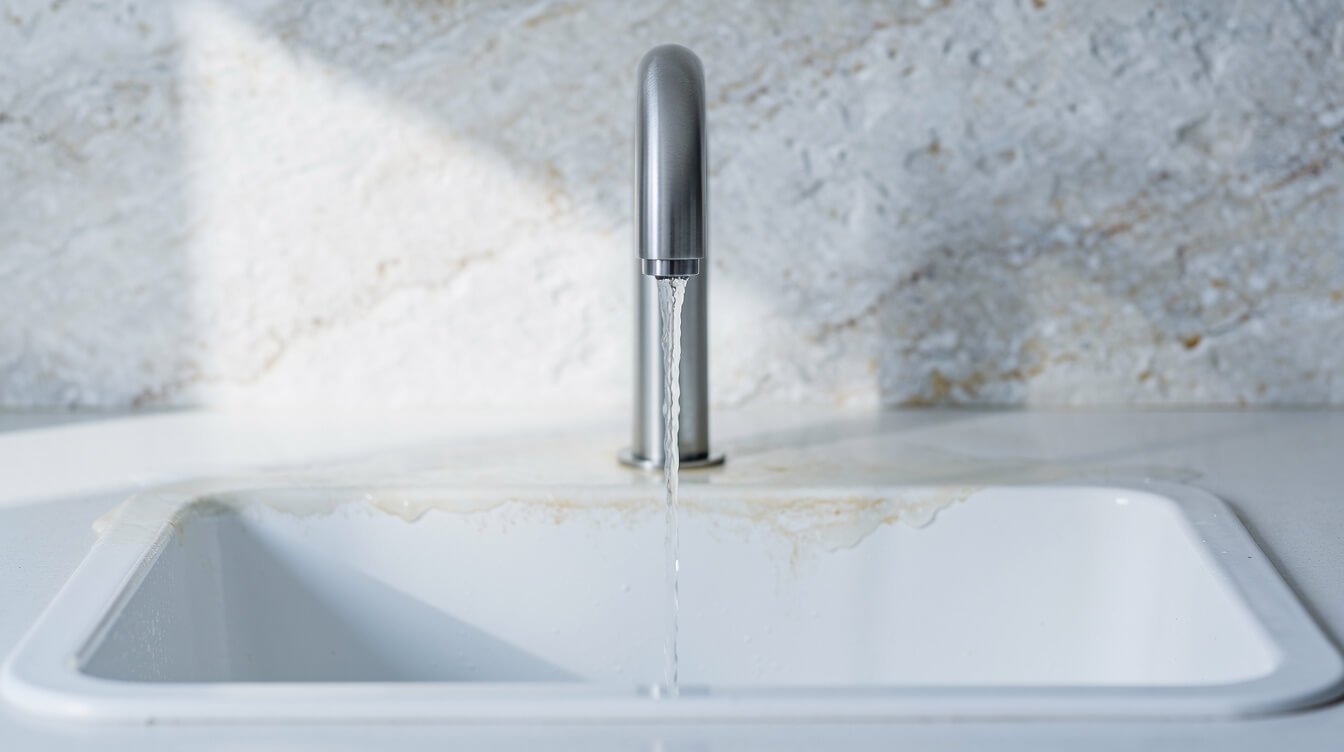
Hard water is the other thing your filter can’t fix. Calcium and magnesium pass through a carbon cartridge, and under electrolysis some of that can build up as scale on the plates. That is why many ionizers run cleaning cycles.
Two add-ons come up often:
- A sediment pre-filter catches grit before it reaches the main cartridge. On well water or older pipes, it can make the main filter last longer.
- A water softener works differently. NSF describes softeners as swapping calcium and magnesium for sodium or potassium. If you are on a sodium-restricted diet, that sodium is worth knowing about, and it is a reason to ask your doctor before softening the water you drink.
Before you add any third-party pre-filter or use a non-original cartridge, read your machine’s warranty terms. Some manufacturers exclude damage from non-genuine filters. If you are weighing filtration for the whole house against a single tap, see whole-house filtration vs. point-of-use ionizers.
Who should think twice
The filter itself is plumbing. The water coming out of an ionizer is a different matter. People with chronic kidney disease, anyone with a history of calcium-alkali syndrome, people taking proton pump inhibitors, anyone on a sodium-restricted diet, and anyone preparing water for infants or drinking it during pregnancy should talk to a doctor before switching to alkaline or mineral-enhanced water. If they say no, that’s the answer. We cover the kidney question in more detail in alkaline water and kidney health.
And if your real concern is a specific contaminant in your water, start with a test or your utility’s report, then buy whatever is certified for that contaminant. That may not be an ionizer at all.
If you own an Enagic machine
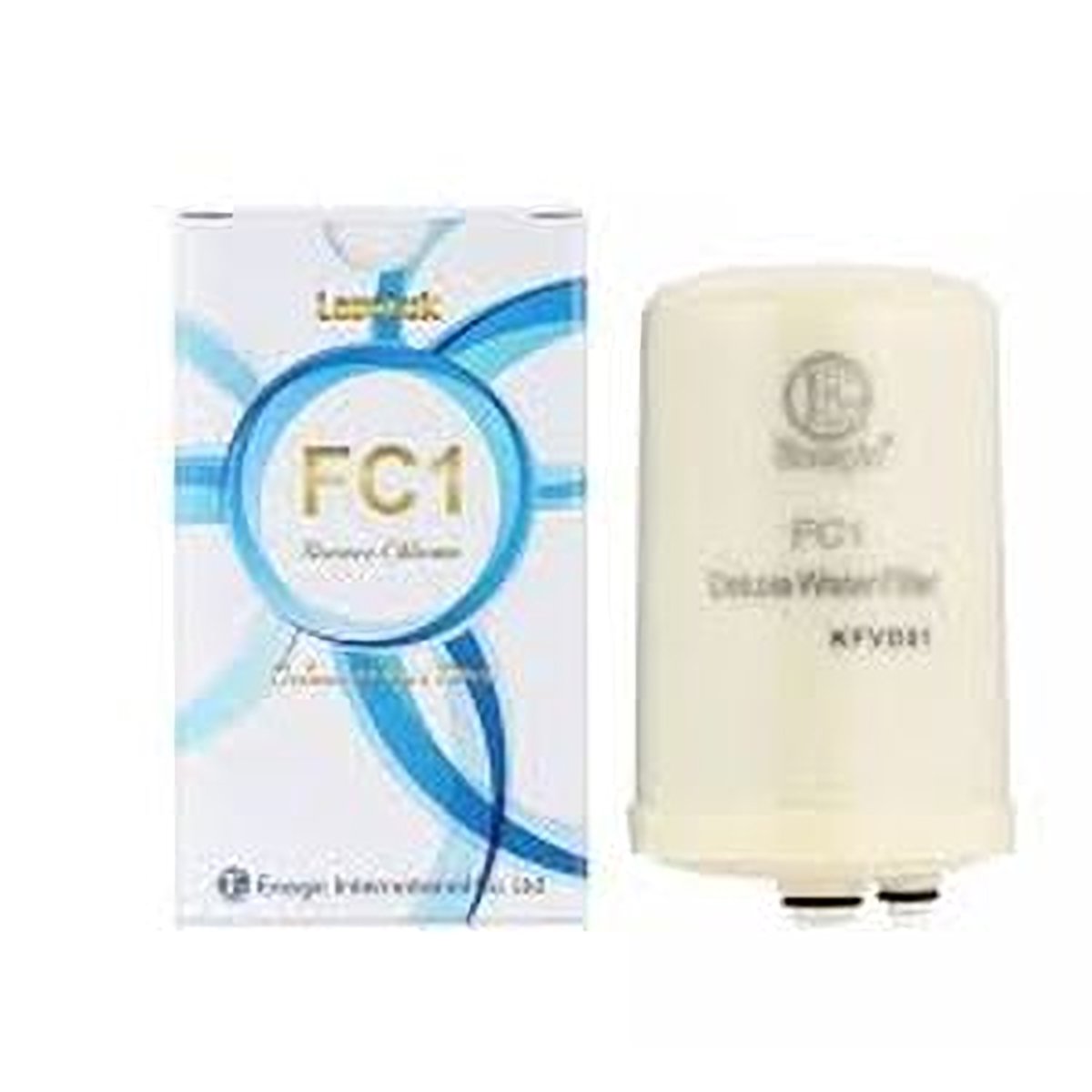
The FC1 is Enagic’s current replacement cartridge: molded activated carbon with non-woven layers, rated by the manufacturer for residual chlorine, surfactants, and pesticides. Read the label on your current filter before ordering. Compatibility and current pricing are on the product page.
The short version
An alkaline water ionizer filter is a carbon pre-filter with a narrow, useful job: reduce chlorine and similar contaminants, and protect the plates. It doesn’t make water alkaline, it isn’t the tool for fluoride or nitrate, and a claim on the box is only as good as the listing behind it. For the other costs and trade-offs of owning a machine, see how to judge an alkaline water ionizer brand. For the evidence on alkaline water itself, start with is alkaline water good for you.
This article is for general information and is not medical advice. Talk to your doctor before changing what you drink, especially if you have kidney disease or take medication.
Before you go
Get the next honest answer by email
We'd rather tell you when the answer is no. One email a week, written the same way as this post.