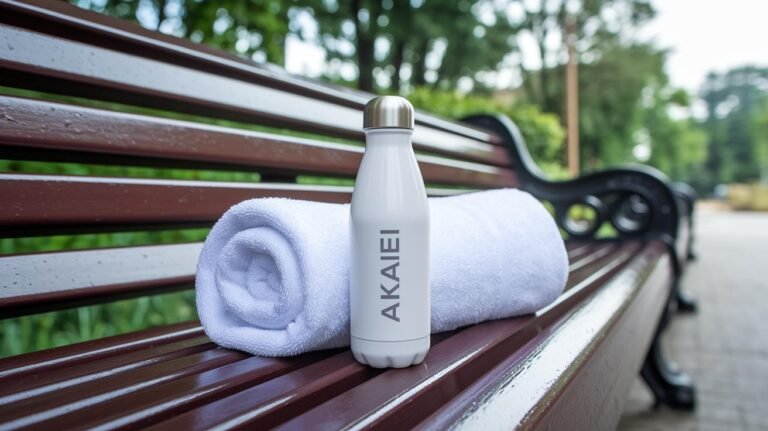
Essentia ionized water: what’s in the bottle and what the research shows
We sell water ionizers — Kangen Health is an authorized Enagic dealer — and Essentia is a bottled alternative to what we sell, so weigh what follows with that in mind. This is a plain look at Essentia ionized water: what the company says it does, what its own lab report shows, and what the one clinical trial it funded actually found.
The short version: Essentia is a clean, very lightly mineralized purified water with a high pH. This is not a takedown. But “ionized” on a label means less than most people assume, and the health case rests on thin evidence.
What Essentia ionized water actually is

Essentia describes a three-step process on its website. First, purification: microfiltration and reverse osmosis strip out almost everything dissolved in the source water. Second, “trace amounts of electrolytes” are added “for a clean, smooth taste.” Third, ionization: in the company’s words, “bitter-tasting acidic ions are removed,” leaving water with a pH of 9.5 or higher.
The ingredient list on its retail listings is short: purified water (by reverse osmosis), sodium bicarbonate, dipotassium phosphate, magnesium sulfate, and calcium chloride. These are common food-grade mineral salts. Sodium bicarbonate is baking soda.
Notice what is not on that list or anywhere in the marketing: dissolved hydrogen. Essentia makes no hydrogen claim, which is to its credit, because a sealed bottle on a store shelf is not where you would find meaningful hydrogen anyway.
What “ionized” means on a bottle
“Ionized” sounds like a special property. In chemistry, an ion is simply an atom or molecule that carries an electrical charge, and every mineral dissolved in water exists as ions: sodium, potassium, magnesium, bicarbonate. In that literal sense, almost all drinking water is ionized.
What Essentia means is electrolysis. Running a current through water that contains dissolved minerals splits it into two streams, one with a higher pH and one with a lower pH. Keep the alkaline stream, discard the acidic one, and you have ionized alkaline water. It is the same basic principle a countertop ionizer uses, including the machines we sell.
The difference is timing. Electrolysis also produces dissolved molecular hydrogen (H₂), which is a separate property from pH — the two get conflated constantly. H₂ is the smallest molecule there is, and only about 1.6 mg of it dissolves per liter of water at room temperature and sea-level pressure (a figure that follows from Henry’s law). It begins escaping the moment water meets air. Whatever the evidence for hydrogen water is worth, and we cover that plainly in is hydrogen water a hoax, a bottle that has spent weeks in a warehouse is not a source of it. What survives bottling is the pH and the minerals.
What’s in a bottle of Essentia ionized water
Essentia publishes a water quality report, which is more than many bottled brands do. The figures below are the “level found” in its 2025 analysis (the version online as of October 2026), which the report describes as an average of representative samples from all of its bottling locations.
- pH: 9.92
- Total dissolved solids: 61.33 mg/L
- Bicarbonate: 33.55 mg/L
- Sodium: 15.0 mg/L
- Potassium: 7.30 mg/L
- Magnesium: 1.42 mg/L
- Calcium: not detected
Two things stand out. First, this is a very lightly mineralized water: total dissolved solids sit at about an eighth of the 500 mg/L limit printed in the same report, and calcium did not register at all. Second, among the minerals, sodium leads, at roughly ten times the magnesium level.
That matters because of where the research points. The most recent review we know of, Alebrahim and colleagues in Frontiers in Medicine (2026), a narrative review, concluded that alkaline water has “limited clinical utility” and that its modest effects are “likely driven more by mineral composition than pH alone,” particularly with bicarbonate-rich formulations. Essentia is high on pH and low on minerals. On the review’s reading, it is strong on the variable that matters less.
One practical point. Essentia’s site says its water “maintains its pH of 9.5 or higher until opened.” That is careful wording, and it is chemistry: water with little dissolved mineral has little buffering capacity, so once it meets air, carbon dioxide dissolves into it and pulls the pH down. The company also says highly purified water needs a calibrated pH meter to test properly, which is fair — low-mineral water gives poor readings on strips. If a home test has ever come back lower than the label, both effects are plausible explanations.
The one trial that tested Essentia by name
The only published human trial we could find and read that tested Essentia specifically is Weidman and colleagues, Journal of the International Society of Sports Nutrition, 2016. It is a randomized, double-blind human trial, and it deserves a fair reading.
One hundred healthy adults exercised in a warm room until they had lost about 2% of body weight to sweat, then rehydrated with either Essentia or a standard bottled purified water (Dasani). Over a two-hour recovery, high-shear blood viscosity — a laboratory measure of how thick blood is under flow — fell by an average of 6.30% with Essentia versus 3.36% with the control water. Plasma osmolality, bioimpedance, and body mass change showed no significant difference between the two.
Now the context. The paper states that the study was funded by a grant from Essentia, which also supplied the water. One author reported consulting fees and stock options from the company, and the data set is held confidential under the sponsor agreement. Blood viscosity is a lab marker, not a health outcome. The honest summary: one industry-funded trial, in healthy adults, found a difference in one of four measured markers after exercise. That is worth knowing. It is not evidence that the water makes anyone healthier.
Honest answers, weekly
The research, without the sales pitch
One short email a week: what a study actually found, what it didn't, and what's worth your attention. No spam. Unsubscribe anytime.
Who should be careful with alkaline water, Essentia included
For most healthy adults, a bottle of Essentia is simply a bottle of water. A few groups should check before making high-pH or mineral-adjusted water a daily habit:
- Chronic kidney disease. Speak to your nephrologist first, and if they say no, that is the answer. Our post on alkaline water and kidney health explains why.
- Acid-suppressing medication, such as proton pump inhibitors.
- Sodium-restricted diets. Essentia’s sodium is modest, but it is the leading mineral in the bottle, and it counts.
- A history of calcium-alkali (milk-alkali) syndrome.
- Pregnancy, infants, and young children, for whom plain water is the sensible default.
Essentia ionized water or a home ionizer: an honest comparison
If you like the taste of Essentia, drink it now and then, and value the convenience, there is no evidence-based reason to replace it with anything. It is clean, consistent, and tested.
The case for a home ionizer is narrower than most dealers make it. It is not that machine water is healthier on current evidence. It is that you control the source, the filtration, and the pH setting; you skip the plastic; and the water is fresh, dissolved hydrogen included, rather than weeks old. Against that sit a significant up-front cost, filter replacements, and an appliance on your counter. For a household going through a lot of bottled alkaline water every week, the math can favor a machine over time. For an occasional bottle, it almost certainly does not. We walk through the bottled, refill, and at-home routes in where to buy alkaline ionized water.
If a machine is the right fit
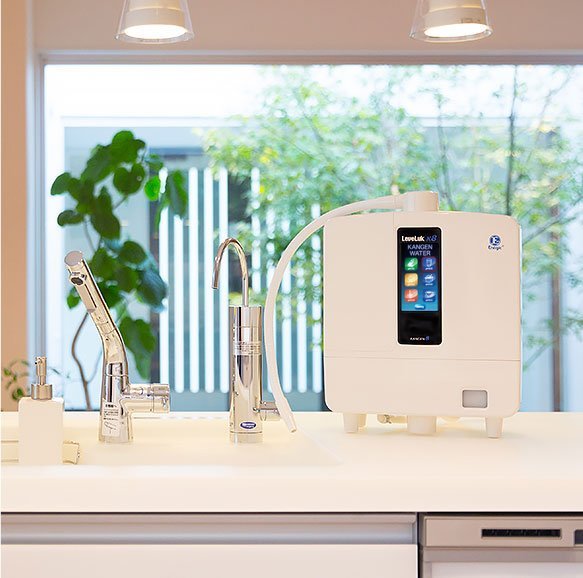
The LeveLuk K8 is our eight-plate flagship ionizer: filtration, adjustable pH, and fresh water at the tap instead of a case of bottles. Specs, documentation, and current pricing are on the product page.
The short version
Essentia ionized water is purified water with a small amount of added minerals, brought to a high pH by electrolysis, and it holds that pH until you open it. Its own lab report shows a lightly mineralized water, and the best current review suggests mineral composition matters more than pH. The one trial that tested it by name was funded by the company and found a difference in a single lab marker. For the wider evidence on alkaline water, start with is alkaline water good for you, and for what pH you should be aiming at in the first place, see what pH drinking water should be.
This article is for general information and is not medical advice. Talk to your doctor before changing what you drink, especially if you have kidney disease or take medication.
Before you go
Get the next honest answer by email
We'd rather tell you when the answer is no. One email a week, written the same way as this post.