Silica water: what’s in it, how to read the label, and who is behind the claims
We sell water ionizers, so we have a commercial interest in how people think about what is dissolved in their water. Weigh what follows with that in mind. We would rather say it in the first line than bury it at the bottom.
Silica water is water that carries more dissolved silica than usual, either because of the rock it came from or because it is sold that way. The chemistry is ordinary. The marketing leans on disease claims we will not repeat. This post covers what can be checked: what silica is, how to read the label, how much people absorb, and who is behind the loudest claims.
What silica water is
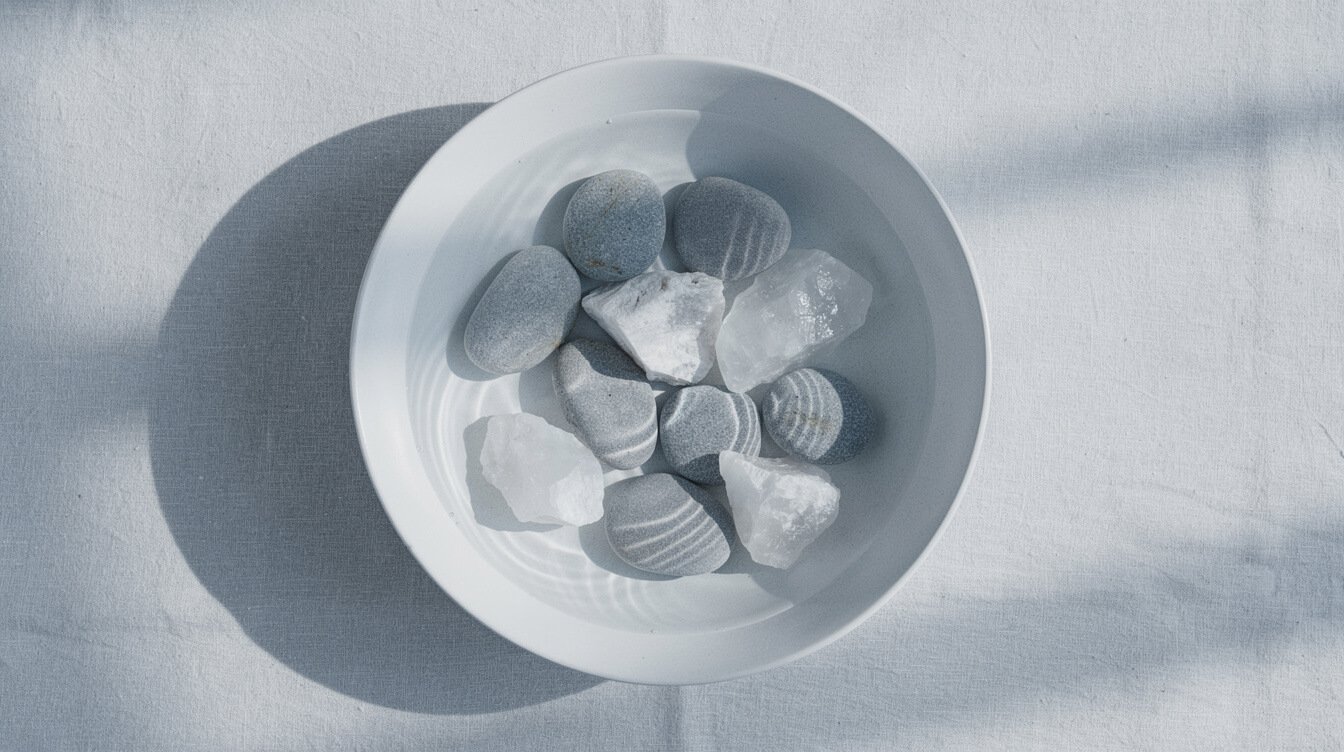
Most rock is built from silicate minerals, and when water moves through it, a little silica dissolves. According to the US Geological Survey’s long-standing reference text on natural water chemistry (Hem, USGS Water-Supply Paper 2254), dissolved silica is mostly present as uncharged silicic acid, Si(OH)4, often called orthosilicic acid.
There is nothing exotic about it. The same USGS text gives the range most commonly observed in natural water as 1 to about 30 mg/L, with up to 100 mg/L “not infrequent” in groundwater in some areas. It quotes median values of 14 mg/L for surface water and 17 mg/L for groundwater.
Amorphous silica dissolves to about 115 mg/L at 25 °C, which Hem describes as the likely upper limit for natural water. Hot springs can carry more, because solubility rises with temperature. So a “high-silica” water is usually water from silica-rich rock, near the top of an ordinary range.
Silica vs silicon: the unit trap on every silica water label
Here is the detail none of the top-ranking silica water pages we read explained. Water analysts report dissolved silicon as if it were the oxide, SiO2 (“silica”). Hem notes that this convention “has been followed by all water analysts.” Nutrition and absorption studies, on the other hand, usually report silicon itself (Si).
The two numbers are not interchangeable. Silicon has an atomic mass of about 28 and silica a molecular mass of about 60, so:
- Silica to silicon: multiply by 0.47 (28 ÷ 60). This is the factor Australia’s drinking water guidelines use.
- Silicon to silica: multiply by about 2.1.
So a label that says “silica 50 mg/L” means roughly 23 mg/L of silicon. A study that gave people 20 mg of silicon gave them the equivalent of about 43 mg of silica. If you compare a label with a study without converting, you will be off by a factor of two, and the mistake makes the label look about twice as generous as it is.
Silica also counts toward total dissolved solids, but a TDS reading cannot tell you how much of it is silica. Our post on what TDS in water measures explains why.
How much silica is in it, compared with other drinks
On the same basis (silica, as on a label):
- Ordinary natural water: commonly 1 to 30 mg/L, with medians around 14 to 17 mg/L (USGS).
- The “silicon-rich” threshold named in the column discussed below: at least 30 mg/L as silica, or about 14 mg/L of silicon. That is the top of the ordinary range, not a different kind of water.
- Beer: a 2004 analysis of 76 beers found a mean of 19.2 mg/L of silicon (Sripanyakorn et al., Br J Nutr, PMID 15005826), which works out to about 41 mg/L as silica. That is a measurement, not a suggestion.
For the rest of a mineral water label, see whether mineral water is good for you.
What the human studies of silica water actually measured
The silica water research that can be verified in people measures absorption. It does not measure health outcomes. The marketing tends to jump from “it gets absorbed” to “it does something for you.”
Two human studies from the same London research group are the most useful here:
- Sripanyakorn et al., 2004 (Br J Nutr, PMID 15005826). Nine healthy volunteers drank 0.6 L of beer containing 22.5 mg of silicon. About 55% of the dose was absorbed, comparable to a solution of orthosilicic acid. It is a human pharmacokinetic study: blood and urine over six hours.
- Sripanyakorn et al., 2009 (Br J Nutr, PMID 19356271). Small groups of fasting volunteers (as few as three for one source) took eight different silicon sources. Absorption, judged by urinary excretion, was 43% for an orthosilicic acid solution and 1% for colloidal silica. The authors concluded that monomeric silicates are readily absorbed, while particulate forms are absorbed less well the more polymerized they are.
The practical point: “silica” on a supplement label can mean very different things, and the dissolved, monomeric form found in natural water is the well-absorbed one.
What is missing matters as much. The US Institute of Medicine’s 2001 review set no Estimated Average Requirement and no Adequate Intake for silicon. It also found the data insufficient to set an upper limit (IOM, chapter 13). There is no official daily amount of silicon you are supposed to get, so there is no benchmark against which anyone could be falling short.
Honest answers, weekly
The research, without the sales pitch
One short email a week: what a study actually found, what it didn't, and what's worth your attention. No spam. Unsubscribe anytime.
Who is selling the claim
One of the top results for this search is a 2017 column on a UK health-news site by a university chemist. It recommends silicon-rich mineral water on the basis of disease claims we will not repeat. Three facts about it are worth knowing, and all three are on the page itself:
- The column names a specific bottled water and says “a proportion of the sales of this water” was being “redirected to research” in the author’s group.
- In a later comment, the author wrote that the funding arrangement ended in February 2018. The brand continued to supply water to some projects “at cost or FOC” (free of charge).
- The publisher has since added an editor’s note: “Some research cited in his articles on this site has subsequently been retracted.”
None of this settles whether the column’s claims are right or wrong. It does mean the author had a financial link to a silica water when he wrote it, and none of the other top results we read mentioned that. You can read the column and its comments and judge for yourself.
Who should check before switching
If you have kidney disease or have been told to limit sodium, read the whole mineral panel, including sodium, before making any mineral water a daily habit, and ask your nephrologist or doctor rather than going by the silica figure. For infants, follow your pediatrician’s guidance on which water to use for formula.
Silica you don’t want: spots and scale at home
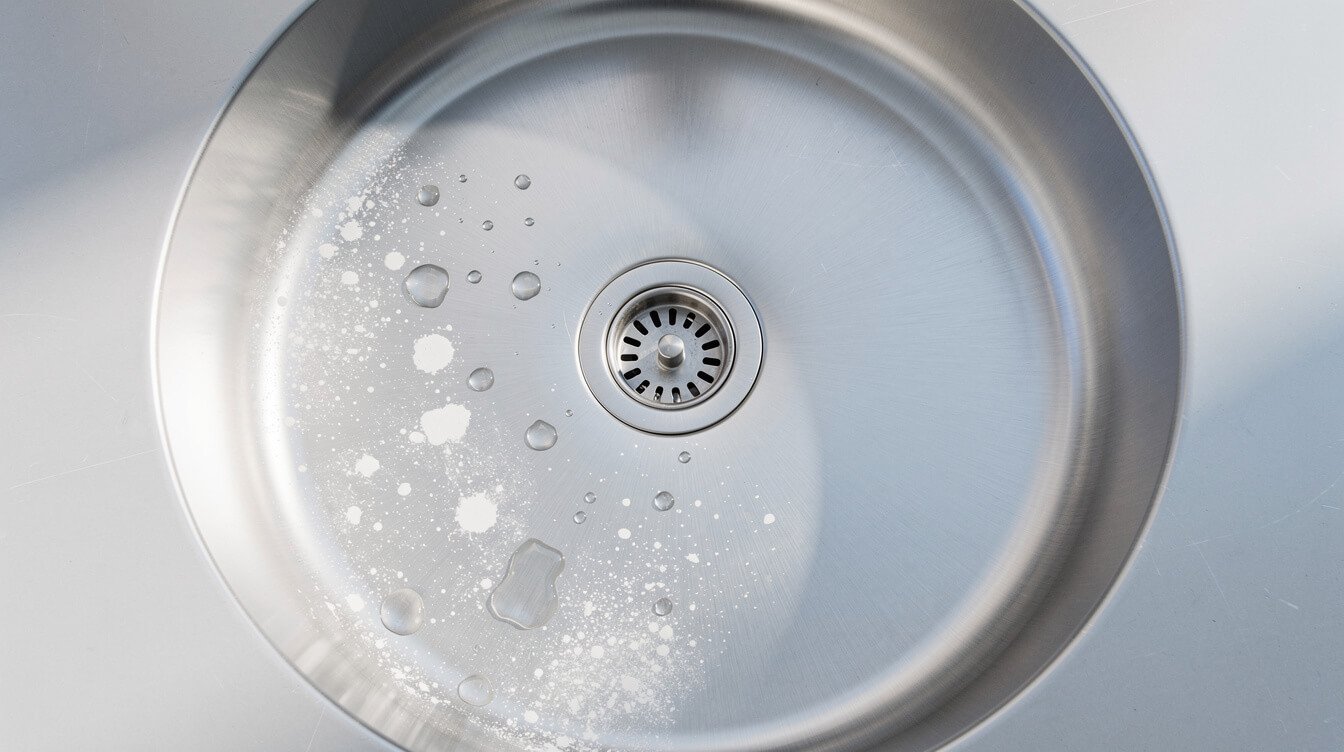
Silica is better known in water treatment as a nuisance than as a nutrient. Australia’s drinking water guidelines set an aesthetic value of 80 mg/L as silica (about 37 mg/L as silicon) “to minimise an undesirable scale build up on surfaces.” They note that dissolved silica reacts with glass and metal surfaces to form a white precipitate. The same guidelines set a health-based value far higher, at 100 mg/L of silicon. They describe the toxicological database for silicon as limited, with “little evidence of adverse effects from oral exposure” in humans.
A few practical points follow from that:
- White spots that come back on glass or steel can be silica rather than calcium hardness. A lab test that reports silica separately will tell you which one you have.
- Silica is not on EPA’s list of secondary (aesthetic) drinking water standards, so your utility’s report may not mention it.
- Most dissolved silica carries no electrical charge, and ordinary softeners, which swap charged ions, are not designed to remove it. The Australian guidelines note that most dissolved silica does not pass through a reverse osmosis membrane, which is also why it can scale those membranes.
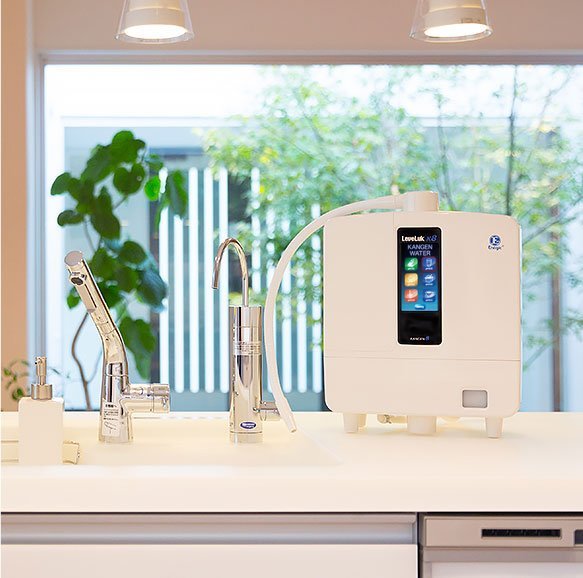
The ionizer we sell
The LeveLuk K8 passes tap water through a replaceable filter and then across eight platinum-coated titanium plates. It is not a silica product, and we make no silica claim for it. Specs are on the product page.
Silica water: the bottom line
Silica water is ordinary water from silica-rich rock, or water sold on that basis. Dissolved silica is real, measurable, and readily absorbed, and that is where the human evidence stops. No official intake target exists for silicon, so silica water has no recognized gap to fill. If you buy it, convert the label (silica × 0.47 = silicon), compare it with what your own tap or a bottle of ordinary alkaline or mineral water already carries, and know who funded the claim before you pay a premium for it.
This article is for general information and is not medical advice. If you have kidney disease, follow a sodium-restricted diet, are pregnant, or are preparing water for an infant, talk to your doctor before changing what you drink.
Before you go
Get the next honest answer by email
We'd rather tell you when the answer is no. One email a week, written the same way as this post.