Is chlorine in tap water? Why it is there, how much, and which kind you have
We sell water ionizers, and every one of them has a filter in it, so we have a commercial interest in how you feel about the chlorine in your tap. Weigh what follows with that in mind. We would rather say it in the first line than bury it at the bottom.
Is chlorine in tap water? If you are on a US public water system, almost certainly yes, or its close relative chloramine. It is there on purpose, the amount is capped by federal rule, and the more useful questions are which kind you have, how much, and what forms when it reacts with the water. This post answers those from the CDC, EPA, and WHO documents that set the rules, not from a filter brochure.
Is chlorine in tap water? Usually yes, on purpose

According to the CDC, US water utilities add a disinfectant to tap water to kill germs, and “usually, they use either chlorine or chloramine.” Less commonly they use something else, such as chlorine dioxide. This is not new. The CDC dates the first US use of chlorine in tap water to 1908 and chloramine to 1929.
So the honest short answer to “is there chlorine in tap water” is: on most city water, yes, at a low level, deliberately. The exceptions are worth knowing. A private well has no utility adding anything, and the EPA notes private wells are not regulated by the federal government under the Safe Drinking Water Act. We cover what that means for well owners in our guide to whether tap water is safe to drink.
Why utilities keep some disinfectant in the pipes
Killing germs at the treatment plant is only half the job. Water then has to travel through the pipe network to your tap, and the rules require some disinfectant to survive the trip.
For systems drawing on surface water, federal rule 40 CFR 141.72 sets two floors. The disinfectant level in water entering the distribution system “cannot be less than 0.2 mg/l for more than 4 hours.” Out in the distribution system, the residual “cannot be undetectable in more than 5 percent of the samples each month, for any two consecutive months.”
That residual is the reason you can smell chlorine at the tap at all. It is not left over by accident. It is a required minimum, and the utility is tested on it.
Chlorine or chloramine: which one is in your water
The two disinfectants behave differently, and that difference explains most of the confusion online.
- Chlorine (free chlorine) works fast but, in the CDC’s words, “gets used up quickly in water.” By the far end of a long pipe network there may not be enough left.
- Chloramine is chlorine combined with ammonia. The type used in drinking water is monochloramine. The CDC says it “can keep killing germs in water pipes longer than chlorine” and “makes fewer disinfection byproducts.”
Chloramine is common. The EPA says “more than one in five Americans uses drinking water treated with chloramines,” and that some systems switched to it specifically to meet disinfection byproduct requirements.
Your water can also change between the two. The CDC notes that some utilities “switch back and forth between chlorine and chloramine at different times of the year.” One reason it gives is that pipes grow a slimy layer of germs called biofilm, and a utility may temporarily switch from chloramine to chlorine to help clear it. If your tap suddenly smells more like a pool for a few weeks, check your utility’s notices before assuming something went wrong.
Your annual water quality report, or Consumer Confidence Report, names the disinfectant your system uses. Community water systems must deliver it by July 1 each year.
How much chlorine is in tap water, and what the limits mean
The EPA sets a maximum residual disinfectant level (MRDL) of 4.0 mg/L for chlorine and 4.0 mg/L for chloramines, both measured as chlorine. The CDC describes levels up to 4 mg/L as “considered safe in drinking water.” That figure is a legal ceiling, not a typical reading.
For a sense of what is typical, the WHO’s background document on chlorine (2003) states that chlorine “is present in most disinfected drinking-water at concentrations of 0.2–1 mg/litre.” The WHO’s own guideline value for free chlorine is 5 mg/L, and the same document calls that value “conservative.”
Taste is a separate threshold from safety. The WHO notes that most people can taste chlorine or its by-products, including chloramines, below 5 mg/L, “and some at levels as low as 0.3 mg/litre.” That is why perfectly compliant water can still taste of chlorine to you and not to the person next to you.
If you want your own number rather than a typical one, read the disinfectant line on your report, or test it yourself. Our chlorine in water test guide explains why a free-chlorine strip can read zero on chloraminated water.
Honest answers, weekly
The research, without the sales pitch
One short email a week: what a study actually found, what it didn't, and what's worth your attention. No spam. Unsubscribe anytime.
Disinfection byproducts: the part worth reading on your report
If there is a real trade-off in disinfecting water, this is it. The CDC defines disinfection byproducts as “chemicals made when chlorine or chloramine come into contact with dirt or other materials in water,” and says that “at high enough levels, disinfection byproducts can cause health problems over time.”
The EPA regulates the main groups with enforceable limits:
- Total trihalomethanes (TTHM): 0.080 mg/L
- Five haloacetic acids (HAA5): 0.060 mg/L
- Bromate and chlorite, which come from other disinfection methods, have their own limits
These rules apply to community water systems that add a disinfectant. Your report lists the measured TTHM and HAA5 values next to those limits, and the EPA’s drinking water regulations table lists the long-term health effects each limit is set against. Those effects are the reason the limits exist. Two practical points follow. First, the byproduct numbers on your report are a better use of your attention than the chlorine smell. Second, the switch to chloramine that many people complain about was, for many systems, made to bring these numbers down.
One more trade-off, in fairness. The CDC notes that chloramine “can change the chemical properties of the water, which can affect lead and copper pipes,” and that EPA gives utilities guidance on minimizing lead and copper when they switch. If your home has older plumbing, the lead section of your report matters more than either disinfectant.
Who needs to remove it, and who doesn’t
For most people drinking compliant city water, removing chlorine is a taste preference, not a safety step. A few groups are different, and the CDC is specific about them:
- Dialysis. Dialysis centers must remove all chemical disinfectants, including chlorine and chloramine, before the water is used. If you do dialysis at home, follow your machine’s instructions or ask the manufacturer.
- Fish, turtles, frogs, and other animals that live in water. The CDC says these animals “absorb water directly into their blood stream,” so even low levels can make them sick. The CDC says pet stores sell products to remove chlorine or chloramine.
- Dogs, cats, and birds are not affected by the small amounts in tap water, according to the CDC.
If you simply dislike the taste, the method depends on which disinfectant you have. Chlorine will leave water left standing for a few days. Chloramine will not leave that way. Our guide to removing chlorine from drinking water compares carbon filters, vitamin C, and standing water for each.
Who should not take this as permission to skip their utility’s advice: anyone told by a care team or equipment maker to use specially prepared water. Follow their instructions, not a blog post.
If taste is the issue
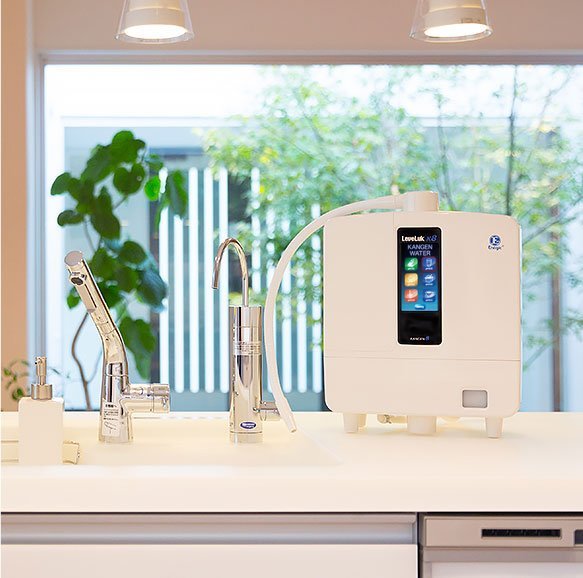
The LeveLuk K8 is the eight-plate ionizer we sell. Tap water passes through a replaceable filter cartridge before it reaches the plates. It does not change what your utility adds or what your report says, and we make no chloramine claim for it. Specs are on the product page.
Is chlorine in tap water a reason to worry? The bottom line
Chlorine or chloramine is in most US tap water because federal rules require a disinfectant residual all the way to your tap. The legal ceiling is 4.0 mg/L, and the WHO puts typical levels at 0.2 to 1 mg/L. Some people can taste it at 0.3. Your water quality report tells you which disinfectant your system uses and, more usefully, what its disinfection byproduct levels are against EPA limits. Read those numbers before deciding whether to filter. For most households the chlorine itself is a matter of taste. For dialysis at home and for aquarium animals, removal is required, and the method depends on which disinfectant you have.
This article is for general information and is not medical advice. If you do dialysis at home, have a medical condition, or are preparing water for an infant, follow the guidance of your care team or equipment manufacturer, and talk to your doctor before changing how you treat your drinking water.
Before you go
Get the next honest answer by email
We'd rather tell you when the answer is no. One email a week, written the same way as this post.