Lemon water with baking soda: what the fizz is, and what ends up in the glass
We sell water ionizers, which change the pH of water by electrolysis, so we have a commercial interest in how you think about “alkaline” drinks. Weigh what follows with that in mind. We would rather say it in the first line than bury it at the bottom.
Lemon water with baking soda is one of the most repeated kitchen “alkalizing” recipes online: a glass of water, a squeeze of lemon, a pinch of baking soda, and a lot of fizz. The videos usually stop at the fizz. This post covers what comes after it: what the reaction leaves in the glass, whether the result is alkaline at all, and the one ingredient that does not leave with the bubbles.
What happens when you mix lemon water with baking soda

Lemon juice is acidic mainly because of citric acid. Baking soda is sodium bicarbonate, a mild base. Put them in the same glass and they react with each other. The fizz is the visible part of that reaction: the bicarbonate is converted to carbon dioxide gas, which bubbles out of the water.
Written out, one molecule of citric acid reacts with three of sodium bicarbonate:
citric acid + 3 sodium bicarbonate → sodium citrate + 3 water + 3 carbon dioxide
Two things follow from that equation, and almost no recipe mentions either.
- The baking soda gets used up. The ingredient that was supposed to make the drink “alkaline” is the one being destroyed. Its bicarbonate leaves as gas.
- The sodium stays. Carbon dioxide leaves the glass. Sodium does not. It ends up as sodium citrate, dissolved in the water you drink.
So once the fizzing stops, you are not drinking lemon water and you are not drinking baking soda water. You are drinking a dilute solution of sodium citrate, plus whatever lemon or baking soda was left over because it had nothing to react with.
Is the result alkaline? It depends on the ratio
Which ingredient is left over decides the pH of the glass.
- More lemon than the baking soda can use up: leftover citric acid, so the drink stays acidic.
- More baking soda than the lemon can use up: leftover bicarbonate, so the drink is mildly alkaline.
- Roughly balanced: mostly sodium citrate. Even then, the pH can land on either side of neutral, depending on details no recipe controls.
How much lemon balances how much baking soda? Lemon juice contains about 1.44 grams of citric acid per fluid ounce, according to an ion-chromatography analysis of juices by Penniston and colleagues (J Endourol, 2008). USDA FoodData Central lists a teaspoon of baking soda at 4.6 grams. Working through the chemistry, a quarter teaspoon of baking soda needs roughly a tablespoon and a quarter of lemon juice to react completely. Lemons vary, so take that as an estimate, not a recipe.
Most videos use far more lemon than baking soda, or far more baking soda than lemon, and never say which. If you want to know where your own glass lands, measure it. A strip or a calibrated meter will tell you more than the fizz will, and we compare the options in how to test water pH at home.
The “alkalizing” claim, and why your blood pH doesn’t follow your glass
The usual promise is that this drink “alkalizes your body.” It doesn’t, and neither does any other drink. Your lungs and kidneys keep the acid-base balance of your blood within a narrow range, as MedlinePlus explains. When you swallow extra bicarbonate, healthy kidneys respond by excreting it. A toxicology case review from the California Poison Control System (Al-Abri and Olson, J Med Toxicol, 2013) states that this is why metabolic alkalosis from excess bicarbonate “is not usually seen.”
Lemon on its own lowers the pH of water. It does not raise it, and the “alkaline ash” idea behind the opposite claim doesn’t hold up. We cover that in how to make alkaline water at home, so we won’t repeat it here.
The part the recipes skip: sodium per glass
This is the number that matters, and none of the top-ranking pages we read in November 2026 gave it.
USDA FoodData Central lists baking soda at 27,360 mg of sodium per 100 grams. Using its 4.6-gram teaspoon:
- ¼ teaspoon of baking soda carries about 315 mg of sodium.
- ½ teaspoon carries about 630 mg.
- 1 teaspoon carries about 1,260 mg.
The FDA sets the Daily Value for sodium at less than 2,300 mg, and its own rule of thumb is that 20% of the Daily Value or more in one serving is high. A half-teaspoon glass is about 27% of the Daily Value. Two of those a day is more than half the day’s sodium, from water. The FDA also notes that Americans already average about 3,400 mg a day.
The lemon doesn’t change any of this. The reaction moves the sodium from bicarbonate to citrate, but every milligram stays in the glass. For a sense of scale, a glass of our electrolyte water recipe carries sodium on purpose, for people who have been sweating heavily. A daily “alkalizing” drink carries it for no reason at all.
Honest answers, weekly
The research, without the sales pitch
One short email a week: what a study actually found, what it didn't, and what's worth your attention. No spam. Unsubscribe anytime.
Who should not drink lemon water with baking soda
The same case review shows what happens when bicarbonate can’t be cleared. Al-Abri and Olson describe a man who had been adding a teaspoon of baking soda to his drinks every day for years. He reached the emergency department with a dangerous heart rhythm and severe electrolyte and acid-base disturbances. He also had other serious illnesses, and this is a case report about one person, not a trial. Its value is in naming the risk: the authors write that bicarbonate builds up when the kidneys can’t excrete it normally, and that the most common reported cases of baking soda toxicity involve excessive use as an antacid.
Talk to your doctor before making lemon water with baking soda a habit if any of these apply:
- You have been told to limit sodium, or you have high blood pressure or heart failure.
- You have chronic kidney disease, or reduced kidney function for any reason.
- You take prescription medication, especially for blood pressure or your heart.
- You are pregnant.
- It is for a child. Don’t give it to children unless a pediatrician has said to.
If you have been drinking it daily and feel unwell, stop and get medical advice. For the wider question of added salts in everyday drinks, see can you drink electrolyte water every day.
If you want flavored water, or water with a higher pH
If you like the taste of lemon in water, have lemon in water. It is a fine drink. It is mildly acidic, and that’s fine too.
If it’s the higher pH you’re after, adding baking soda and then cancelling it out with lemon works against itself, and you keep the sodium either way. There are other ways to raise the pH of water, and each has its own trade-offs, which our alkaline water guide covers. One of them is the kind of machine we sell.
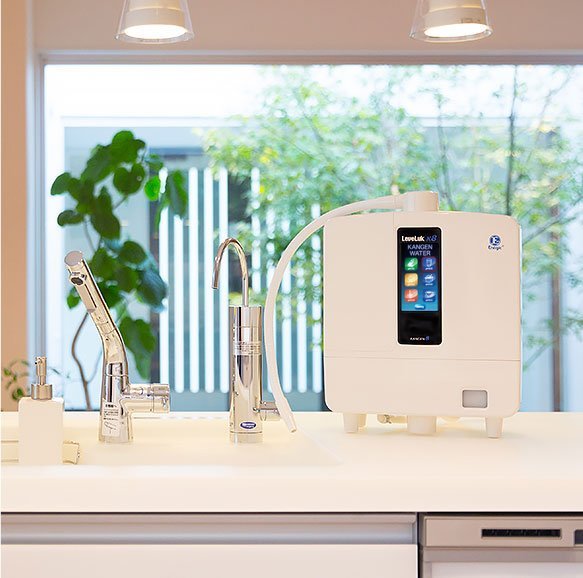
Higher pH without a spoonful of sodium
The LeveLuk K8 is the eight-plate ionizer we sell. It filters tap water and raises its pH by electrolysis as you pour, without adding baking soda. Whatever minerals are in the water come from your tap. Specs and documentation are on the product page.
Lemon water with baking soda: the bottom line
Mixing lemon and baking soda is a small chemistry demonstration. The fizz is carbon dioxide leaving the glass. What stays behind is sodium citrate, with a pH set by whichever ingredient you used more of, and about 315 mg of sodium for every quarter teaspoon of baking soda. The drink does not change your blood pH, and nothing you drink does. If you like it, it is a salty glass of flavored water. If you are watching your sodium, have kidney disease, take blood pressure medication, are pregnant, or are making it for a child, it is a habit to clear with your doctor first.
This article is for general information and is not medical advice. Talk to your doctor before changing what you drink, especially if you are pregnant, have kidney disease or high blood pressure, are on a sodium-restricted diet, or take medication.
Before you go
Get the next honest answer by email
We'd rather tell you when the answer is no. One email a week, written the same way as this post.