How to test water pH at home: which test is good enough for which question
We sell water ionizers, machines whose main selling point is a pH number. You should weigh everything below with that in mind, and we would rather say it in the first line than bury it at the bottom.
If you want to test water pH at home, the right method depends on what you are trying to find out. A quick check of your tap water and a check on whether a bottle labeled “pH 9.5” really is 9.5 are different questions, and they need different tools. Below, each home test is matched to the question it can answer, followed by how to get a reading you can trust. If you want the basics of what pH measures first, start with our post on the pH of water.
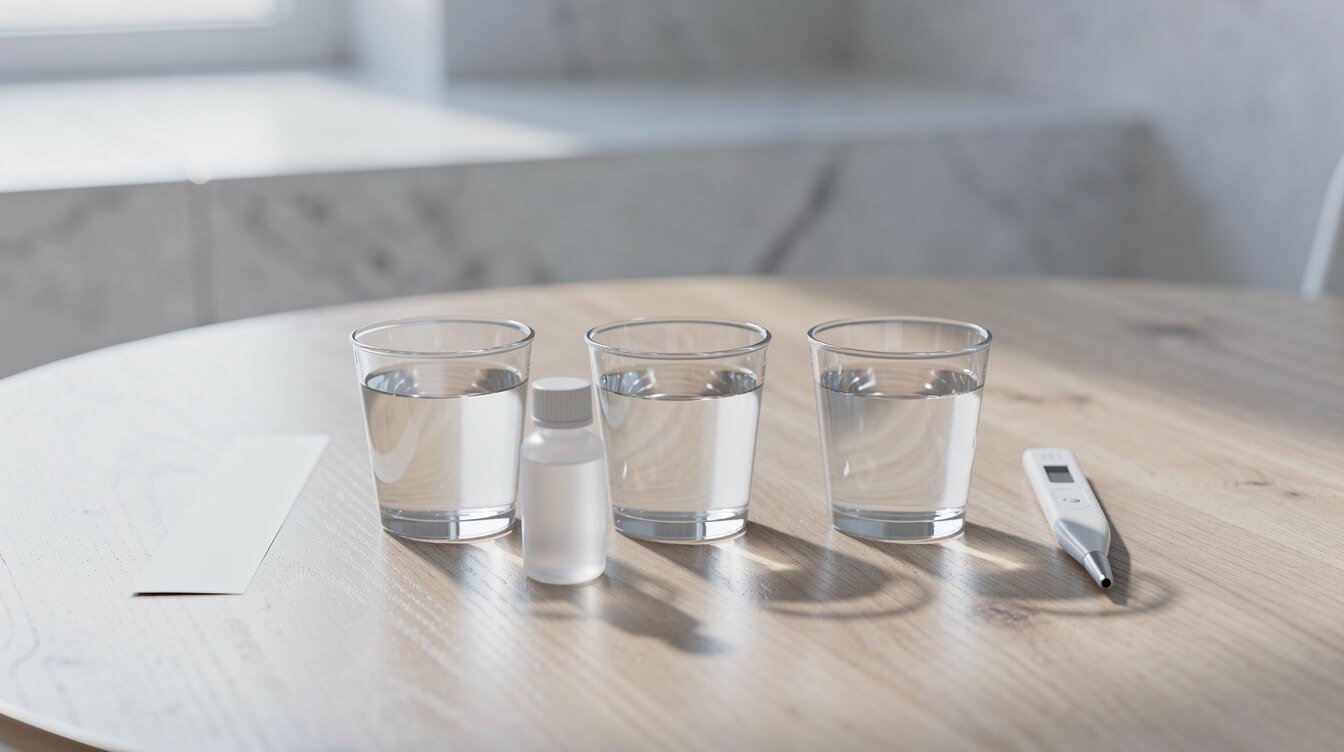
How to test water pH at home: three methods, three different questions
Test strips
Test strips are paper strips treated with dyes that change color with pH. You dip one, wait, and compare it to a printed chart. They answer a rough question: is this water clearly acidic, roughly neutral, or clearly alkaline? The U.S. Geological Survey’s field manual for measuring pH (2021) allows indicator paper only as a “gross indicator” to estimate a sample’s range before calibrating a meter. It adds that “under no circumstances should a pH value from indicator paper be recorded” as the measured pH.
Color-drop kits
Reagent kits use a liquid dye instead of paper: a few drops in a small sample, then a color chart. They share the limits of strips, because you are still judging a color by eye.
Digital pH meters
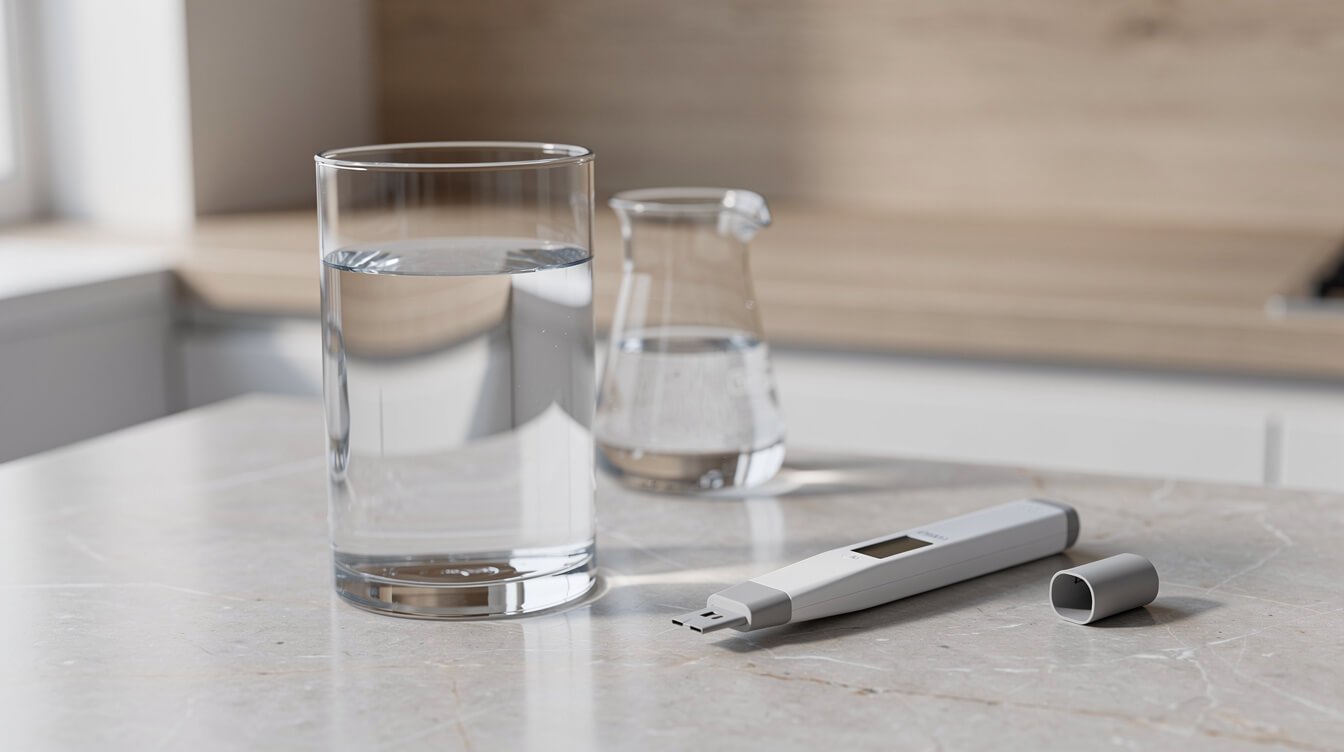
A pH meter uses a glass electrode that responds to hydrogen ion activity and turns it into a number on a display. It is the only home method that can tell 9.0 from 9.5 with any confidence, but only if it is calibrated and cared for, which the next section covers.
The Portland Water Bureau, which supplies water to Portland, Oregon, puts it bluntly on its guide to measuring pH at home. For accurate results, use a probe and meter. Strips and color kits “do not provide accurate results for Portland’s water.” That advice is about one city’s very soft water, but the reason applies more widely, as the next section explains.
A rule of thumb:
- “Is my tap water roughly normal?” A strip or color kit is fine as a first look.
- “Is this water really the number on the label?” You need a calibrated meter.
- “Did my water change after I installed something?” A calibrated meter, used the same way each time.
How to get a reading you can trust
Most bad pH readings at home come from the method, not the water. Four things matter most.
Calibrate, and bracket your sample. A meter is only as good as its last calibration. You calibrate by dipping the probe in buffer solutions of known pH and letting the meter adjust. The USGS manual says accurate measurement “requires calibration with pH buffers that bracket the pH of the sample.” If you are testing alkaline water, include a high buffer, not just 4 and 7. Portland’s technicians verify against buffers of 4.01, 7.00, and 10.01, and they run three-point calibrations twice a day. A meter that hasn’t been calibrated in months will still show a confident number.
Test a fresh sample, right away. pH is not a fixed property of a glass of water. It changes as the water exchanges gases with the air. The USGS manual notes that a sample’s pH “can change substantially within hours or even minutes after sample collection,” with carbon dioxide among the causes. Even pure water left open to the air settles at about pH 5.7 at 25°C, because carbon dioxide from the air dissolves into it and forms a weak acid. So high-pH water left sitting tends to drift downward. Test water within moments of drawing it, in a clean container, and test the same way every time.
Watch the temperature. Temperature affects both the water’s chemistry and the electrode. Many meters include automatic temperature compensation, which Portland recommends. If yours doesn’t, test samples at a similar temperature so readings are comparable.
Expect trouble with very pure water. Water with few dissolved minerals has “low ionic strength.” That includes distilled water, reverse osmosis water, and some soft tap supplies. It conducts electricity poorly, and the USGS manual says this causes “an unstable pH reading” on a standard electrode. Readings creep and take a long time to settle. Portland recommends a probe designed for low-ionic-strength water. If your reading keeps wandering on purified water, the meter may not be faulty.
How to test water pH from an ionizer or a bottle
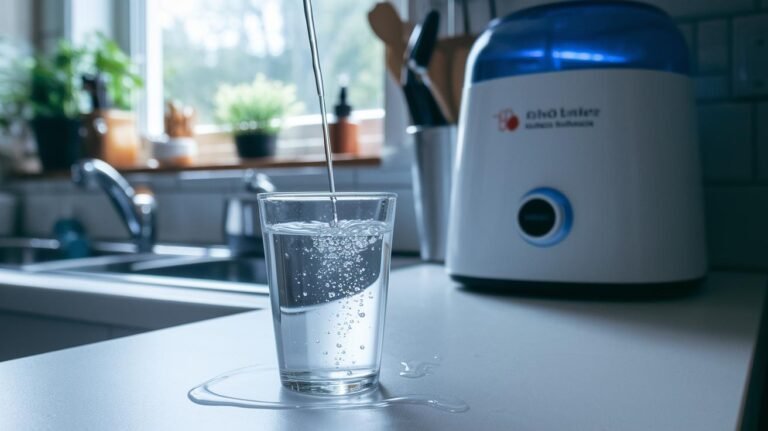
For ionizer water, test at the spout. Electrolysis raises the pH of the water coming out of the alkaline side of the machine. How far it rises depends on the machine’s setting, the flow rate, and the minerals in your source water. If you want to know what the machine is producing, test a fresh sample immediately, at the setting you actually drink, and test your plain tap water the same way for comparison. A glass that has been sitting out will read lower, for the carbon dioxide reason above.
For bottled water, the label is a claim to check. A calibrated meter is the only home tool that can confirm or contradict a specific number on a label. Our post on the pH of water covers a study that found labeled pH did not always match measured pH.
About the color-drop demonstration. A common sales demonstration for ionizers adds a few drops of pH indicator to tap water and to ionized water, and the two glasses turn different colors. The color change is real. The indicator is responding to pH. But it shows only that one glass is more alkaline than the other, which is not in dispute. It gives no precise number, says nothing else about the water, and is not evidence of any health benefit.
Honest answers, weekly
The research, without the sales pitch
One short email a week: what a study actually found, what it didn't, and what's worth your attention. No spam. Unsubscribe anytime.
What a pH test cannot tell you
A pH reading answers one narrow question: how acidic or alkaline the water is at that moment. It does not tell you:
- Whether the water is safe. pH says nothing about lead, bacteria, nitrate, or other contaminants. Those need their own tests, or your utility’s water quality report.
- What minerals are in it. Two waters with the same pH can have very different mineral content and buffering capacity.
- How much dissolved hydrogen it holds. pH and dissolved molecular hydrogen (H₂) are separate properties, and they are constantly conflated. A high pH is not evidence of hydrogen. Measuring H₂ at home takes a reagent drop test made for hydrogen, which our post on how to make hydrogen water walks through.
One related tool is worth a warning: an ORP (oxidation-reduction potential) meter is not a hydrogen meter. A 2022 review of electrolyzed reduced water by LeBaron, Sharpe, and Ohno in the International Journal of Molecular Sciences advises users to measure hydrogen “with accurate methods, avoiding ORP or ORP-based H2 meters.” The review’s lead author is affiliated with the Molecular Hydrogen Institute, an organization that promotes hydrogen research, so the review is not neutral on hydrogen.
If you are weighing an ionizer
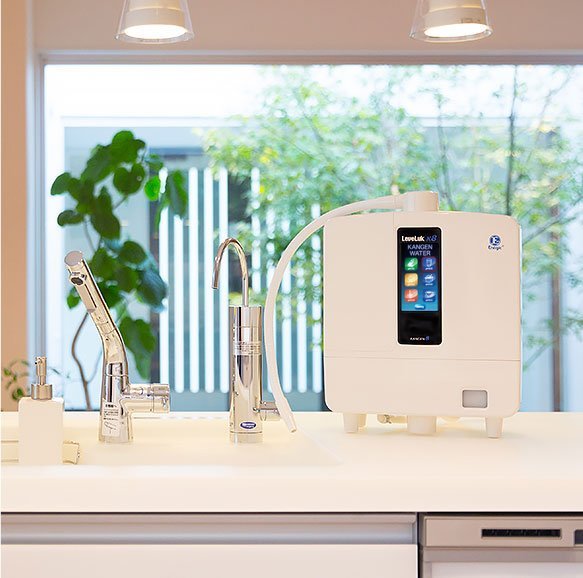
The LeveLuk K8 is the eight-plate ionizer we sell. It filters your tap water and adjusts pH by electrolysis as you pour. If you own one, a calibrated meter is the honest way to check what it produces. Specs and documentation are on the product page.
What to do with the number
- For tap water, compare it with the range your utility reports in its annual water quality report, and with the federal guideline range. Our post on what pH drinking water should be explains where that range comes from and why it is about pipes and taste, not health. If your reading is far outside your utility’s range, recalibrate and test again before you worry. If it is still off, call your utility.
- For ionizer water, the number to know is the upper limit. The LeBaron review notes that regulations on electrolyzed reduced water say its pH should not exceed 9.8, and that clinical reports linked water above that level to dangerous hyperkalemia (high blood potassium) in some people. It also recommends that people with impaired kidney function not use it without medical supervision. Our post on alkaline water side effects covers who should be cautious.
- For anything else you are worried about, a pH test is the wrong tool. Ask your utility for its report, or use a certified laboratory test for the specific contaminant.
Measured carefully, pH tells you one true thing about your water. It doesn’t tell you whether the water is good for you.
This article is for general information and is not medical advice. Talk to your doctor before changing what you drink, especially if you have kidney disease, are pregnant, or take medication.
Before you go
Get the next honest answer by email
We'd rather tell you when the answer is no. One email a week, written the same way as this post.