Benefits of a copper water bottle: what copper does to the water, and what it can’t do for you
We sell water ionizers, not copper bottles, and we have no copper product to push. Still, we sell drinking-water equipment, so weigh what follows with that in mind. We would rather say it in the first line than bury it at the bottom.
Search for the benefits of a copper water bottle and you will find long lists: digestion, energy, skin, weight, and more, usually credited to Ayurveda and “modern research” with no study named. This post takes a narrower question. What does copper actually do to the water inside the bottle, how much copper ends up in it, and who should not use one? The short version: the real findings are about the water, not about you.
What the evidence on the benefits of a copper water bottle actually covers

The study most often behind the antibacterial claim is Sudha and colleagues, published in 2009 in Transactions of the Royal Society of Tropical Medicine and Hygiene. Its own title calls it “laboratory evidence,” and that is the right label.
The researchers deliberately added bacteria to water: 500 to 1,000 colony-forming units per milliliter of E. coli, Salmonella Typhi, and Vibrio cholerae. They stored that water overnight at room temperature, either in copper pots or in glass bottles holding a copper coil. After the night, the organisms “were no longer recoverable when cultured on conventional media,” while the same bacteria survived in plain glass.
That result is real. It is also a lab experiment on water, not a study of people. Nobody drank anything, and no health outcome was measured. Two more details matter. The copper coil was “devised by us,” in the authors’ words, and they work at a foundation devoted to traditional medicine. The paper pitches the device as a household purification method “especially in developing countries,” which is a different situation from a bottle filled at an American tap.
So the honest version of the claim is narrow: in a lab, copper killed bacteria that had been added to water. It says nothing about what that water does for the person drinking it.
How much copper gets into the water
This is the number almost no seller gives you. In the same 2009 study, the copper that leached into the water overnight was “less than 475 parts per billion.” That is under 0.475 milligrams per liter.
For scale, the EPA’s action level for copper in public drinking water is 1.3 mg/L. If more than 10% of a water system’s tap samples exceed it, in the EPA’s words, the system “must take additional steps.” The lab figure sits well under that line. The EPA’s own table lists the effects of going over it as “gastrointestinal distress” in the short term and “liver or kidney damage” in the long term.
The NIH Office of Dietary Supplements sets the adult recommended amount of copper at 900 micrograms a day and the adult upper limit at 10,000 micrograms a day, counting food, drinks, and supplements together. If two liters of water carried the full 475 parts per billion, that would add about 950 micrograms. That is roughly a day’s recommended amount, and well under the adult upper limit. The NIH also says “copper deficiency is rare in the United States,” because most people get enough from food. So for most adults, extra copper from a bottle fills a gap they don’t have.
Two caveats. That figure comes from one small lab study using overnight storage. We could not find reliable measurements for longer storage or for any particular brand of bottle, so we won’t guess. And your tap water may already carry copper: the NIH notes that copper pipes can leach it into drinking water. Your utility’s annual report lists copper alongside lead, and our guide to checking whether your tap water is safe shows how to read that report. A TDS meter won’t tell you either, as we explain in what a TDS reading measures.
The health claims, and why none of them has a human trial
Copper is an essential mineral. The NIH lists its roles in making energy and connective tissue, among others. That fact is where most benefit lists start. They then jump from “your body needs copper” to “water from a copper bottle improves your body.” Those are different claims, and the second one has no human trial behind it that we could find.
We are not going to repeat the specific promises, because some of them name serious diseases and none of them is supported. If a listicle tells you a copper bottle does something for a named condition, ask which study, in which people. You will usually find a citation to the lab study above or none at all.
Some sellers also say copper makes water “alkaline.” We could not find a primary measurement supporting that. Even if a bottle did nudge the water’s pH, drinking it would not change your body’s pH. Our post on what pH drinking water should be covers why the pH of a drink and the pH of your blood are separate questions.
Here is the benefit we can stand behind. If you like the bottle and it means you carry water and drink it, that is a real, if unglamorous, gain. The same is true of any bottle you enjoy using.
Honest answers, weekly
The research, without the sales pitch
One short email a week: what a study actually found, what it didn't, and what's worth your attention. No spam. Unsubscribe anytime.
Acidic drinks and copper don’t mix
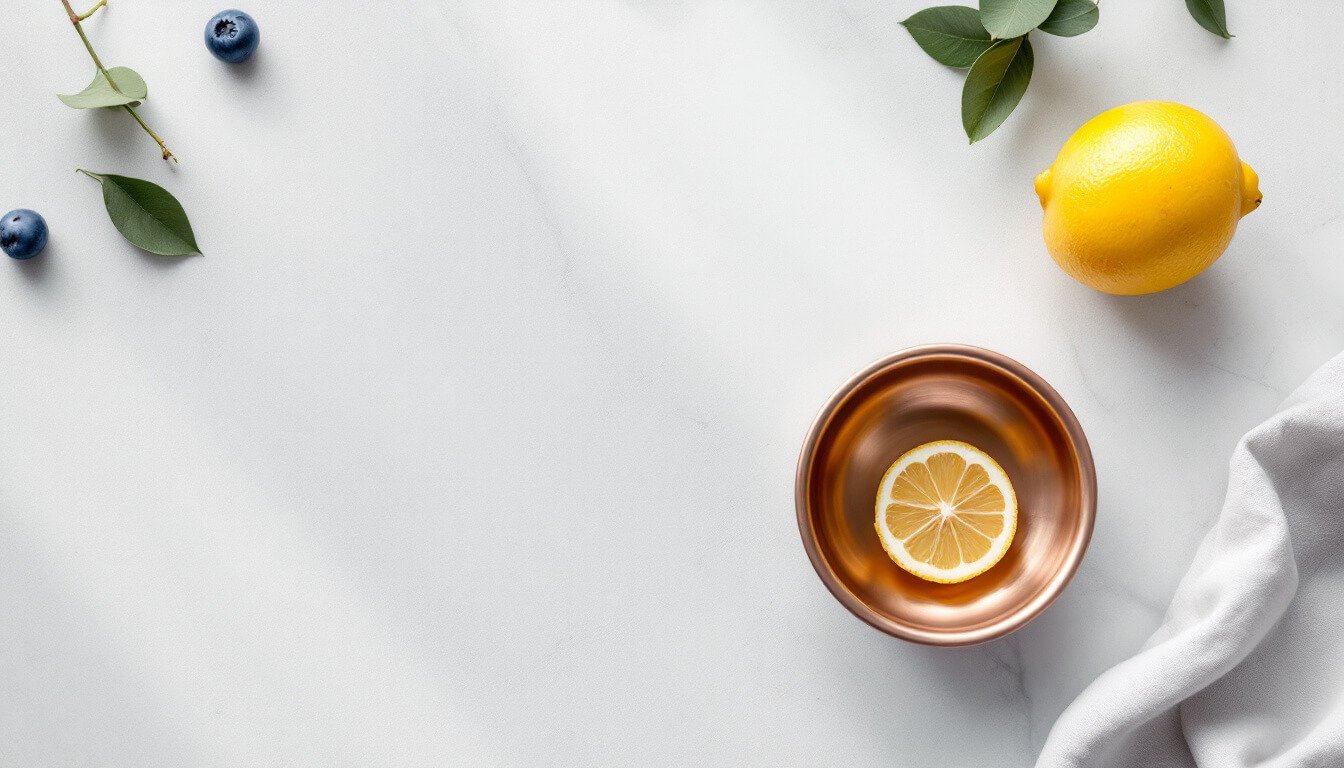
The FDA’s 2022 Food Code lists copper among the chemical hazards tied to “high acid foods and beverages.” Its control measure is plain: “Do not store high acid foods in copper utensils.”
That rule is written for restaurants, but the chemistry doesn’t change at home. Lemon water, juice, sports drinks, and anything else acidic belong in glass or stainless steel, not in a copper bottle. Squeezing lemon into water lowers its pH. It makes the water more acidic, and that is exactly the kind of liquid the FDA keeps away from copper.
For plain water, follow the maker’s cleaning and care instructions. We didn’t find an independent source on cleaning methods and leaching that we could verify, so we won’t offer a recipe.
Who should not use a copper water bottle
The EPA’s drinking-water table carries one line about a specific group, and we will quote it rather than paraphrase it: “People with Wilson’s Disease should consult their personal doctor if the amount of copper in their water exceeds the action level.” The NIH adds that copper toxicity “is rare in healthy individuals. However, it can occur in people with Wilson’s disease, a rare genetic disorder.”
If you have Wilson’s disease, or any condition where you have been told to watch your copper intake, ask your doctor before you use a copper vessel at all. That is a conversation for your doctor, not for a product page.
Children have lower limits. The NIH puts the upper limit at 1,000 micrograms a day for ages 1 to 3, and it has not set one for babies under 12 months. If you are preparing water for an infant, use the water your pediatrician recommends, not a copper bottle.
And if your utility’s report already shows copper near the action level, adding a copper bottle on top makes little sense. Fix the plumbing question first.
If you are deciding what to drink from your tap
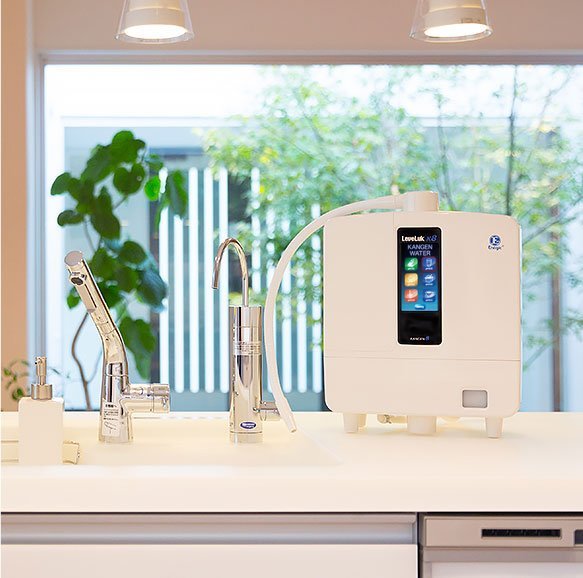
The LeveLuk K8 is the eight-plate water ionizer we sell. It filters tap water and makes water across a range of pH settings, from 2.5 to 11.5 according to the manufacturer. It is not a copper product, and we make no antibacterial or health claim for it. Specs are on the product page.
The bottom line on the benefits of a copper water bottle
The benefits of a copper water bottle are smaller and more specific than the listicles suggest. In a lab, copper killed bacteria that were deliberately added to water, and the copper that leached out overnight stayed under the EPA’s action level. There is no human trial behind the health claims, and most American adults already get enough copper from food.
If you like the bottle, use it for plain water, keep acidic drinks out of it, and check your utility’s report for copper first. If you have Wilson’s disease, ask your doctor before using one. And if the only reason you bought it was a promise about your health, you can put it down without missing anything.
This article is for general information and is not medical advice. Talk to your doctor before changing what you drink, especially if you have Wilson’s disease or liver or kidney disease, are pregnant, or are preparing water for an infant.
Before you go
Get the next honest answer by email
We'd rather tell you when the answer is no. One email a week, written the same way as this post.