
Alkaline Water and Kidney Health: What You Should Know
This is the one topic in this category where the honest answer leans toward caution rather than benefit, and we’d rather lead with that than bury it.
If you have kidney disease, speak to your nephrologist before drinking alkaline or mineral-enhanced water. Everything below is context for that conversation, not a substitute for it.
Why kidneys are the relevant organ
Your kidneys do the work of maintaining acid-base balance. They excrete excess acid, conserve bicarbonate, and manage the mineral load from everything you eat and drink. This is why blood pH stays between roughly 7.35 and 7.45 no matter what you consume.
It’s also why kidney function is the deciding factor in whether alkaline water is inconsequential or genuinely inadvisable. Healthy kidneys handle a mineral and alkali load without difficulty. Impaired kidneys may not.
For healthy kidneys
For people with normal kidney function, drinking alkaline water in ordinary amounts is not known to cause harm. Your kidneys manage the load, blood pH is unaffected, and the main observable change is in urine pH — which reflects what your kidneys are excreting, not the state of your body.
There’s a common claim that alkaline water reduces kidney stone risk by raising urine pH. Handle this carefully: urine alkalinity affects different stone types differently. Higher urine pH may reduce uric acid stone formation, but it can increase the risk of calcium phosphate stones. If you form stones, the type matters, and that’s a question for a urologist or nephrologist who knows which kind you make — not a general recommendation.
For impaired kidney function
This is where genuine caution applies, and where you’ll find little discussion on water company websites.
Mineral handling. Reduced kidney function means reduced ability to excrete potassium, calcium and other minerals. Mineral-rich alkaline water adds to that load. In chronic kidney disease, hyperkalemia and hypercalcemia are real risks with real consequences.
Metabolic alkalosis. Impaired acid-base regulation combined with a sustained alkali load can push things too far in the alkaline direction. The literature includes case reports of calcium-alkali syndrome.
Sodium. Some alkaline waters carry meaningful sodium, which matters in CKD and is associated with increased urinary calcium excretion (Park et al.).
Fluid limits. Some kidney patients are on fluid restrictions. Any advice to “drink more water” is inappropriate without knowing that.
The 2026 Frontiers in Medicine review specifically identifies chronic kidney disease patients as a group at risk of hyperkalemia, hypercalcemia and metabolic alkalosis from alkaline water consumption.
Honest answers, weekly
The research, without the sales pitch
One short email a week: what a study actually found, what it didn't, and what's worth your attention. No spam. Unsubscribe anytime.
What about hydrogen water and kidneys?
That’s a separate question with a different evidence base — molecular hydrogen rather than pH — and we cover it in Hydrogen Water And Kidney Disease. The same caution applies: early research is not clinical guidance, and CKD patients should treat any change in what they drink as a medical decision.
Our position
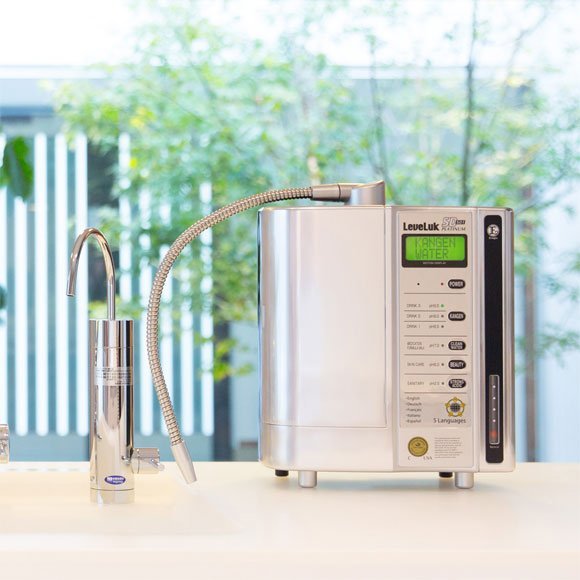
We sell water ionizers, and we are telling you that if you have kidney disease, this product may not be appropriate for you. That’s not a sales strategy; it’s what the evidence supports.
Any dealer who takes your money without asking about kidney function is not doing the job properly. If you have CKD, are on dialysis, have had a transplant, or form kidney stones, the correct next step is a conversation with your nephrologist — and if they say no, that’s the answer.
General information only and not medical advice. Nothing here is intended to diagnose, treat, cure or prevent any disease, including any kidney condition. If you have or suspect kidney disease, consult a qualified healthcare professional before changing what you drink.
Before you go
Get the next honest answer by email
We'd rather tell you when the answer is no. One email a week, written the same way as this post.