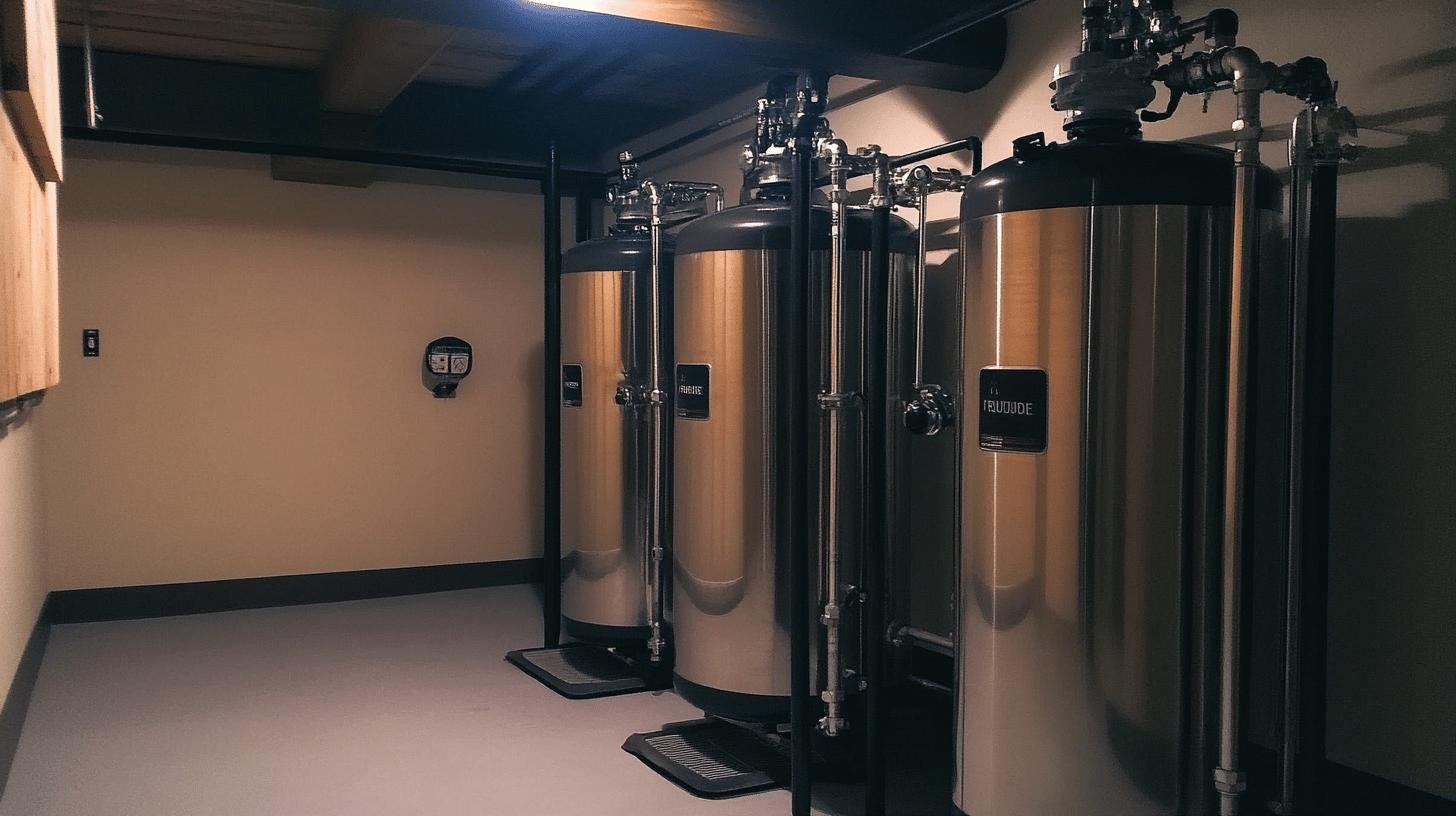
Whole House Filtration vs. Point-of-Use Ionizers: What Hawaii Homes Actually Need
If you have been searching for the best whole house filtration system, it is worth stopping to ask what you actually want the water to do. “Whole house filtration” and “ionized drinking water” get lumped together in the same search results, but they are two different products solving two different problems — and on O‘ahu in particular, the system most people are shopping for is often not the one that fixes what is bothering them.
This guide breaks down what each type of system does, what is actually in Honolulu tap water, and how to decide which one belongs in your home.
What a whole house filtration system actually does
A whole house system is a point-of-entry unit. It is plumbed into your main water line where it enters the house, so every tap, shower, and appliance downstream draws filtered water. Most systems combine a sediment pre-filter with a carbon stage, and some add a softener or conditioner.
What point-of-entry filtration is genuinely good at:
- Sediment and rust — particulate from older pipes, catchment tanks, or well water.
- Chlorine at every fixture — including showers, where chlorine is a comfort issue for skin and hair rather than a drinking-water one.
- Protecting fixtures and appliances — less scale and sediment reaching water heaters, dishwashers, and washing machines.
- Whole-home consistency — one unit, no separate filters to manage at each sink.
What a whole house system does not do
This is where most buyers get surprised. A point-of-entry filter treats water on the way in. It cannot change what happens at the glass.
- It does not let you select a pH. Whatever comes out of the main line is what comes out of every tap, at one fixed quality.
- It does not produce hydrogen-rich water. Dissolved molecular hydrogen is a product of electrolysis, which filtration does not perform.
- It does not give you separate water for different jobs. Cooking, drinking, skincare, and cleaning all get the same output.
- It cannot be moved. It is a plumbing installation, which matters if you rent — a real consideration in Honolulu.
- Filtered water sits in your pipes. Treatment happens at the entry point, not at the moment you pour.
What is actually in O‘ahu tap water
Before buying any system, it helps to know the baseline. According to the Honolulu Board of Water Supply:
- Municipal water is chlorinated, with a residual maintained at roughly 0.25 to 0.5 ppm through the distribution system.
- The BWS does not add fluoride to the municipal supply.
- Hardness varies widely by address, from about 25 to 300 ppm, depending on which pumps are serving your area.
- Some areas of O‘ahu also receive granular activated carbon treatment.
- The system is tested against 91 EPA-regulated contaminants annually.
Two things follow from that. First, much of O‘ahu sits at the soft end of the hardness range, so the water softener that anchors many whole house packages is often solving a problem the household does not have. Second, the chlorine residual is real but modest — noticeable in taste and smell, and the single most common reason people say they do not like drinking their tap water.
If the thing bothering you is how your drinking water tastes, a whole-home plumbing project is an expensive way to fix a glass of water.
What a point-of-use ionizer does instead
A water ionizer connects at the sink and treats water at the moment you use it. It filters, then runs the water through electrolysis across a set of plates, which lets you select the water you want rather than accepting one fixed output.
On an Enagic machine such as the LeveLuk K8, that means:
- Five types of water from one unit — drinking, cooking, beauty, and cleaning.
- A selectable pH range of 2.5 to 11.5, chosen on the panel each time you pour.
- Hydrogen-rich drinking water with a negative oxidation-reduction potential, produced by electrolysis.
- Strong acidic water at around 2.5 pH for surface cleaning, and strong alkaline at 11.0 for heavy-duty kitchen jobs — replacing several bottled products.
- Up to 7.6 litres per minute, filtered fresh at the tap rather than upstream.
- No plumbing project. It sits on the counter, and it moves with you.
Honest answers, weekly
The research, without the sales pitch
One short email a week: what a study actually found, what it didn't, and what's worth your attention. No spam. Unsubscribe anytime.
Side by side
| Whole house filtration | Point-of-use ionizer | |
|---|---|---|
| Where it treats | Main line, before the house | At the tap, as you pour |
| Sediment and rust | Yes, house-wide | At the treated tap only |
| Chlorine taste and smell | Yes, every fixture | Yes, drinking and cooking water |
| Showers and laundry | Yes | No |
| Selectable pH | No | Yes, 2.5–11.5 |
| Hydrogen-rich water | No | Yes |
| Separate cleaning water | No | Yes |
| Installation | Plumber, permanent | Connects at the faucet |
| Works in a rental | Usually not | Yes |
When you genuinely need whole house filtration
We will say plainly that some homes should buy one, and an ionizer is not a substitute:
- Rain catchment or well water, common outside municipal service areas on the neighbor islands. Untreated source water needs point-of-entry treatment before anything else.
- Visible sediment or staining at multiple fixtures, or rust from aging galvanised plumbing.
- Chlorine is bothering your skin or hair in the shower, not just your drinking water.
- You are on a system with known hardness at the high end of the BWS range and are seeing scale on fixtures and appliances.
If any of those describe your house, start there. The two are not rivals — plenty of homes run point-of-entry filtration for the whole house and an ionizer at the kitchen sink, which is a sensible combination. The whole house unit handles bulk water for bathing and appliances; the ionizer handles what you actually drink and cook with.
How to decide in about five minutes
- Name the problem out loud. “My water tastes like a pool” is a drinking-water problem. “My showers leave my skin dry and there is scale on the taps” is a whole-house problem.
- Check your source. Municipal BWS water is already treated and tested. Catchment and well water are not.
- Check whether you can plumb. If you rent, point-of-entry is usually off the table regardless.
- Count what you would replace. An ionizer that covers drinking, cooking, skincare, and cleaning water displaces several recurring purchases; a filter housing does not.
- Taste it before you buy it. This one is not optional at these prices.
Try it before you decide
Reading specifications only gets you so far. If you are on O‘ahu, come by the showroom at 3457 Waialae Ave #201 in Honolulu and taste all five water types straight from the machine, and we will talk honestly about whether an ionizer, a whole house system, or both make sense for your address. If you are off-island, get in touch and we will walk you through it.
You can also browse the full range of Enagic machines and filters, from the entry-level LeveLuk JRIV through to the K8 and Super 501.
These statements have not been evaluated by the Food and Drug Administration. Kangen Water® systems are intended for general wellness purposes and are not intended to diagnose, treat, cure, or prevent any disease. Individual results may vary. Water quality figures cited are from the Honolulu Board of Water Supply and vary by address and over time; consult your own water quality report for your location.
Before you go
Get the next honest answer by email
We'd rather tell you when the answer is no. One email a week, written the same way as this post.