How to remove chlorine from drinking water (and why chloramine changes the answer)
We sell water ionizers, and every one of them has a carbon filter in it, so we have a commercial interest in how you think about filtering tap water. Weigh what follows with that in mind. We would rather say it in the first line than bury it at the bottom.
If you are working out how to remove chlorine from drinking water, most answers to the search “how to remove chlorine in drinking water” list the same three tricks: let it sit out, boil it, or buy a filter. Those answers are fine for some homes and wrong for others, and the difference is not the method. It is which disinfectant your utility puts in the water. This post goes method by method and shows where each one stops working.
One thing first, so the rest reads in proportion. Chlorine in tap water is not a health scare. The CDC says chlorine or chloramine levels up to 4 milligrams per liter (mg/L) “are considered safe in drinking water,” and EPA’s legal limit for both is 4.0 mg/L. Most people who remove it do so for taste and smell, and that is a perfectly good reason.
How to remove chlorine from drinking water: first, find out which disinfectant you have
US utilities disinfect with one of two things. Chlorine is the familiar one. Chloramine is chlorine combined with a small amount of ammonia. According to the EPA, more than one in five Americans drinks chloraminated water, and the CDC explains why utilities choose it: chlorine “gets used up quickly,” while chloramine keeps working longer in the pipes and forms fewer disinfection byproducts.
That stability is exactly what makes chloramine harder to get out of your glass. So step one is not a method. It is a lookup. You have two easy ways to find out:
- Your annual water quality report. The CDC says the report shows whether there is disinfectant in your water and what kind your utility uses. Our guide to whether your tap water is safe to drink explains how to find and read that report.
- Call the utility. The number is on your bill. Ask “chlorine or chloramine?” It is a one-word answer.
Private wells have no utility and no annual report. What is in well water depends on how, or whether, you treat it.
Letting it sit out and boiling: fine for chlorine, not for chloramine
Letting water stand. Chlorine does escape into the air over time. The CDC says you can remove chlorine “by letting it sit out for a few days,” which is longer than the overnight figure that circulates online. Then it adds: “You cannot remove chloramine this way.”
Boiling. The Missouri Poison Center puts it plainly: boiling “can remove chlorine, but it’s not effective for chloramine, which is more stable.” The San Francisco Public Utilities Commission, which switched its system to chloramine, says the same in its customer FAQ: chloramine “cannot be removed by boiling water, adding salt, or letting water stand still.”
So both free methods work on chlorine and fail on chloramine. That is the gap in most of the advice ranking for this question. Someone on a chloraminated system can leave a pitcher out for a week and still taste the same water.
Carbon filters: read which claim is certified
Activated carbon is the standard household answer, in pitchers, faucet mounts, under-sink units, and the pre-filter inside most ionizers. Carbon is good at chlorine taste and odor. Chloramine is a separate question, and the certification reflects that.
We covered certification in detail in our post on what is inside an ionizer filter and how to read its claims, so here is the short version. Certification is claim by claim. A filter certified to reduce chlorine is not thereby certified to reduce chloramine. Look for chloramine listed by name. The SFPUC FAQ adds two honest caveats: devices should be “independently tested and specifically certified to reduce chloramine,” and home filtration “will reduce the level of chloramine from water, it will not remove it completely.”
Replace cartridges on the schedule the label gives. A certification describes a cartridge used as directed, not one left in long past its rated life.
Vitamin C: fast, cheap, and works on both
This is the method almost nobody mentions outside of aquarium and brewing forums, and it has the best documentation.
A 2005 USDA Forest Service technical report tested two forms of vitamin C, ascorbic acid and sodium ascorbate, for neutralizing chlorine in water. Its findings:
- The reaction “is very fast.”
- One gram of ascorbic acid neutralizes 1 mg/L of chlorine in 100 gallons of water.
- Ascorbic acid is mildly acidic and can lower the pH slightly in low-alkalinity water. Sodium ascorbate is pH neutral.
- Once dissolved, vitamin C “degrades in a day or two,” so you treat the water you are about to use rather than a week’s supply.
The amounts involved are small. Using the Forest Service ratio, a gallon of water at EPA’s 4 mg/L maximum needs about 40 mg of ascorbic acid. A single 500 mg tablet covers roughly a dozen gallons at that level, and more at the lower residuals most homes have. That is our arithmetic from the report’s figure, not a tested dose for your tap.
The Forest Service tests were on chlorine. For chloramine, the SFPUC FAQ lists ascorbic acid as one of the methods dialysis providers use to remove it, alongside carbon systems designed for chloramine. None of the sources we read gives a home dose specific to chloramine, so treat the arithmetic above as a starting point, not a specification.
Honest answers, weekly
The research, without the sales pitch
One short email a week: what a study actually found, what it didn't, and what's worth your attention. No spam. Unsubscribe anytime.
When removal genuinely matters, and when it is just taste
For drinking, the official position is clear. The EPA says chloraminated water that meets its standards is safe for drinking, cooking, and bathing. The SFPUC FAQ notes that “dialysis patients can drink chloraminated water because the digestive process neutralizes chloramine.” For most people, removing chlorine is a matter of taste. The CDC notes that chlorinated water can taste and smell different, and many people drink more water when they like how it tastes. That is reason enough.
Two groups need full removal, not just better taste:
- Fish, reptiles, and amphibians. The CDC says not to keep fish, turtles, or frogs in water containing chlorine or chloramine, because “even low levels of disinfectants can make them sick.” Pet stores sell conditioners made for this. Ask whether a product handles chloramine before you rely on it. The CDC adds that dogs, cats, and birds are not affected.
- Home dialysis. The CDC explains that dialysis uses large amounts of water to clean waste products out of a patient’s blood, which is why dialysis centers must remove all chemical disinfectants, chlorine and chloramine included, first. The CDC says that if you do dialysis at home, check your machine’s instructions or contact the manufacturer about water treatment. That is the answer. Do not substitute a kitchen method.
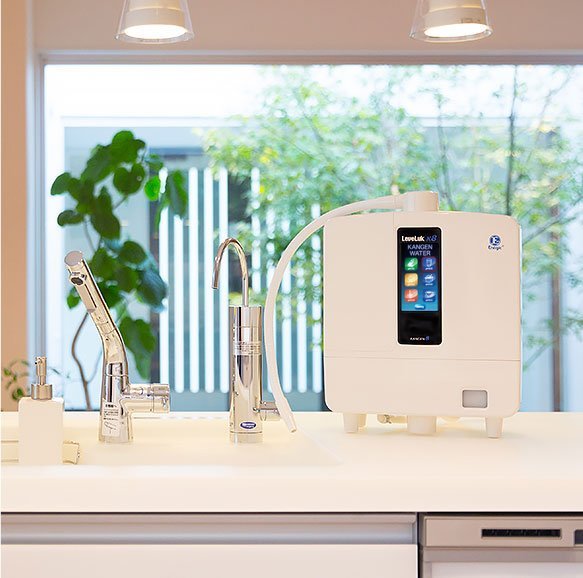
A carbon filter built into the tap
The LeveLuk K8 is the eight-plate ionizer we sell. Tap water passes through a replaceable carbon cartridge before it reaches the plates, and Enagic’s current cartridge is listed for residual chlorine. No chloramine claim is made for it, so on a chloraminated system, treat it as a chlorine filter. Specs are on the product page.
Checking that it worked
Taste is a decent first test for chlorine. It is a weaker one for chloramine, because the CDC notes that chlorinated water tends to taste and smell different from chloraminated water. If you want a number, use a test that reports total chlorine, not just free chlorine, because chloramine shows up in the total. A TDS meter will not help here. It measures dissolved minerals, not disinfectant, as we explain in our TDS water tester guide.
How to remove chlorine from drinking water: the bottom line
Start with the lookup, not the method. If your utility uses chlorine, letting water stand for a few days or boiling it will work, and a certified carbon filter or a pinch of vitamin C will work faster. If it uses chloramine, standing and boiling will not. Use a filter certified for chloramine by name, or vitamin C, and expect a filter to reduce chloramine rather than eliminate it. For aquariums or home dialysis, follow the pet-store product directions or the dialysis machine manufacturer, not a kitchen trick.
This article is for general information and is not medical advice. If you do dialysis at home, have a medical condition, or are preparing water for an infant, follow the guidance of your care team or equipment manufacturer, and talk to your doctor before changing how you treat your drinking water.
Before you go
Get the next honest answer by email
We'd rather tell you when the answer is no. One email a week, written the same way as this post.