How to check lead in water: the pipe check, the sample, and how to read the result
We sell water ionizers, which filter tap water, so we have a commercial interest in how you feel about your tap. Weigh what follows with that in mind. We would rather say it in the first line than bury it.
Here is how to check lead in water at your own address, in the order that saves the most money: look at your pipes, skip tests that can’t see lead at the levels that matter, collect a sample the way a lab needs it, and read the result against the right number. None of it needs a product from us.
How to check lead in water: why you can’t do it by eye
Lead dissolved in water has no color, taste, or smell. The EPA’s guidance is blunt: “testing is the only sure way of telling whether there are harmful quantities of lead in your drinking water.”
The second thing to know is where lead comes from. It is rarely in the water when it leaves the treatment plant. According to the EPA, the most common sources are “lead pipes, faucets, and fixtures,” with a lead service line (the pipe connecting your home to the water main) “typically the most significant source.” In homes without one, the usual culprits are older brass or chrome-plated brass faucets and lead solder. So your utility’s annual report can look clean while your kitchen tap does not, because its samples come from a set of homes, not yours. Reading that report, and asking your utility what its service line inventory says about your address, are covered in our guide to whether tap water is safe to drink. This post covers the test itself.
Check your pipes first: the scratch and magnet test
Before you pay for anything, find the pipe where water enters your home, usually near the water meter. State health departments in Michigan and Massachusetts publish the same check, using a key or coin and a small magnet:
- Lead: dull gray and soft. Scratch it gently with a key and the mark turns shiny silver. A magnet will not stick.
- Copper: scratches to a bright copper color, like a new penny. A magnet will not stick.
- Galvanized steel: hard, and stays dull when scratched. A magnet will stick.
- Plastic: doesn’t change color when scratched. A magnet will not stick.
Two cautions from those guides: never scratch with a knife or anything sharp, so you don’t puncture the pipe, and this only covers the part of the line you can see. Michigan’s checklist notes that the section outside your property may belong to the city and “could be made from a different material,” so ask your water utility about that part. The EPA’s interactive Protect Your Tap guide walks through the same check with photos.
A pipe check is not a water test. Copper pipes can be joined with old lead solder, and brass fixtures can contribute too. If the line looks like lead, test soon. If it doesn’t, testing is still the only way to know.
Why a home lead in water test kit may tell you nothing

The cheapest option is a strip or color kit. The best independent evaluation we found is a laboratory study from Virginia Tech (Kriss and colleagues, Environmental Science & Technology, 2021). The researchers tested 16 brands of at-home lead kits against water spiked with known amounts of dissolved and particulate lead. This is a lab test of the kits, not a health study.
The result: 12 of the 16 brands “were not suitable for drinking water analysis,” with detection limits of 5 to 20 mg/L. The federal lead action level is 0.015 mg/L, or 15 micrograms per liter, so those kits could only register lead at concentrations hundreds to more than a thousand times higher. A “negative” from a kit like that says almost nothing. The binary strips did better on dissolved lead but “failed to detect particulate lead,” the small flakes that can break off old pipes and solder. Products change, so check the detection limit on the box. If none is stated, or it is above 15 ppb, the kit can’t answer your question.
A TDS meter or pH meter can’t do this job either. Lead at the levels that matter is far too small to move a total dissolved solids reading, as our guide to TDS water testers explains.
Honest answers, weekly
The research, without the sales pitch
One short email a week: what a study actually found, what it didn't, and what's worth your attention. No spam. Unsubscribe anytime.
How to collect a sample that means something
The EPA “recommends sending samples to a certified laboratory.” Your state certifies drinking water labs, and the EPA keeps a list of state certification programs. Your utility is the first call: the EPA says some states and utilities pay for testing, and its Protect Your Tap guide puts the cost at $15 to $100 otherwise (figures as of November 2026).
Follow the lab’s instructions exactly. For context, the federal rule for utility lead sampling (40 CFR 141.86) shows what a meaningful sample looks like:
- Let the water sit. The sample is one liter of water that has “stood motionless” in the plumbing “for at least six hours,” such as overnight.
- Use the cold tap you drink from, typically the kitchen sink.
- Don’t prepare the tap. Instructions cannot tell you to clean the aerator or flush the tap before the six-hour standing period, because that would hide the lead you actually drink. Collect the very first water out.
For homes with a lead service line, the updated rule (the Lead and Copper Rule Improvements) adds a fifth-liter sample: five numbered one-liter bottles filled in sequence, with the higher of the first and fifth results counting. If you know or suspect you have a lead line, ask your lab or utility whether they offer that kind of sequential sampling.
How to read your lead test result
Results usually come in micrograms per liter (µg/L), which is the same as parts per billion (ppb). Three numbers frame the result:
- The health goal is zero. The EPA set its maximum contaminant level goal for lead at zero, “because lead is a toxic metal that can be harmful to human health even at low exposure levels.”
- The action level is 15 ppb today. It triggers utility action when more than 10 percent of a system’s tap samples exceed it.
- It drops to 10 ppb on November 1, 2027, the Lead and Copper Rule Improvements compliance date. The Federal Register showed no amendment to that rule as of November 21, 2026.
When you check lead in water, the action level is the most misread number. It is a trigger for a whole water system, not a line below which your own tap is safe. A result of 8 ppb is under the action level, and it is still lead in water with a health goal of zero.
If lead shows up, the EPA’s own list is practical: use only cold water for drinking, cooking, and formula; run the tap before use (your utility can say for how long); remember that “boiling water does not remove lead”; clean the aerator regularly once sampling is done; and call your utility. For filtration, use a filter certified to reduce lead. The EPA offers a consumer tool for finding certified lead filters, and certification works contaminant by contaminant, the same way we describe in our fluoride filter guide.
Who should not wait
If you are pregnant, mix infant formula with tap water, or have young children, test soon and ask your doctor or pediatrician about lead. The EPA notes that a pediatrician can order a blood lead test for a child. Why formula-fed infants get a large share of their lead exposure from water is covered in our tap water guide.
If you filter your tap for taste
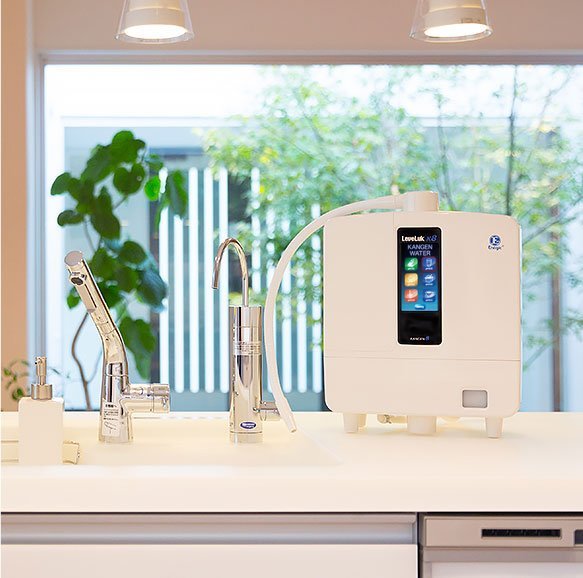
The LeveLuk K8 is the eight-plate water ionizer we sell. It filters tap water at the faucet. Its listing makes no lead-reduction claim, so do not buy it for lead. For lead, use a filter certified to reduce lead. Specs are on the product page.
The bottom line on how to check lead in water
Start free: ask your utility about your service line, and do the scratch and magnet check. Then test with a state-certified lab, using a first-draw sample from water that has stood at least six hours, and skip kits whose detection limit is above 15 ppb. Read the result against a health goal of zero, not just the action level. If lead is there, a filter certified for lead reduction, cold water, and flushing are the immediate steps, and replacing the lead pipe is the lasting fix.
This article is for general information and is not medical advice. Regulatory references are current as of November 21, 2026, and may change. If you are pregnant, preparing infant formula, or concerned about lead exposure in a child, talk to your doctor or pediatrician. For questions about your water, contact your water utility or state health department.
Before you go
Get the next honest answer by email
We'd rather tell you when the answer is no. One email a week, written the same way as this post.