
Is tap water safe to drink? How to find out for your own address
We sell water ionizers, which filter tap water, so we have a commercial interest in how you feel about what comes out of your faucet. Weigh what follows with that in mind. We would rather say it in the first line than bury it at the bottom.
Is tap water safe to drink? People type it as “tap water is it safe to drink,” and most answers either cover one city or end by selling you a filter. The honest answer is that it depends on your address, and you can find most of it out yourself. This guide shows you how.
Is tap water safe to drink? The short answer depends on your address
“Tap water” is not one thing. The water in your glass has passed through three separate stages, and each one has a different owner:
- Your water system. If you are on a public supply, a utility treats the water and monitors it against federal standards. You can read its results.
- The pipes between the street and your faucet. The service line and your home’s plumbing are not something the utility fully controls, and they can add things the utility’s own testing never sees.
- Whether you are on a regulated system at all. If your water comes from your own private well, nobody is testing it but you.
So “is tap water safe to drink” is really three questions. A utility that meets every standard can still deliver water through a lead service line. The rest of this guide takes them one at a time.
How to read your water quality report

Every community water system has to send its customers an annual drinking water quality report, called a Consumer Confidence Report (CCR). According to the EPA, “Reports must be sent by your water supplier each year by July 1.” If you can’t find yours, call the utility or use the EPA’s “Find your CCR” tool.
Federal rules (40 CFR 141.153) fix what the report must contain, so every one reads the same way:
- MCLG (goal). The level “below which there is no known or expected risk to health.”
- MCL (limit). “The highest level of a contaminant that is allowed in drinking water.” It is set as close to the goal as treatment technology allows.
- Level detected and range. The highest compliance result and the spread across sampling points.
- Violation (yes/no). The column that matters most. A detected level is not a violation.
- Lead and copper. These are reported differently, as a 90th-percentile result from homes sampled and the number of sites over the action level.
Read the violation column first. If every row says “no,” your utility met the federal standards for that year. If any row says “yes,” the report must explain how long the violation lasted, the potential health effects in the EPA’s required wording, and what the system did about it.
Don’t look for total dissolved solids as a safety score, either. TDS is a mostly aesthetic number.
What your water report can’t tell you: the pipes inside your home
The utility samples its own system. It can’t see what happens in the last stretch of pipe before your faucet, and the biggest concern there is lead. The EPA says the most common sources of lead in drinking water are “lead pipes, faucets, and fixtures,” that a lead service line is “typically the most significant source,” and that lead pipes “are more likely to be found in older cities and homes built before 1986.”
Three practical steps:
- Find out what your service line is made of. Under the Lead and Copper Rule Revisions, water systems had to prepare an inventory of service line materials by October 16, 2024. Ask your utility what its inventory says about your address. If it doesn’t know, the EPA suggests a licensed plumber and its “Protect Your Tap” guide.
- Use cold water and flush water that has been sitting. In the EPA’s words, “Use only cold water for drinking, cooking and making baby formula,” and “boiling water does not remove lead.” Water that has sat in pipes overnight can carry more lead, so run the tap, shower, or do a load of dishes first. Your utility can tell you how long to flush.
- Test at the tap if you’re unsure. Your utility can tell you how to get lead testing at your own faucet. A home TDS or pH meter can’t do this job. Those meters aren’t safety tests, and neither is a color-change demonstration.
Private wells: nobody tests them but you
About the private-well question, the EPA is blunt: “The quality and safety of drinking water from private domestic wells are not regulated by the Federal Government under the Safe Drinking Water Act nor by most state governments and laws.” It also says “Around 15 percent of the U.S. population (over 43 million) rely on private wells.”
That doesn’t mean well water is bad, only that nobody else is checking it. The EPA cites a U.S. Geological Survey study of 2,100 private wells in which “about one in five wells contained one or more contaminants at a concentration greater than a human-health benchmark for drinking water.” There is no CCR for a well. Your state or county health department can tell you what to test for and which labs are certified.
Honest answers, weekly
The research, without the sales pitch
One short email a week: what a study actually found, what it didn't, and what's worth your attention. No spam. Unsubscribe anytime.
Who should take extra care
Every CCR is legally required (40 CFR 141.154) to carry this statement, so you’ll find it in yours:
“Some people may be more vulnerable to contaminants in drinking water than the general population. Immuno-compromised persons such as persons with cancer undergoing chemotherapy, persons who have undergone organ transplants, people with HIV/AIDS or other immune system disorders, some elderly, and infants can be particularly at risk from infections. These people should seek advice about drinking water from their health care providers.”
If that describes you or someone you care for, take the advice literally and ask the clinician who knows your situation. We can’t advise on anyone’s condition.
Pregnancy and infancy deserve a specific mention. The required CCR wording on lead says lead can cause serious health effects in people of all ages, “especially pregnant people, infants (both formula-fed and breastfed), and young children.” The EPA also notes that infants who consume mostly mixed formula can get 40 to 60 percent of their lead exposure from drinking water. And the required CCR wording on nitrate says that if you prepare formula with tap water, you “may want to use alternate sources of water or ask for advice from your health care provider,” because nitrate above 10 ppm is a particular concern for infants under six months. If you mix formula, read your report’s nitrate and lead rows, use cold water, and flush first.
When a filter makes sense, and when it’s just a preference
A filter makes sense when you have a specific, identified problem: a lead service line, old plumbing with lead solder, or a well test result over a benchmark. In that case, buy for the contaminant. The EPA’s required CCR language on lead says a filter “certified by an American National Standards Institute accredited certifier to reduce lead, is effective in reducing lead exposures.” Certification is contaminant by contaminant, so a filter certified for taste and chlorine is not thereby certified for lead. We walk through how to read filter certifications separately.
If your report shows no violations, your service line isn’t lead, and you don’t mind the taste, a filter is a preference, not a requirement. Plenty of people filter because they dislike the chlorine taste and drink more water when it tastes better. That is a fair reason, but it is not fixing a safety problem, and nobody should sell it to you as one.
If you filter for taste
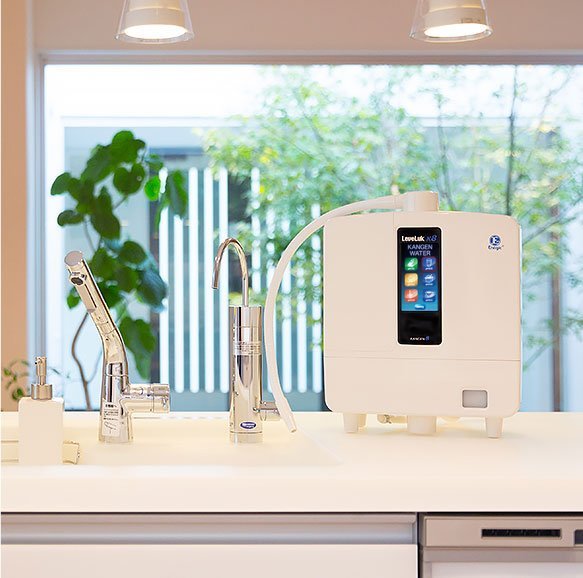
The LeveLuk K8 is the eight-plate ionizer we sell. It filters tap water at the faucet and changes its pH by electrolysis as you pour. It is not a substitute for reading your water report or testing for lead. Specs and documentation are on the product page.
Is tap water safe to drink where you live? The bottom line
On a public supply, you don’t have to settle for a guess. Get your CCR and read the violation column. Ask your utility whether your service line is lead. Use cold water, and flush water that has been sitting. If you are on a private well, test it, because nobody else will. If you are pregnant, mixing infant formula, or have a weakened immune system, ask your health care provider, as your own water report advises. A filter is the right tool for a specific, identified problem, and a matter of taste otherwise.
This article is for general information and is not medical advice. Talk to your doctor before changing what you drink, especially if you are pregnant, preparing infant formula, have a weakened immune system, or take medication.
Before you go
Get the next honest answer by email
We'd rather tell you when the answer is no. One email a week, written the same way as this post.