Electrolyte water recipe: what goes in, how much sodium, and when you need it
We sell water ionizers, so we have a commercial interest in how people think about what they drink. Weigh what follows with that in mind. We would rather say it in the first line than bury it at the bottom.
A good electrolyte water recipe is three ingredients: water, a little salt, and some fruit juice. Most recipes online stop there. They give you teaspoons but not milligrams, and they rarely say who should leave the salt out. This one gives you the numbers, so you can see what you are actually drinking and decide whether you need it. For most people on most days, the honest answer is plain water.
The basic electrolyte water recipe
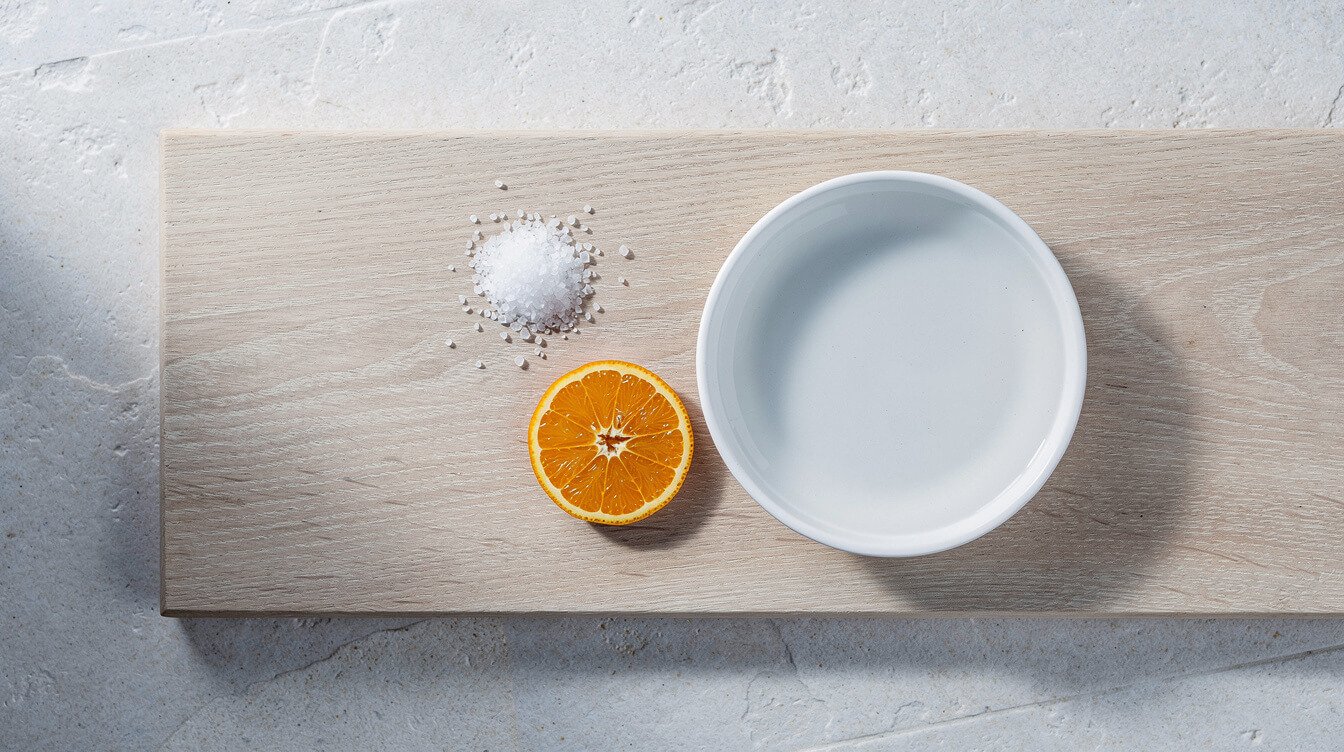
This makes about 1 liter (a little over 4 cups).
- 1 liter of water. Tap, filtered, or bottled. Use whatever you would normally drink.
- ¼ teaspoon of fine table salt. This is the sodium.
- ½ cup of orange juice. This adds potassium, a little sugar, and flavor.
- A squeeze of lemon or lime, optional. For taste only.
- 1 to 2 teaspoons of sugar or maple syrup, optional. Only if you want it sweeter or plan to drink it during long exercise.
Stir until the salt dissolves completely, then chill. It should taste faintly salty, about like a sports drink with less sugar. If it tastes like seawater, you have used too much salt, or a different salt from the one the measurements assume (more on that below).
Keep it in the fridge. It contains juice, so treat it like juice, not like bottled water: make small batches and don’t leave it sitting out.
What’s in the glass, in milligrams
The FDA says the adult sodium limit of less than 2,300 mg a day is “about 1 teaspoon of table salt.” That makes the arithmetic simple:
- Sodium: ¼ teaspoon of table salt is roughly 575 mg of sodium. Spread across 1 liter, that is about 25 millimoles per liter, the unit sports scientists use.
- Potassium: the NIH Office of Dietary Supplements lists 1 cup of orange juice at 496 mg of potassium, so half a cup adds roughly 250 mg.
Two comparisons put those figures in context.
Against your daily sodium. 575 mg is a quarter of the FDA’s Daily Value. The FDA treats 20% DV or more per serving as “high,” so a full liter of this recipe counts as a high-sodium drink. Americans already eat about 3,400 mg of sodium a day on average, according to the same FDA page. For most people, this drink adds to a total that is already over the limit.
Against what you lose in sweat. A 2017 review of sweat testing in athletes put whole-body sweat sodium at roughly 10 to 70 millimoles per liter. That works out to about 230 to 1,610 mg of sodium per liter of sweat. The range is wide because people differ a lot. (The review is by Lindsay Baker of the Gatorade Sports Science Institute, which is owned by PepsiCo. Her figures are widely cited, but you should know where they come from.) At about 25 millimoles per liter, this recipe sits toward the low end of that range. That is deliberate. It replaces some of what you lose without assuming you are a very salty sweater.
If you think you sweat more, or saltier, than most, the next step is to talk to a sports dietitian, not to keep adding salt to the jug.
Does the salt or sweetener matter?
Sea salt and pink salt
Many recipes call for sea salt or Himalayan pink salt because it supposedly carries “trace minerals.” The amounts are too small to matter. A 2020 laboratory analysis of 31 pink salts sold in Australia (Fayet-Moore and colleagues, Foods) found that you would need to eat more than 30 grams a day, about 6 teaspoons, before the minerals made any meaningful contribution to your diet. At that point the sodium would do real harm. One sample also exceeded Australia’s limit for lead. For an electrolyte drink, salt is a sodium source, so choose it on price and taste.
What does matter is grain size. A teaspoon of coarse or flaky salt holds less salt by weight than a teaspoon of fine table salt, so the same spoon gives you less sodium. If you use a coarse salt, check the Nutrition Facts panel on the package for sodium per serving and adjust.
Baking soda is not a substitute. It is sodium bicarbonate, so it adds sodium too, and it changes the taste. We cover what baking soda does to water in how to make alkaline water at home.
Sugar, honey, and lemon
Sugar is optional. It is useful as fuel during long exercise and unnecessary the rest of the time. If you use honey, do not give the drink to a child under 1 year old. The CDC is clear that honey is not safe for infants because it can carry the bacteria that cause botulism.
Lemon and lime are there for flavor. They make the water more acidic, not less. You may see recipes say that lemon “alkalizes” the body. It does not. Your blood pH is held in a narrow range whatever you drink. For the same reason, it doesn’t matter if you start with alkaline water from an ionizer. The juice will pull the pH down, and pH was never what made this an electrolyte drink.
Honest answers, weekly
The research, without the sales pitch
One short email a week: what a study actually found, what it didn't, and what's worth your attention. No spam. Unsubscribe anytime.
When a homemade electrolyte water recipe makes sense
The use case is sweat: long sessions, heat, humidity, or heavy sweating. For a desk day, a commute, and an evening walk, plain water and normal meals already cover your electrolytes. We go through the guidance from sports medicine physicians, and the hour-long threshold they use, in can you drink electrolyte water every day?
There is a caution that recipe sites skip. Adding salt to your water does not make it safe to drink unlimited amounts. In 2015, the Clinical Journal of Sport Medicine published the third international consensus statement on exercise-associated hyponatremia, a dangerously low blood sodium level. The editorial that accompanied it, by nephrologist Mitchell Rosner, states that “excessive fluid consumption is the most common and strongest driving factor.” One case it describes involved several liters of a sports beverage. Its first piece of advice is simple: drink according to thirst. A homemade electrolyte drink is still far more dilute than your blood. It does not cancel out overdrinking.
Illness is a separate situation. If you are losing fluid from vomiting or diarrhea, especially in a child or an older adult, ask a clinician or pharmacist what to drink. Several top-ranking recipes recommend kitchen drinks for colds, flu, and stomach bugs. We don’t.
Who should skip it or ask first
Some people should not add salt or potassium to their water without a doctor’s OK. That includes people on a sodium-restricted diet or taking blood pressure medicine, people with kidney disease, people taking medicines that raise potassium (ACE inhibitors, ARBs, or potassium-sparing diuretics), and children. Our electrolyte water every day post explains the reasons for each.
Two recipe-specific points belong here. First, do not swap in a “lite” salt or salt substitute to cut sodium unless your doctor agrees. NIH notes that these products often replace sodium with potassium chloride, at roughly 440 to 2,800 mg of potassium per teaspoon, which is exactly what the groups above need to watch. Second, if you are on a fluid restriction, a tasty drink you finish without noticing works against you.
If you are choosing an everyday water
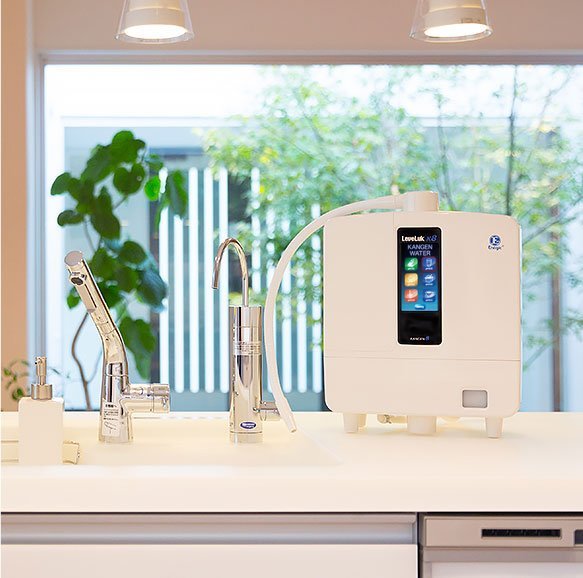
The LeveLuk K8 is the eight-plate ionizer we sell. It filters tap water and changes its pH by electrolysis as you pour. It does not add sodium, potassium, or magnesium, and it is not an electrolyte drink. Specs and documentation are on the product page.
Electrolyte water recipe: the short version
Use 1 liter of water, ¼ teaspoon of fine table salt, and ½ cup of orange juice, with lemon and sweetener to taste. That gives you about 575 mg of sodium and 250 mg of potassium per liter, which is toward the low end of what people lose in a liter of sweat and a quarter of a day’s sodium limit. Make it for long, hot, sweaty days. Drink to thirst, not to a target. If you have kidney disease, are watching your sodium, or take a medicine that affects potassium, ask your doctor first. On ordinary days, plain water is enough.
This article is for general information and is not medical advice. Talk to your doctor before changing what you drink, especially if you have kidney disease, are pregnant, or take medication.
Before you go
Get the next honest answer by email
We'd rather tell you when the answer is no. One email a week, written the same way as this post.