Oxygenated water: how much oxygen is in the bottle, and why drinking it isn’t breathing
We sell water ionizers, not oxygen drinks, and we have no oxygen product to push. Still, we sell drinking-water equipment, so weigh what follows with that in mind. We would rather say it in the first line than bury it at the bottom.
Oxygenated water is bottled water with extra oxygen pushed into it, usually sold with promises about energy, endurance, or recovery. This post asks three narrower questions. How much oxygen is actually in the bottle? Can your body use any of it? And what happened when researchers tested it in people? There is also a safety issue: some products labeled “oxygenated water” are not drinking water at all.
What oxygenated water is, and why all water already has some
Every glass of water that has touched air already holds some dissolved oxygen. That is how fish breathe. Joe Schwarcz, a chemist at McGill University’s Office for Science and Society, puts the solubility of oxygen in water at “only about 25 mL per liter” in his 2021 explainer on the subject.
Bottled oxygen drinks raise that amount by dissolving more oxygen under pressure, much as soda makers do with carbon dioxide. Some newer products use very small “nanobubbles” instead. Many labels then go further, with talk of “stabilized” oxygen, water “clusters,” or exotic forms of oxygen. Schwarcz quotes several of these claims and calls them “gobbledigook.” We covered the cluster idea in our post on what structured water is.
The idea is the same one behind hydrogen water, with a different gas. The drink is sold on a dissolved gas, and that is a separate property from its pH. Adding oxygen does not make water alkaline, and alkaline water does not contain extra oxygen.
Where the oxygen goes when you open the bottle
A gas forced into water under pressure starts leaving as soon as the pressure is released. Schwarcz says it directly: “most of this oxygen escapes into the air as soon as the pressure is released by opening the bottle.”
Hydrogen water has the same problem. We explain it in more detail in our guide to molecular hydrogen water, and in our look at whether the gas survives shipping. The practical point is simple. Any oxygen figure on a label describes the water at the factory, not the water in your glass ten minutes after you open it.
Can your gut absorb it? The breath comparison
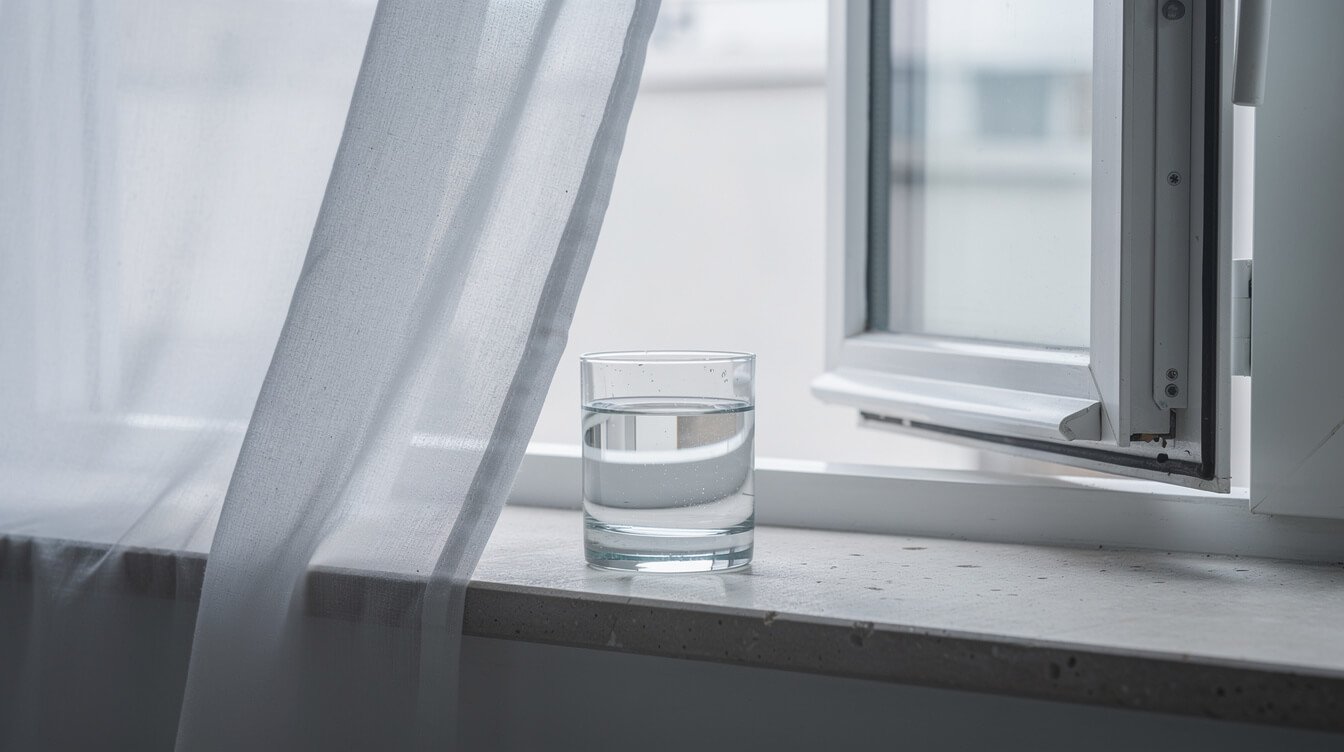
Suppose some of the oxygen is still there when you drink it. The next question is where it would go. Schwarcz’s answer is blunt: “we do not breathe through our gut.” He adds that only a trace would pass through the intestinal lining, into blood that is already saturated with oxygen.
His numbers make the scale clear. One normal breath is about 500 mL of air, roughly 100 mL of which is oxygen. A sampling of oxygenated waters averaged about 10 mL of oxygen per 100 mL of water. So a full liter holds, at most, about what you take in with a single breath. His conclusion is that even if all of it were absorbed, “it would be less than taking an extra breath.”
These are his figures, not our measurements. The order of magnitude is the point. You breathe all day without thinking about it, so a bottle of water cannot compete with your lungs. If you have a condition that affects your breathing or oxygen levels, no drink is a substitute for anything your doctor has prescribed.
What the trials on oxygenated water found
Here are the human trials. All three are small, and all three tested exercise, which is where the marketing points.
- Leibetseder and colleagues, 2006 (International Journal of Sports Medicine, Medical University of Vienna). This was a double-blind crossover trial in 20 healthy young men. Each drank 1.5 liters a day of highly oxygenated water for two weeks, and untreated water from the same spring for another two weeks. There was no significant effect on aerobic or lactate measures at either moderate or maximal effort. One secondary breathing measure crossed the line at p = 0.048, which is a single result among many. The authors concluded that it “does not enhance aerobic performance or lactate kinetics.”
- McNaughton and colleagues, 2007 (International Journal of Sports Physiology and Performance, University of Hull). This was a double-blind, randomized crossover trial in 11 active men, who drank 15 mL of “superoxygenated” water 30 minutes before cycling. Oxygen uptake, blood lactate, blood oxygen, and heart rate did not differ. In the 15-minute time trial, they covered 8.96 km after the test water and 9.01 km after the placebo.
- Muramoto and colleagues, 2025 (Current Research in Physiology, Keio University). This was a double-blind, randomized, placebo-controlled crossover trial of oxygen nanobubble water in 20 adults with an average age of 47, most of whom exercised less than four times a week. Work rate at the lactate threshold was 3.33 watts higher after the nanobubble water. There was no difference at peak effort. The paper discloses that the manufacturer, Sigma Technology, supplied the water free of charge and helped with the blinding.
So two trials found nothing, and one found a small change in one measure, for one specific product, with the maker involved. That last result is not evidence that ordinary bottled oxygen drinks do anything, and it has not been repeated. You will also see animal studies near the top of search results. They were done in rats, and they tell us nothing reliable about people.
Honest answers, weekly
The research, without the sales pitch
One short email a week: what a study actually found, what it didn't, and what's worth your attention. No spam. Unsubscribe anytime.
Not for drinking: “oxygenated water 20 volumes”
Shop online for these drinks and you can run into something that is not a drink. “Oxygenated water” is also a name for hydrogen peroxide. Some imported first-aid and salon products are sold in English under exactly that name, often with a strength in “volumes.” Listings for Gilbert’s “Oxygenated Water 20 Volumes” describe it as a 20-volume hydrogen peroxide solution. A salon version is labeled “20 Volumes 6%” and sold as an oxidizer for hair color and bleaching.
The difference matters. According to Poison Control (poison.org), household hydrogen peroxide is 3%, hair bleach is 6 to 10%, and so-called “food-grade” hydrogen peroxide is 35%. Poison Control warns that “food-grade” peroxide “is not food and can cause serious internal burns if swallowed.” Higher concentrations can cause burns, and in rare cases oxygen bubbles from peroxide have entered the bloodstream and blocked blood flow.
The rule is easy to remember. If the label gives a strength in “volumes” or a hydrogen peroxide percentage, it is not a drink. Keep it away from children, and never add peroxide of any grade to water you plan to drink. If someone swallows it, call Poison Control at 1-800-222-1222.
Who might still like oxygenated water, and what to buy instead
If you enjoy the taste of a particular brand, and it gets you to drink more, that is a fine reason to buy it. It is still water. Drinking enough water is the one benefit we can stand behind here, and it does not depend on the oxygen.
It is probably not worth it for you if:
- you are buying it for endurance, recovery, or energy, since the trials do not support that;
- you were told it will help a breathing or circulation problem, which needs a doctor, not a drink;
- you are paying a premium for a dissolved gas that mostly leaves once the cap comes off.
If what you actually want is water that tastes better, the cheaper fix is usually a good filter on the tap you already have.
If you are deciding what to drink from your tap
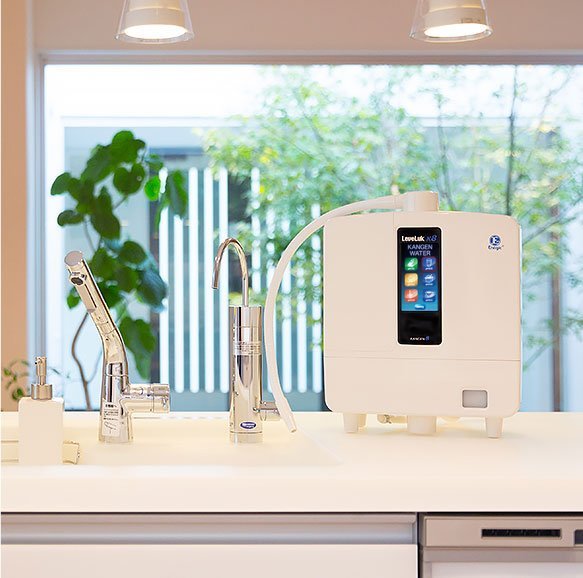
The LeveLuk K8 is the eight-plate water ionizer we sell. It filters tap water and makes water across a range of pH settings, from 2.5 to 11.5 according to the manufacturer. It does not add oxygen to water, and we make no performance or health claim for it. Specs are on the product page.
The bottom line on oxygenated water
Oxygenated water holds more oxygen than tap water when it leaves the factory. Most of that escapes once the bottle is open, and your gut is not built to absorb what is left. By McGill’s numbers, a whole liter holds about one breath’s worth at most. Two controlled trials found no effect on exercise, and the one positive trial was small, used one nanobubble product, and had the manufacturer involved.
Drink it if you like it. Do not pay extra for a benefit the research has not shown. And never confuse it with “oxygenated water 20 volumes,” which is hydrogen peroxide. For the hydrogen version of this story, see whether hydrogen water is a hoax.
This article is for general information and is not medical advice. Talk to your doctor before relying on any drink for exercise performance, breathing, or a health condition. If someone swallows a hydrogen peroxide product, call Poison Control at 1-800-222-1222.
Before you go
Get the next honest answer by email
We'd rather tell you when the answer is no. One email a week, written the same way as this post.