Where to buy hydrogen water: the four channels, and whether the hydrogen survives the trip
We sell water ionizers, so read everything below with that in mind. We would rather say it in the first line than bury it at the bottom. If you are looking for where to buy hydrogen water, the honest answer is that the channel you choose matters less for price than for whether there is any dissolved hydrogen left in the glass by the time you drink it.
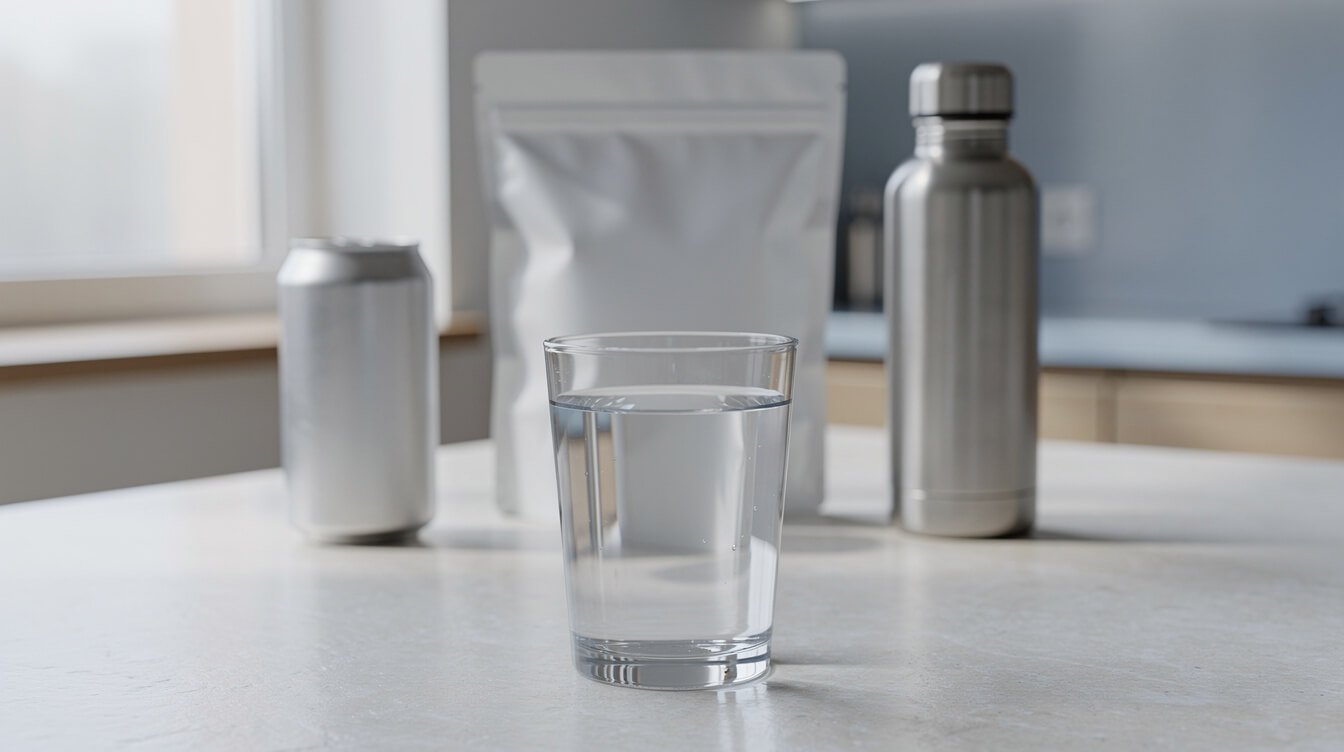
There are four real channels: pre-bottled and canned products, tablets you drop into your own water, portable bottles that make it on the spot, and countertop machines. They are four levels of retention, not four prices for the same thing.
Why the channel matters more than the price
Hydrogen water is ordinary water with hydrogen gas, H2, dissolved in it. The gas is colorless, tasteless, and does nothing to the water’s pH; pH and dissolved hydrogen are separate properties, which we untangle in hydrogen water vs alkaline water vs Kangen water.
The buying channel matters because of two physical facts. Water holds only about 1.6 mg of hydrogen per liter (1.6 ppm) at one atmosphere and 25 °C. And hydrogen, one of the smallest molecules there is, does not stay put: in an open container a large share of it escapes within an hour. The channel you pick is really a proxy for elapsed time.
| Channel | Cost profile | How the hydrogen gets in | Retention when you drink it |
|---|---|---|---|
| Pre-bottled and canned | Highest per serving | Dissolved at the factory, then sealed | Weakest and least verifiable |
| Tablets | Lowest per use, but recurring | Magnesium reacts with the water in your glass | High briefly, then falls once the glass is open |
| Portable generator bottles | One-time, modest | A small electrolysis cell in the base | Good at the moment of generation, if the cell and seal are decent |
| Countertop machines | One-time, highest | Electrolysis across a membrane, at the tap | Good if you drink it straight away |
Channel one: pre-bottled and canned
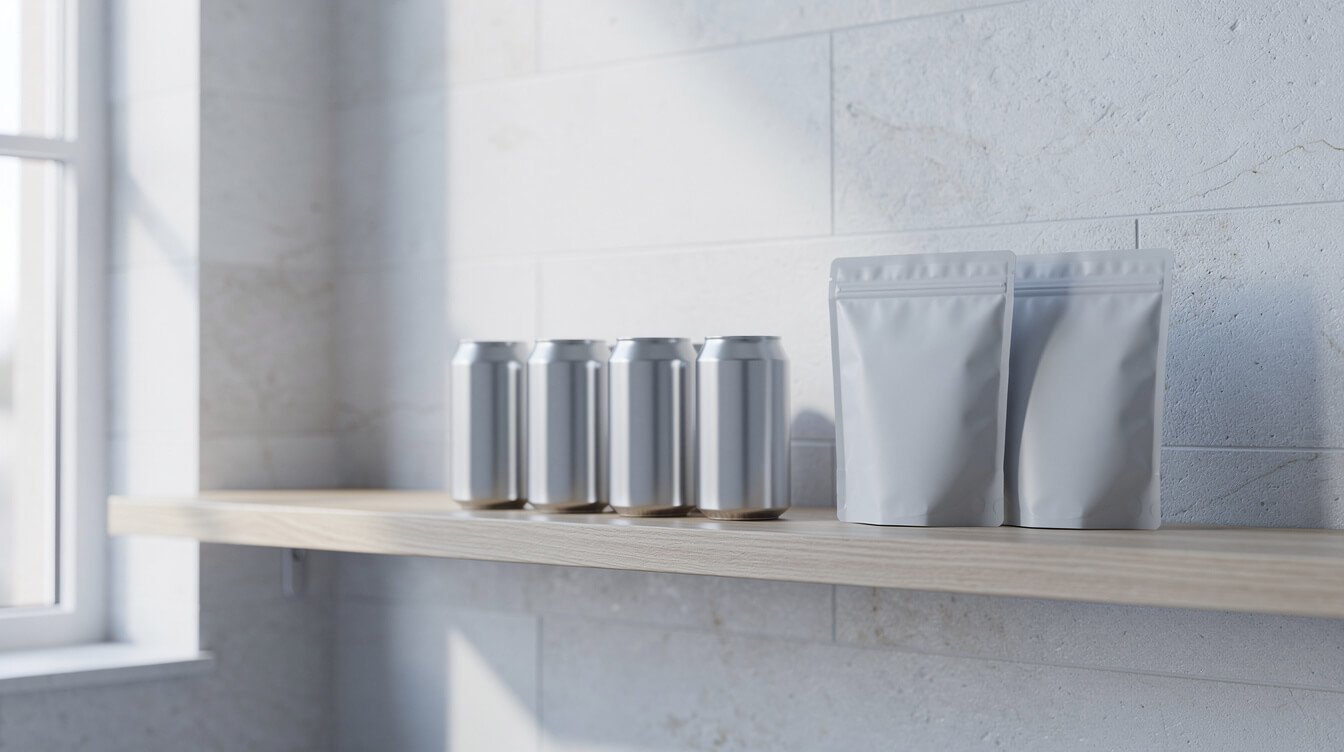
Grocery chains, Amazon and brand-direct sites sell single servings. Per liter, that is one of the most expensive ways to buy water there is.
What you are really buying is the packaging. Gas permeates plastic through the free space between polymer chains, hydrogen is small enough to use those gaps better than almost anything else, and no ordinary plastic is a true barrier to it. A continuous metal or glass wall has no such path. That is why the serious products come in sealed aluminum pouches and cans: it is the only format in which the product has a chance of still containing what it claims.
- Clear plastic bottle: treat the hydrogen claim as decorative.
- Sealed aluminum pouch or can: the right format, but still unverifiable from the outside.
- No fill date: you cannot assess retention without elapsed time, and almost no brand discloses it.
As a one-off trial it is fine. As a habit it is hard to defend.
Channel two: tablets you drop into your own water

Tablets are the cheapest way to generate hydrogen rather than buy it pre-made: roughly 70 cents to a little over a dollar each for the leading brands, as of October 2026. They are mostly elemental magnesium, about 80 mg per tablet, often with an organic acid to speed the reaction. Magnesium reacts with water to produce magnesium hydroxide and hydrogen gas.
In a closed bottle, that reaction can briefly push dissolved hydrogen above the normal ceiling, which is called supersaturation and is why tablet packaging advertises figures well above 1.6 ppm. Supersaturation is unstable by definition. Once the bottle is open, the excess comes out of solution. A tablet dropped into an open glass is mostly a bubble display.
The magnesium stays in your water, so you are taking a mineral dose as well as a gas, which matters for some people (see below). Even so, tablets are the channel we would point a curious person toward first, and we do not sell them. If the whole thing does nothing for you, you are out a few dollars rather than several thousand.
Channel three: portable hydrogen bottles
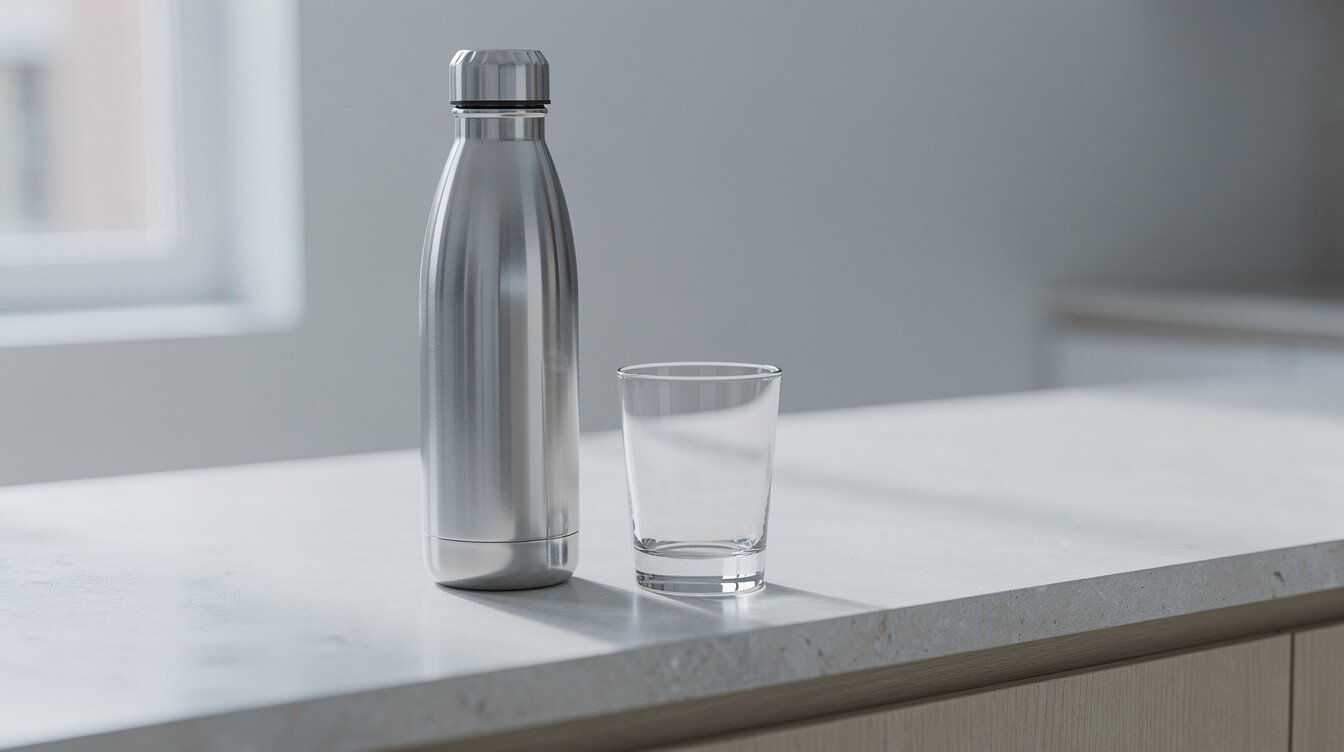
A portable hydrogen bottle is a small electrolysis cell in the base of a flask. You fill it, run a short cycle, and drink.
On retention this channel is strong, because generation happens seconds before drinking. What varies is the cell: whether it uses a proton exchange membrane to separate the hydrogen from the oxygen and other electrolysis by-products, or simply runs current through the water and lets everything mix. The second approach is cheaper and common at the bottom of the range.
For someone who wants to drink hydrogen water regularly rather than try it once, this is the best ratio of dissolved hydrogen to dollars spent. That conclusion does not help us.
Honest answers, weekly
The research, without the sales pitch
One short email a week: what a study actually found, what it didn't, and what's worth your attention. No spam. Unsubscribe anytime.
Channel four: countertop machines and ionizers
This is the channel we are in. Countertop water ionizers are what we sell, so weigh what follows accordingly.
An ionizer runs tap water across electrode plates and splits the stream, raising the pH on one side and lowering it on the other. Because that is electrolysis, it produces dissolved hydrogen on the alkaline stream. We walk through it in how water ionization works.
But an ionizer is designed and priced as an ionizer and a filter, not as a dedicated hydrogen generator, and a good portable bottle beats it comfortably on hydrogen per dollar. What the machine buys you is filtration, multiple pH settings, flow at the tap, and the fact that it is always there. If dissolved hydrogen is the only thing you care about, do not buy a machine for that reason. For the pH side of this question, see where to buy alkaline ionized water.
How to read a ppm claim on any channel
- Does it exceed the ceiling? Figures of 8, 12 or 16 ppm describe transient supersaturation in a sealed vessel, or overstatement. Neither is what is in an open glass.
- When was it measured? Concentration at the instant of generation and at the moment you drink diverge within minutes.
- In what volume? Ppm is a ratio. The same tablet in 250 mL and in 750 mL gives very different figures from identical chemistry.
- Measured by whom? Most retail figures come from the seller with no method stated. Treat an unsourced number as marketing copy.
On what the hydrogen does once you drink it, the human evidence is small and early, and the best pooled data in healthy adults, which mixes drinking water with inhaled gas and baths, is mixed: no change in one oxidative-stress marker and a small improvement in antioxidant capacity. We cover that in is hydrogen water a hoax.
Who should be careful
Dissolved hydrogen itself has no established contraindication. The cautions attach to what comes with it: raised pH, minerals, and the magnesium in tablets. If you have chronic kidney disease or are at risk of calcium-alkali syndrome, take proton pump inhibitors, are on a sodium-restricted diet, or are pregnant or buying for an infant, talk to a clinician first, and if they say no, that is the answer. More in alkaline water and kidney health.
If an ionizer is what you actually want
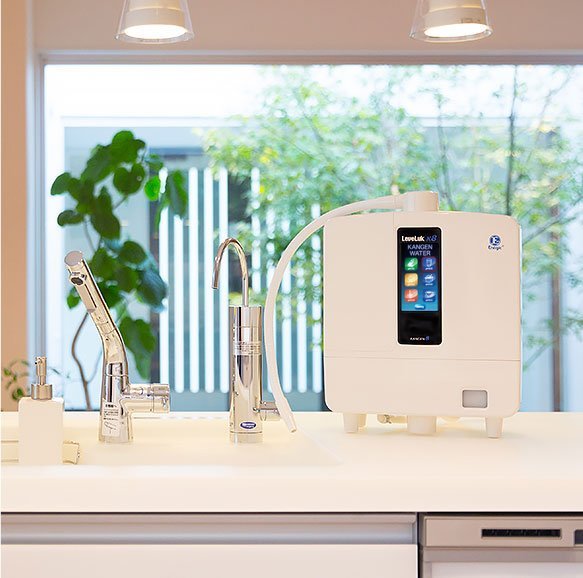
The LeveLuk K8 is our eight-plate flagship machine: filtration and adjustable pH at the tap, with dissolved hydrogen as a by-product rather than the purchase case. Specs and documentation are on the product page.
How to choose
If you only want to try hydrogen water, start with something you drink right after it is made, not a product that has sat on a shelf. If hydrogen is the main goal, a portable bottle with a proton exchange membrane makes it fresh, in the container you drink from. If what you actually want is filtered water with adjustable pH, that is a countertop ionizer, and the hydrogen is a by-product rather than the reason to buy it.
This article is for general information and is not medical advice. Talk to your doctor before changing what you drink, especially if you have kidney disease or take medication.
Before you go
Get the next honest answer by email
We'd rather tell you when the answer is no. One email a week, written the same way as this post.