Electrolyzed reduced water: how to read the research, including the parts dealers skip
We sell Enagic water ionizers, which make electrolyzed reduced water. You should weigh everything below with that in mind, and we would rather say it in the first line than bury it at the bottom.
If you have typed “electrolyzed reduced water” into a search box, you are probably already reading papers rather than sales pages. That is the right instinct. It is also where this category gets confusing, because the research under this name spans test-tube chemistry, cell cultures, rats, and a much smaller number of people, and it has changed its mind about what in the water matters. This post is a guide to reading that literature, including the safety limits written into the same papers dealers like to cite.
What electrolyzed reduced water is
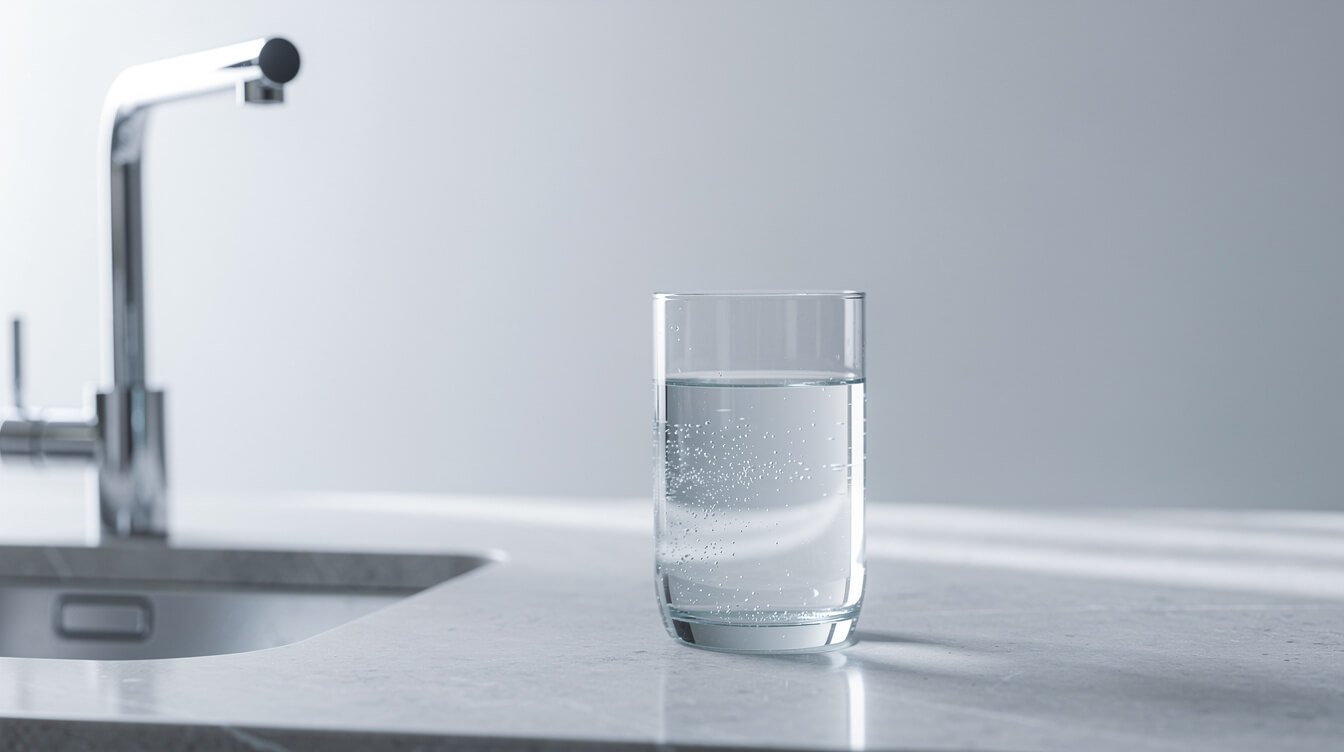
Electrolyzed reduced water (ERW) is the research name for what a home ionizer dispenses as its alkaline stream. It is the same thing sold as “alkaline ionized water” and, under Enagic’s trademark, as Kangen Water. A current runs between two electrodes separated by a membrane. Water on the cathode side gains a higher pH and a small amount of dissolved hydrogen gas (H₂). Water on the anode side becomes acidic and is called electrolyzed oxidizing water. “Reduced” is the chemistry term for that cathode side, not a health claim.
Two properties come out of the cathode at once, and they are different things. pH measures how alkaline the water is. Dissolved H₂ is a gas carried in the water that does not change its pH. Our post on how a water ionizer works covers the plates and membrane in more detail.

Why older and newer studies disagree about what matters
The early ERW papers were not sure what the active ingredient was. A widely cited 1997 paper by Shirahata and colleagues (Biochem Biophys Res Commun, PMID 9169001) was test-tube chemistry: no cells, no animals, no people. It reported that ERW neutralized reactive oxygen molecules in a lab assay and credited “active hydrogen”, meaning atomic hydrogen. In that same assay, water bubbled with ordinary hydrogen gas did not show the effect.
Over the following decades, other explanations came and went: the high pH, the negative oxidation-reduction potential (ORP), “microclusters”, free electrons. A 2022 narrative review by LeBaron, Sharpe, and Ohno (Int J Mol Sci, Review I, PMID 36499079) went through these one by one. It concluded that dissolved molecular hydrogen alone explains both the negative ORP and the effects reported in the research, and that none of the other proposed properties are needed. Disclosure: LeBaron is affiliated with the Molecular Hydrogen Institute, and the authors declare no conflict of interest.
The practical consequence is simple. A study that describes ERW only by its pH or ORP tells you little about the water that was actually tested. The hydrogen concentration is what you need, and Review II’s authors say the field spent years focused on pH and ORP instead.
How to read an electrolyzed reduced water study
Before taking anything from an electrolyzed reduced water paper, ask four questions.
- What was studied: a test tube, cells, animals, or people? Much of this literature is the first three. Those studies are useful for generating hypotheses. They do not show that a glass of water does anything for a person.
- What water was used? A 2011 paper by Yan and colleagues (BMC Proceedings, PMID 22373490) is a conference abstract that tested cultured nerve-derived cell lines. The ERW it describes was made in a lab electrolysis device from a sodium hydroxide solution and measured about pH 11.6, well above anything the same field says to drink.
- Was hydrogen measured, and how? If a paper reports only ORP, see the section on measurement below.
- Who wrote it? Some prominent authors in this field, including the reviewers cited here, are affiliated with hydrogen organizations or companies. That does not make a paper wrong. It is context worth knowing.
Human trials of hydrogen-rich water do exist, but they are few and small. Our post on molecular hydrogen water goes through that evidence, and our answer to whether hydrogen water is a hoax covers the skeptic’s version.
What the same literature says about safety
The companion paper, Review II (LeBaron, Sharpe, and Ohno, Int J Mol Sci 2022, PMID 36498838), is the main safety source on electrolyzed reduced water. Dealer pages rarely quote it. Here is what it says.
- A pH ceiling. The review reports that clinical studies found some people developed dangerous hyperkalemia, meaning high blood potassium, when ERW exceeded pH 9.8. It states that Japanese and Korean regulations cap drinking ERW at pH 9.8.
- Kidney function. It recommends that people with impaired kidney function not use ERW without medical supervision. Our post on alkaline water and kidney health covers this in more depth.
- Older animal findings. Several rat studies from the 1990s reported heart tissue damage and hyperkalemia in animals drinking ERW. The reviewers say the cause has never been worked out. They suggest the high pH or electrode wear, not the hydrogen.
- Electrode particles. Platinum nanoparticles shed from electrodes are named as a possible concern. The review notes they are generally below detection limits, so read this as an open question, not a finding.
The manufacturer’s own guidance points the same way. On Enagic’s K8 product page, only Kangen Water at pH 8.5 to 9.5 is described as “intended for daily drinking and cooking”. The higher-pH Strong Kangen Water is “not intended for drinking” (as of October 2026).
Honest answers, weekly
The research, without the sales pitch
One short email a week: what a study actually found, what it didn't, and what's worth your attention. No spam. Unsubscribe anytime.
How much hydrogen an ionizer actually delivers
Review II also gives a number most sales pages leave out. Most ionizers, when new and running on suitable source water at a normal flow rate, produce about 0.2 to 1.2 mg/L of dissolved H₂ across pH 8.5 to 10.5. Depending on the machine, electrodes, voltage, source-water minerals, flow rate, and how clean the electrodes are, the full range runs from below 0.01 mg/L to nearly 2 mg/L.
Scale matters more than most owners realize. Calcium deposits on the cathode reduce the H₂ that dissolves. The authors report seeing some ionizers fall from nearly 1 mg/L to below 0.01 mg/L within about two weeks, recovering after a citric acid cleaning. That is the authors’ own observation, not a controlled trial.
The review also explains why an ORP meter cannot tell you how much hydrogen is present. At pH 9, water with 0.1 mg/L of H₂ reads about −497 mV. Ten times as much hydrogen, 1 mg/L, reads about −527 mV. That difference is within a typical meter’s margin of error, and raising the pH by half a unit moves the reading the same amount. At pH 10.5, water can read −580 to −730 mV while holding under 0.1 mg/L of H₂. A very negative ORP reading mostly reflects pH. If hydrogen is the point, measure hydrogen.
Who should not drink it
This water is not for everyone, and we would rather say so here than in small print.
- Anyone with impaired kidney function, or anyone who has been told to watch their potassium. Talk to your nephrologist first, and if they say no, that is the answer.
- People on acid-suppressing medication, including proton pump inhibitors. A 2026 narrative review in Frontiers in Medicine (Alebrahim and colleagues, PMID 42433989) lists people taking acid-suppressing drugs among its cautions.
- Pregnant women, infants, and children. The same review lists pregnancy and children. Ask your doctor before giving it to a child.
- Anyone on a sodium- or potassium-restricted diet, who should check with their doctor first.
Our post on alkaline water side effects covers the wider list.
The LeveLuk K8
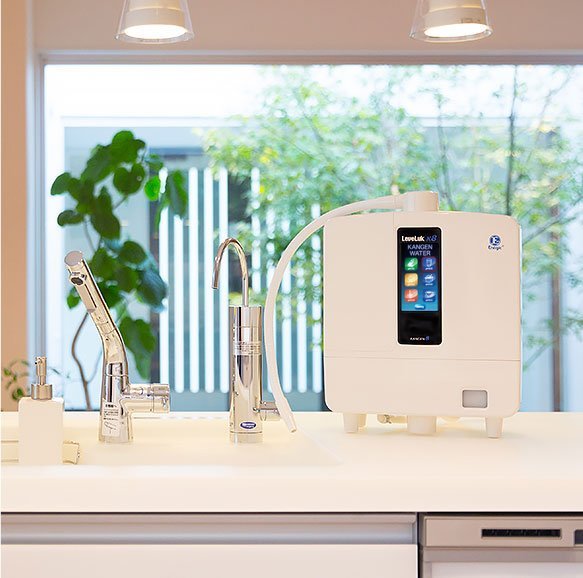
Enagic’s K8 is an ionizer with eight platinum-coated titanium plates. It filters tap water and makes five water types. Enagic designates only the pH 8.5 to 9.5 setting for drinking. Specs, warranty, and documentation are on the product page.
Electrolyzed reduced water: the short version
Electrolyzed reduced water is the cathode-side output of an ionizer: alkaline water carrying a small, variable amount of dissolved hydrogen. The field’s own reviewers now attribute the reported effects to the hydrogen, not the pH or ORP. Much of the research is cell and animal work, so read each paper for its evidence class before reading its conclusion. The same reviewers set the safety limits: stay at or below pH 9.8, which Enagic narrows to 8.5 to 9.5 for drinking, and talk to a doctor first if your kidneys or potassium are a concern. If you own a machine, keep the electrodes clean and measure hydrogen directly rather than trusting an ORP number.
This article is for general information and is not medical advice. Talk to your doctor before changing what you drink, especially if you have kidney disease, are pregnant, or take medication.
Before you go
Get the next honest answer by email
We'd rather tell you when the answer is no. One email a week, written the same way as this post.