
Best hydrogen water bottle: how to evaluate the claims before you buy
We sell water ionizers, not portable hydrogen water bottles — so take everything below with that in mind. We wrote this guide because most “best hydrogen water bottle” roundups are affiliate placements dressed up as reviews, and the people asking this question deserve an honest answer about what these devices actually do before they spend money on one.
This is not a ranked list of products. It is the set of technical questions worth asking before you buy any hydrogen water bottle, how to read the reviews underneath it, and an honest look at what the evidence for drinking dissolved hydrogen actually supports.
What “hydrogen water” actually means
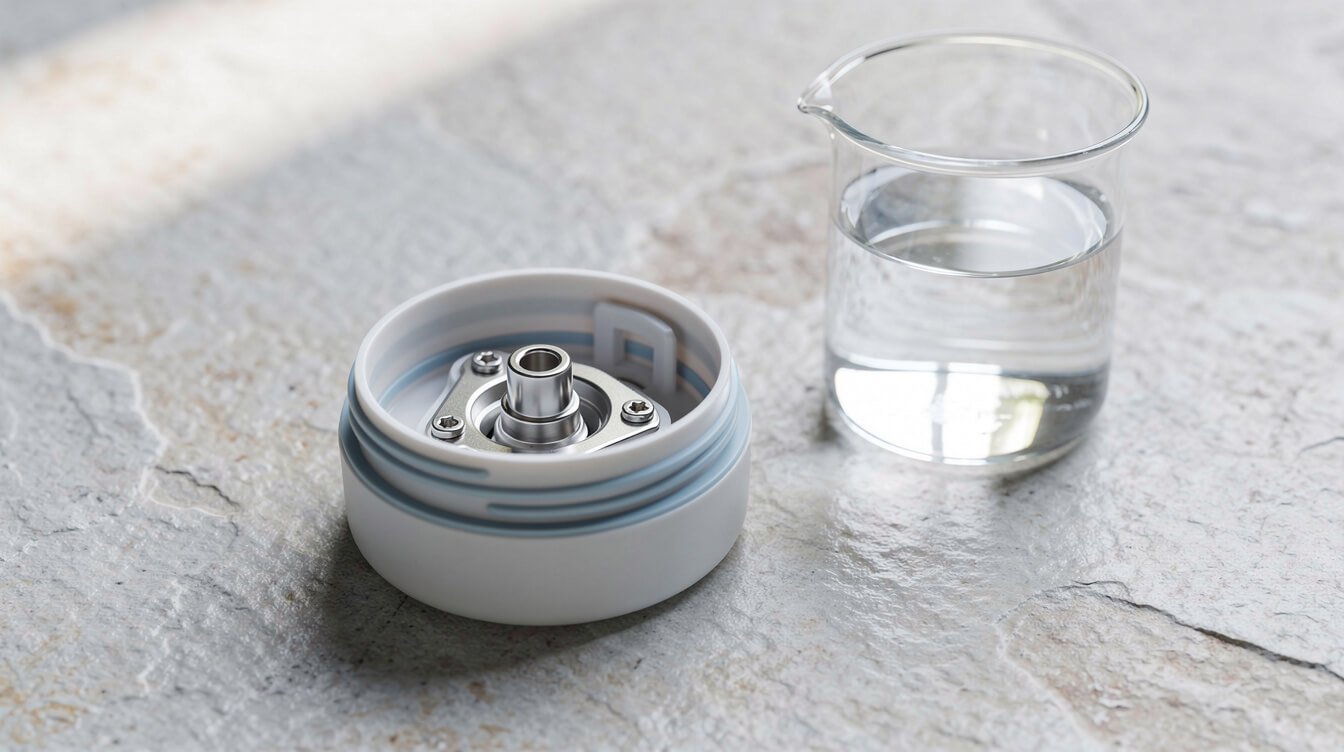
Most hydrogen water bottles work by electrolysis: a small electrode splits water molecules, and dissolved molecular hydrogen (H₂) gas infuses into the water in the chamber. That is a different property from pH. H₂ is a colorless, tasteless gas — it does not meaningfully raise the water’s pH the way a twin-chamber countertop ionizer does, and it does not add minerals. This matters because a lot of marketing in this category blurs “hydrogen” and “alkaline” into one vague idea of “ionized water.” They are not the same claim, and they do not rest on the same evidence.
ORP (oxidation-reduction potential) is a third, separate measurement some bottles display. A negative ORP reading is not proof of dissolved hydrogen content — it is a voltage measurement that can be influenced by several things in the water. If a bottle’s marketing leans on an ORP number instead of a verified hydrogen concentration, that is worth noticing.
How to read a hydrogen concentration claim
Hydrogen concentration is usually reported in parts per million (ppm) or parts per billion (ppb). Three questions separate a real number from a marketing number:
- What method measured it? Titration and dissolved-hydrogen meters give different readings under different conditions. A number with no method attached is not verifiable.
- Was the test independent? A figure from the manufacturer’s own lab is a starting point, not confirmation.
- Were the conditions disclosed? Water temperature, fill volume, and time since infusion all change the reading. Dissolved hydrogen escapes water steadily, and the concentration can drop noticeably within an hour in an open container, faster if the water is warm.
The technology that separates a decent bottle from a bad one
The electrolysis method matters more than the packaging. SPE/PEM (solid polymer electrolyte / proton exchange membrane) electrolysis is the current standard for producing dissolved hydrogen without also generating chlorine or ozone as a byproduct — which can happen with cheaper electrode designs run directly in tap water. Beyond the electrolysis method, a few practical details predict whether a bottle holds up:
- Membrane access — can you actually clean it, or is it sealed in a way that just accumulates mineral scale over time?
- Materials and certifications — food-grade plastics or glass, with the certifications to back it up, not just the word “safe” on the listing.
- Venting — hydrogen and any byproduct gas need somewhere to go; a sealed bottle with no venting is a pressure problem waiting to happen.
- Battery life and charging — a reasonable number of infusion cycles per charge, and a standard charging port rather than a proprietary one you’ll lose.
Reading the reviews: spotting fake ones and writing a useful one
Most reviews describe the unboxing, the LED, and water that “tasted cleaner.” None of that is a hydrogen claim — H₂ has no taste, so a taste change is temperature, filtration, or expectation. Before weighing what a review says, check whether the review base itself has been manipulated:
- Timing clusters. A burst of five-star reviews in a listing’s first two weeks, followed by a long gap, looks more like a launch-incentive campaign than organic adoption.
- Repeated phrasing. The same phrase (“amazing hydration boost”) verbatim across unrelated accounts is usually a talking point, not a coincidence.
- Verified purchase is not verified use. The tag confirms a transaction, not a month of use.
- Longevity beats day one. Reviews from three-plus months in tell you whether the membrane, battery, and seals still work.
None of this proves a given review is fake. But when a rating looks too uniformly positive for a claim that is genuinely hard to measure, the uniformity is the signal. If you buy one and want to leave a review worth reading, say when you tested the water (right after infusion or hours later), say whether you measured anything or are reporting how it felt, update it after a month, and disclose if you got the unit free or discounted.
Honest answers, weekly
The research, without the sales pitch
One short email a week: what a study actually found, what it didn't, and what's worth your attention. No spam. Unsubscribe anytime.
What the evidence for drinking hydrogen water actually supports
Be precise about which claim you’re evaluating. The pepsin-denaturation finding sometimes cited in this category — that water at pH 8.8 can deactivate pepsin, relevant to acid reflux (Koufman & Johnston, 2012, Annals of Otology, Rhinology & Laryngology) — is real, but it is an in vitro laboratory result, not a clinical trial in people, and it is about pH, not dissolved hydrogen. Most portable hydrogen bottles do not raise pH meaningfully, so that finding does not transfer to this product category at all.
For molecular hydrogen specifically, the honest summary is: a handful of small human pilot studies have looked at oxidative-stress and inflammation markers after drinking hydrogen-infused water, and some report favorable changes. Sample sizes are typically small, results are mixed across studies, and no major health authority treats molecular hydrogen as an established treatment for any condition. If you see a claim that hydrogen water treats, cures, or prevents a disease, that claim is ahead of what the research supports. We go through the wider evidence in is hydrogen water a hoax.
One thing this category has in its favor, and it is unglamorous: people who like the taste of their water tend to drink more of it. If a hydrogen bottle gets you to drink more water in a day, that is a real, if modest, benefit — independent of whatever the dissolved hydrogen is or isn’t doing.
Who this is a reasonable idea for, and who should be more skeptical
Here is a distinction worth making, because it runs the opposite direction from what people expect: dissolved hydrogen alone does not shift pH or add minerals, so the cautions that apply to alkaline water — chronic kidney disease, calcium-alkali syndrome risk, sodium-restricted diets, long-term PPI use — do not obviously extend to a bottle that is only infusing H₂ gas. We cover those alkaline-specific cautions in alkaline water and kidney health.
That said, “no known reason for caution” is not the same as “shown to be beneficial.” If a bottle also markets itself as raising pH significantly — some combination devices do — the alkaline-water cautions apply to it too, so read the label.
Frequently asked questions
Is a higher ppm always better?
Not necessarily, and an unverified ppm figure tells you less than a verified low one. See the questions above before trusting the number on the box.
Bottle or countertop machine — what’s actually different?
A portable bottle infuses hydrogen on demand and travels with you, but needs charging and a membrane that degrades over time. A countertop ionizer works differently — continuous electrolysis at the tap, a built-in filter that needs periodic replacement, and typically a meaningful pH shift alongside the hydrogen, which a portable bottle usually does not produce. For daily portability, a bottle wins.
Are hydrogen water bottles safe?
For most healthy adults, drinking hydrogen-infused water appears to carry low risk — it is, after all, still water. The bigger risk in this category is financial (overpaying for unverified claims), not physiological. See our note on hydrogen water side effects for a fuller answer.
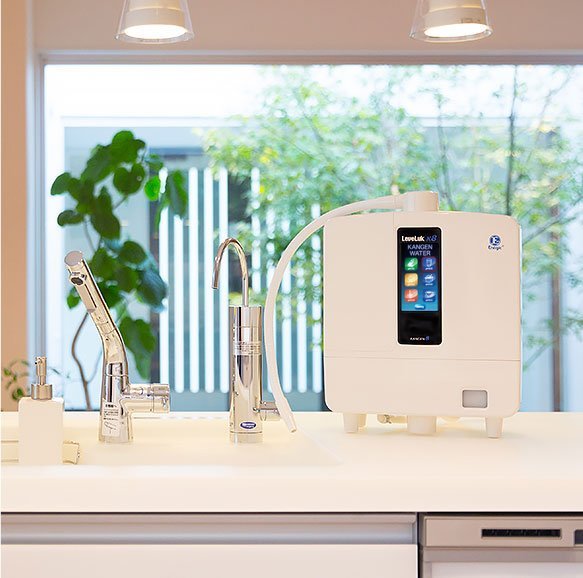
Prefer a countertop machine to a bottle you charge?
The LeveLuk K8 is our flagship countertop ionizer: electrolysis and filtration at the tap, with a filter you replace periodically. Different category, different tradeoffs — for portability, a bottle still wins.
The bottom line
Most “best hydrogen water bottle” content online is written to sell a specific bottle. Judge any bottle by the electrolysis method, whether the hydrogen concentration claim has a verifiable method behind it, and whether the membrane is something you can actually maintain — not by the ppm number on the front of the box or a wall of five-star reviews. And keep the evidence claims separated by what they actually are: real in-vitro chemistry about pH, a modest and unglamorous “you’ll drink more water” effect, and a still-thin body of early human research that does not support disease-related claims for any product in this category.
This article is for general information and is not medical advice. Talk to your doctor before changing what you drink, especially if you have kidney disease or take medication.
Before you go
Get the next honest answer by email
We'd rather tell you when the answer is no. One email a week, written the same way as this post.