
Iron in water test: what your water is already telling you, and which test answers which question
We sell water ionizers. They are not iron filters and they are not water tests, so nothing in this guide ends with a reason to buy one. We would rather say that in the first line than bury it.
An iron in water test is usually something people look for after the problem has already shown up: orange stains in the sink, a metallic taste, laundry coming out tinted. The test is still worth doing, because the stain tells you that iron is there and the test tells you how much, in what form, and whether it matters. Below we cover what your water is already telling you, what the 0.3 mg/L number means, how to take a sample that answers the right question, and which kind of test to use.
What your water is already telling you

Iron gets into water two ways. Groundwater picks it up as it seeps through iron-bearing soil and rock, and it can also come from corroding steel well casing or iron pipes. The Minnesota Department of Health lists the usual signs: yellow, red, or brown stains on dishes, laundry, and fixtures; a metallic taste; a rainbow sheen on tea or coffee; and, over time, clogged pumps, sprinklers, and dishwashers.
How the color appears is a useful clue to the form of iron, which matters later when choosing treatment. The department describes three forms:
- Ferrous (“clear-water”) iron: the water comes out of the faucet clear, then turns red or brown after standing.
- Ferric (“red-water”) iron: the water is red or yellow as it leaves the faucet.
- Organic iron: usually yellow or brown, sometimes colorless, and more likely in very shallow wells or wells affected by surface water.
A fourth sign is slime. Sticky rusty, yellow, or brown deposits in the toilet tank, a swampy or musty smell, or an oil-like sheen can point to iron bacteria. These are observations, not a diagnosis. Only a lab result confirms what you are looking at.
What the 0.3 mg/L number is, and what it isn’t
Almost every iron in water test result gets compared to one number: 0.3 milligrams per liter. That figure comes from the EPA’s secondary drinking water standards, and the word “secondary” matters. The EPA lists the effects of iron above 0.3 mg/L as “rusty color; sediment; metallic taste; reddish or orange staining.” It says the contaminants on that list “are not considered to present a risk to human health” at those levels, and that secondary standards “are not federally enforceable.”
So 0.3 mg/L is a nuisance threshold, not a safety limit. The Minnesota Department of Health says iron in water “does not usually present a health risk,” and that water above 0.3 mg/L “is usually considered objectionable.” It adds one real caveat: if harmful bacteria have entered a well, iron can make them harder to get rid of. That is a reason to test the well for bacteria, not a reason to fear the iron.
The same EPA table sets manganese, which often travels with iron, at 0.05 mg/L for “black to brown color; black staining; bitter metallic taste.” Black or dark brown stains point to manganese rather than iron, and Minnesota’s health department specifically recommends testing for manganese before a baby drinks the water.
How to take a sample that means something
Where and when you fill the bottle decides what the result describes. The University of Wisconsin Division of Extension’s sampling instructions use two different methods for two different questions:
- To see what you actually drink: the metals sample is taken “first thing in the morning, before any water is run,” from the faucet that supplies most of your drinking water. That water has sat in your plumbing overnight, so it includes whatever the pipes add.
- To see what the well delivers: the general sample comes from a faucet “where water is not softened or otherwise treated,” with screens and aerators removed, after running the water for at least 10 minutes, 15 being better. The instructions say the goal “is to sample water from the well.”
For iron, the second method matters most if you are deciding on treatment, because a softener or filter upstream of the tap will hide the number you need. If you already have treatment, a matched pair (one raw, one treated) shows whether it is working. Always use the bottle and instructions the lab gives you; some contain a preservative and must not be rinsed.
Honest answers, weekly
The research, without the sales pitch
One short email a week: what a study actually found, what it didn't, and what's worth your attention. No spam. Unsubscribe anytime.
Strips, color kits, and a lab: which answers which question
Not every iron test measures the same thing. One manufacturer’s ferrous iron color kit states plainly that it “measures ferrous iron,” and that to find ferric iron you subtract that result from a separate total-iron test. A total-iron method works differently: in a standard total iron procedure, the reagent “converts all soluble iron and most insoluble forms of iron” before measuring, over a range of 0.02 to 3.00 mg/L.
That gives you three practical checks for any home kit:
- Does it say total iron or ferrous iron? A ferrous-only reading can come in low on red-water iron, because the rust it is missing is the problem you can see.
- Can it resolve 0.3 mg/L? Read the color blocks on the package. If the steps jump from zero to well above 0.3, the kit cannot tell you which side of the line you are on.
- Is your question about safety, or about stains? A home kit is a reasonable screen for a nuisance problem. It is not a well-safety test.
For a number you will act on, the Minnesota Department of Health recommends an accredited laboratory, which can give “the exact amount of iron” and suggests also testing hardness, pH, alkalinity, and iron bacteria. Ask for iron and manganese together. Our guide on how to check lead in water covers how to find a certified lab and why many home kits fall short on metals. A TDS meter cannot do this job either: it reports total dissolved solids and cannot tell you which ones they are.
Reading your iron in water test result
Under 0.3 mg/L: you are below the EPA’s nuisance threshold, and there is nothing to treat for iron. If you still see color, test manganese, or look at the plumbing rather than the source.
Above 0.3 mg/L: you will probably notice it, and treatment is a choice about taste, staining, and equipment wear. Minnesota’s health department says iron is usually below 10 mg/L, and that the right treatment “depends on the form(s) of iron present, the chemistry of the water, and the type of well.” That is why the form and the full lab panel matter more than the single iron number.
Slime or odor, whatever the number: iron bacteria are “not known to cause disease,” the department says, but they “can create conditions where other disease-causing organisms may grow.” Its advice is to test the well for nitrate and coliform bacteria.
When you don’t need to do anything
If you are on a public water system, your utility tests the water and reports it each year. Our guide to whether your tap water is safe explains how to read that report and covers private wells, which are not federally regulated, so testing is up to the owner. If rusty water is new and sudden on city water, call the utility before you buy a kit. And if your well result is under 0.3 mg/L with no stains, there is nothing to fix. Don’t let a sales demonstration talk you into equipment the lab result doesn’t support, ours included.
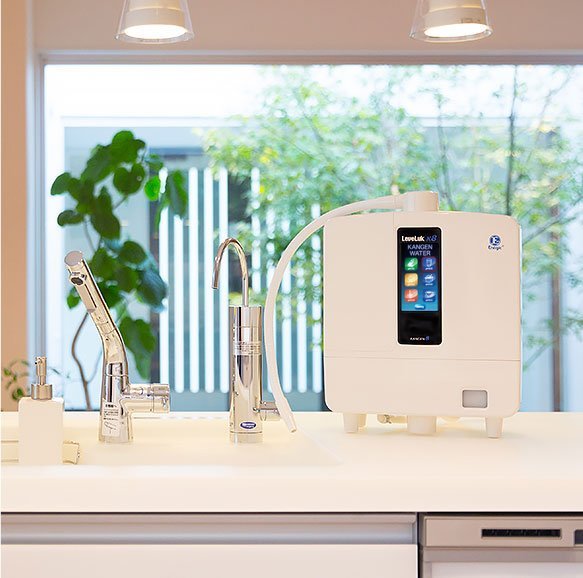
Once your water has been tested
The LeveLuk K8 is the eight-plate water ionizer we sell. It is not an iron filter or a water test, and its listing makes no iron-reduction claim, so do not buy it for an iron problem. Specs are on the product page.
The bottom line on an iron in water test
Orange stains already tell you iron is present. A test tells you how much and in what form. Sample from an untreated tap after a long flush if you are deciding on treatment, check whether your kit reads total or only ferrous iron, and use an accredited lab for any number you plan to spend money on. Above 0.3 mg/L is a nuisance, not a health limit under EPA’s own standard. If you are on a well, the more important tests are bacteria and nitrate, and an iron result is a good reminder to run them.
This article is for general information and is not medical advice. Regulatory references are current as of November 23, 2026, and may change. For questions about your well, contact your state or county health department or a licensed water professional. For city water, contact your utility.
Before you go
Get the next honest answer by email
We'd rather tell you when the answer is no. One email a week, written the same way as this post.