Alkaline Ionized Water Vs Distilled Water Clear Comparison
Think all water is the same? That’s a risky assumption. Ever notice your coffee tastes different at work than at home?
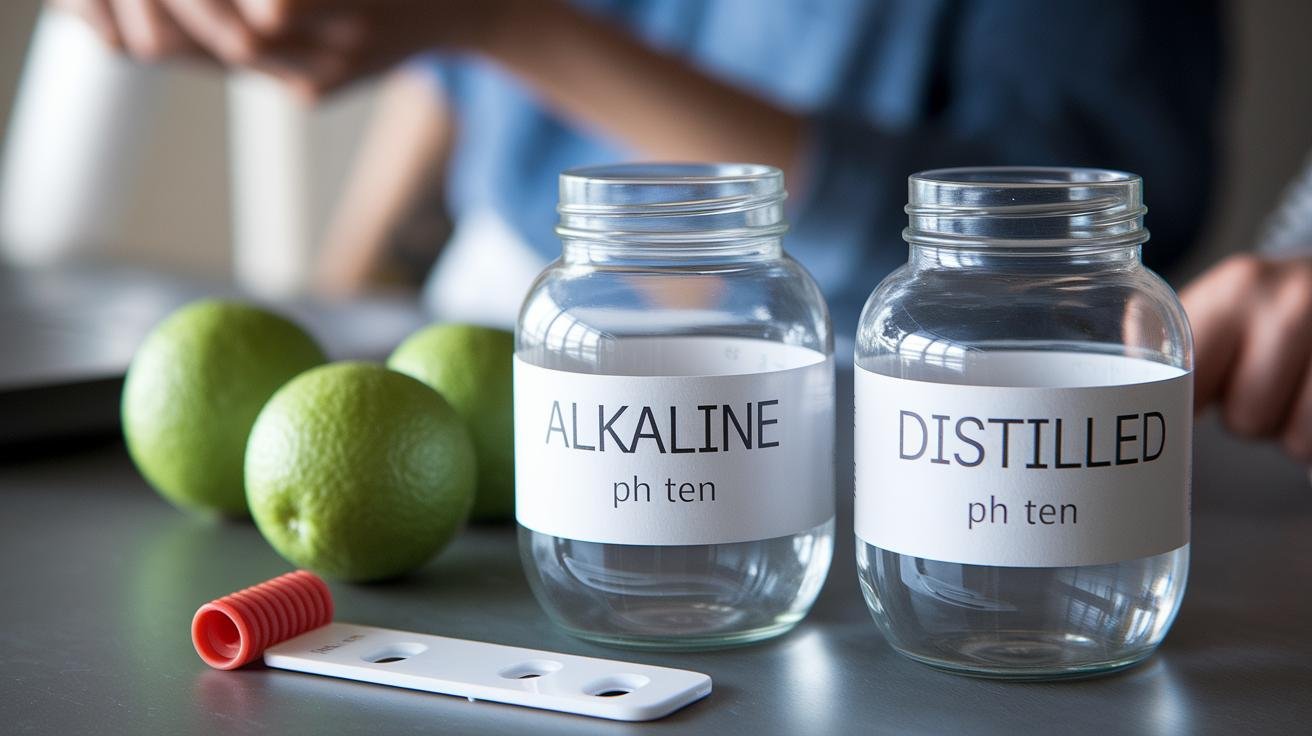
Wait, let me rephrase that. Alkaline ionized water usually has a pH of about 8 to 9 (pH is how acidic or alkaline something is). It keeps natural minerals, so you get a crisper, cooler sip. It can also contain molecular hydrogen (a tiny molecule that works like an antioxidant), which some people find refreshing.
Distilled water has virtually zero TDS (total dissolved solids, meaning minerals and tiny particles). Many people say it tastes flat. It’s ideal for lab work, steam irons, and CPAP machines, not for everyday drinking.
Here’s a quick side-by-side to show the real differences so you can pick the right water for drinking, cooking, or your devices. Which one fits your routine?
Alkaline Ionized Water Vs Distilled Water Clear Comparison
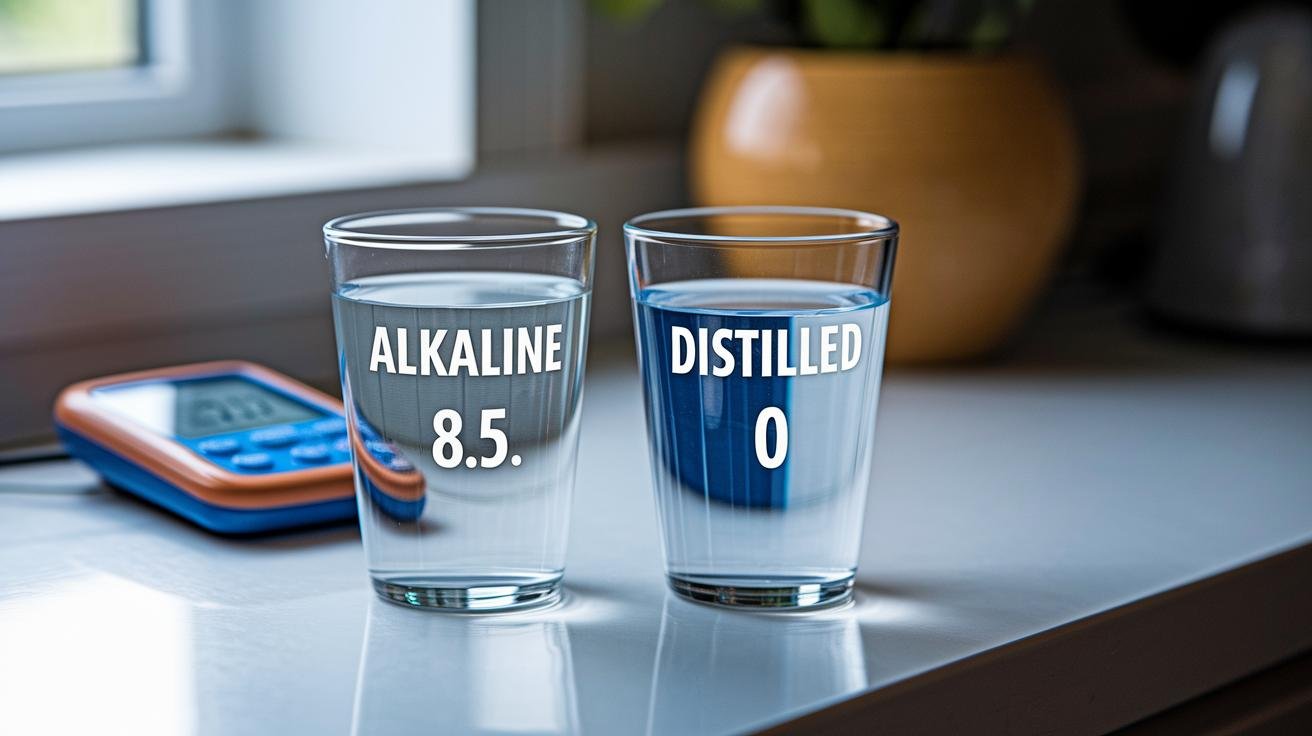
Here’s a quick, friendly side-by-side so you can see the main differences at a glance. Scan it, then decide what matters to you.
| Metric | Alkaline Ionized | Distilled |
|---|---|---|
| pH |
|
|
| TDS |
|
|
| Minerals |
|
|
| Taste |
|
|
| Antioxidants |
|
|
| Top uses |
|
|
| Pros / Cons |
|
|
Want more detail? See See Production Processes, See Water Chemistry, See Health Claims, and See Best Applications.
Production Processes for Alkaline Ionized Water vs Distilled Water
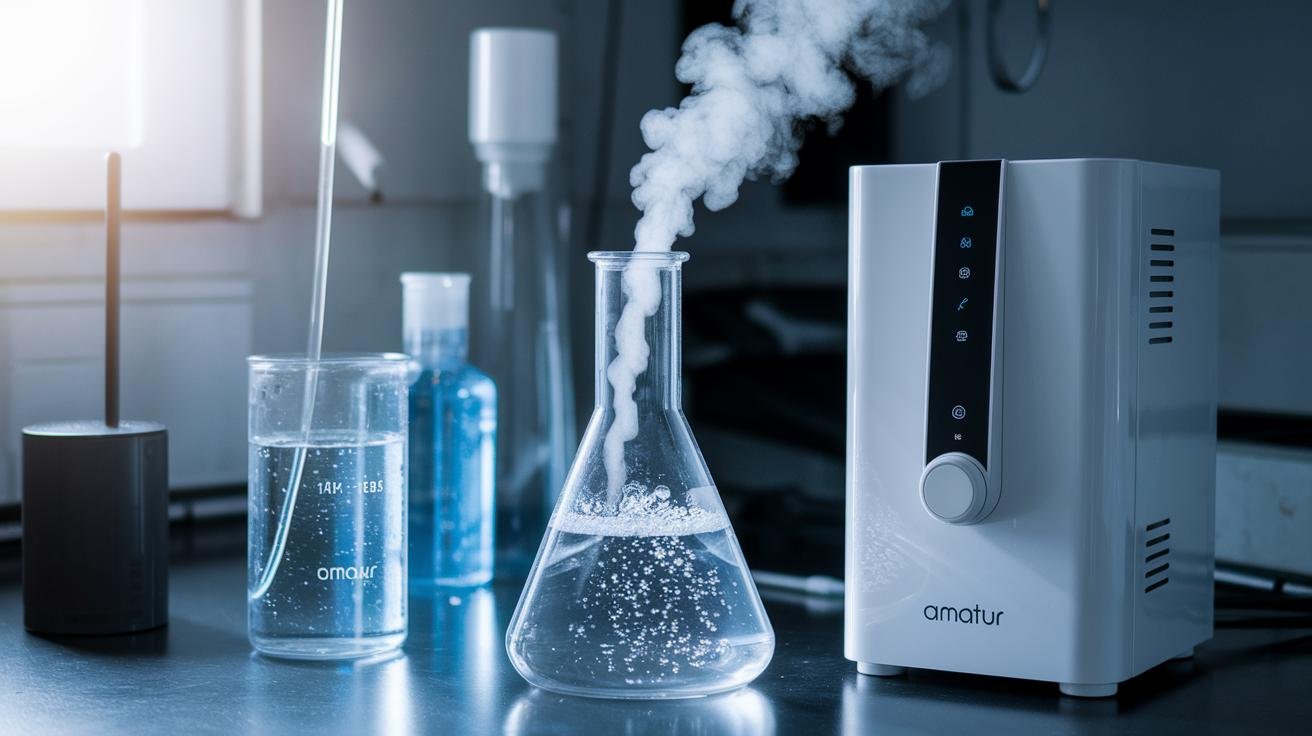
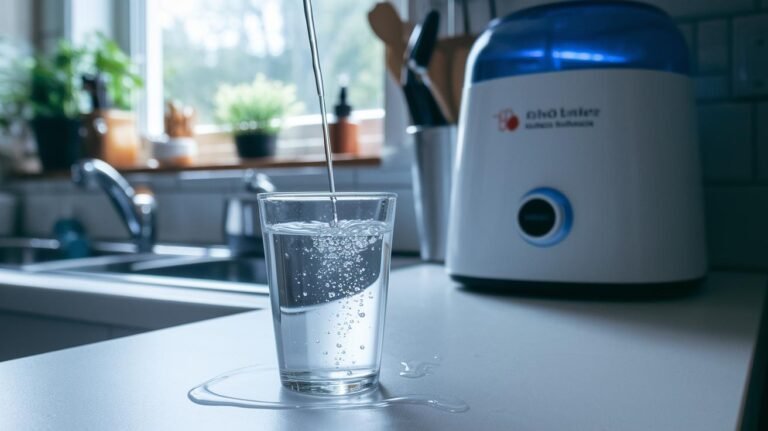
Alkaline ionized water starts with multiple filters that strip chlorine, lead, and common impurities but leave minerals like calcium and magnesium. Then the water goes through electrolysis (using an electric current to separate water into acidic and alkaline streams). This step also creates molecular hydrogen (tiny H2 molecules that may act as antioxidants). The alkaline side keeps those minerals and the hydrogen, and you get it right from the tap. Ever noticed it feels smoother, a crisp, cool sip?
For a plain overview of that electrolysis step, see How is water ionized.
Step-by-step for ionized water:
- Pre-filtration: sediment and carbon filters remove particles and odors (think chlorine taste and visible bits).
- Electrolysis: water flows across charged plates, splitting into acidic and alkaline fractions and producing molecular hydrogen (a potential antioxidant).
- Delivery: the alkaline, mineral-rich water is delivered instantly at the tap.
Distillation works in a different, simpler way. You boil water until it becomes steam at about 100 °C (212 °F), catch the vapor, then cool it so it turns back into liquid. Minerals and dissolved solids stay behind in the boil chamber, so the collected water is basically mineral-free. Pure, plain water.
Step-by-step for distilled water:
- Heat: water is vaporized, leaving heavier impurities in the pot.
- Condense: steam cools in a coil or chamber and becomes pure water.
Quick comparison: ionizers give continuous, mineral-rich alkaline water at the tap. Distillers run in batches and produce mineral-free, very pure water. Which one you prefer depends on taste and how you plan to use the water.
Water Chemistry in Alkaline Ionized Water vs Distilled Water
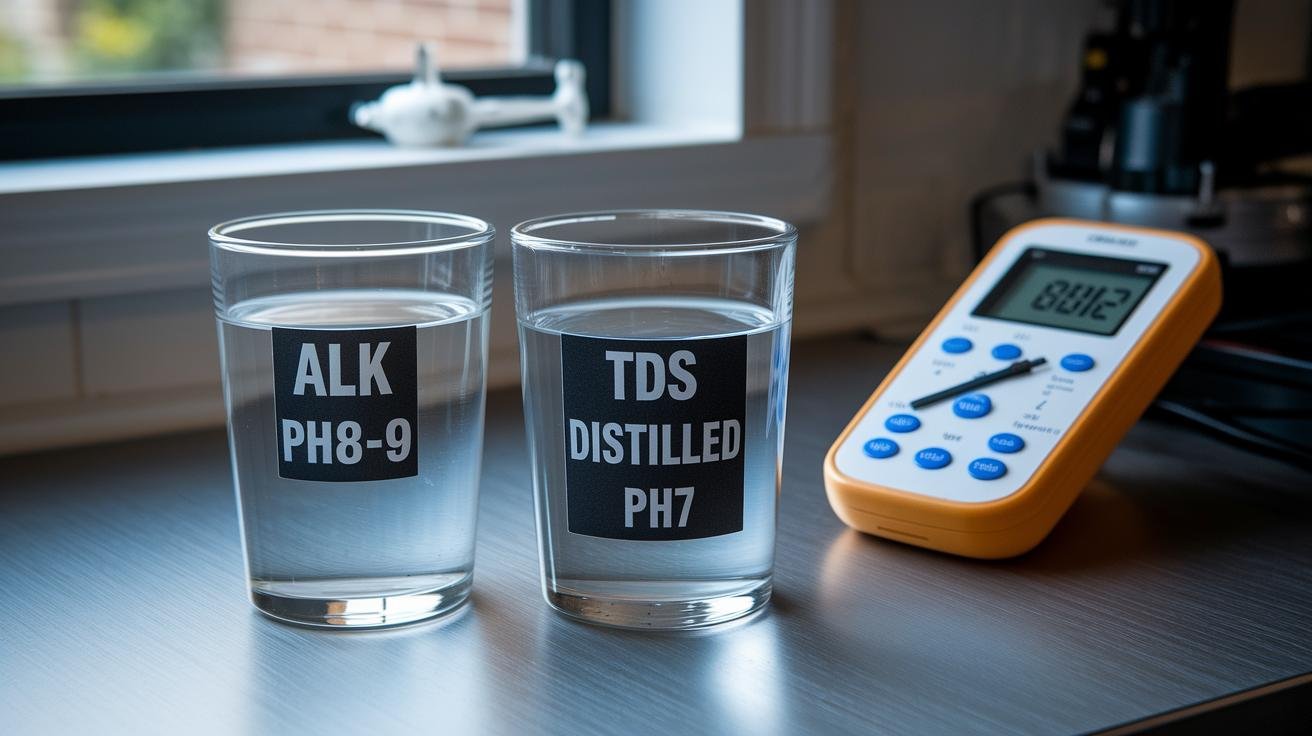
| Property | Alkaline Ionized Water | Distilled Water |
|---|---|---|
| pH (how acidic or alkaline something is) | Usually around pH 8 to 9, giving a slightly alkaline taste, think a crisp, cool sip. | About pH 7 at the tap; it can fall below 7 if the water absorbs CO₂ from air. |
| Minerals / TDS | Has calcium and magnesium: Ca ≈ 20–60 mg/L, Mg ≈ 10–30 mg/L. TDS (total dissolved solids) commonly about 30–90 mg/L (sources: WHO Guidelines for Drinking-water Quality; EPA; NSF International). | TDS ≈ 0 mg/L because distillation removes mineral ions, so there’s almost no dissolved mineral content. |
| Contaminant removal | Pre-filtration is used before electrolysis to remove chlorine and lead. Many systems include filters tested to reduce pharmaceuticals and heavy metals (manufacturer reports and NSF data). | Water is boiled and condensed, which removes most dissolved solids and many contaminants, leaving very pure water. |
| Antioxidants | Contains dissolved molecular hydrogen (H2), which is cited for antioxidant activity, see the Health Claims section for details. | No added molecular hydrogen (H2). |
Want the short version? Here it is: ionizers filter first, then use electrolysis (that’s splitting water with an electric current) to shift pH and separate an alkaline stream from an acidic one. Distillers heat water until it vaporizes, then cool that vapor back into very pure liquid.
Speaking of filters, some ionizer pre-filters are tested to cut pharmaceuticals and heavy metals (manufacturer test reports and NSF-rated filter data). So yeah, there’s a difference between a smooth, mineral-rich alkaline sip and the almost blank canvas that is distilled water.
Health Claims vs Scientific Evidence for Alkaline Ionized Water and Distilled Water
Molecular hydrogen (tiny H2 gas molecules) in alkaline ionized water has been studied a lot. Over 3,000 papers look at its antioxidant potential. Some small clinical trials and lab studies have found interesting effects: blood viscosity dropped about 6.3 percent versus 3.36 percent for regular purified water, pepsin activity went down which could help with acid reflux, and there are early signs of better stool quality. Those results hint at real effects on circulation and digestion.
Ever noticed that smooth, mineral-rich sip and wondered if it does more than taste good? The short answer: maybe. The studies point in a promising direction, but the biggest, most convincing trials are still missing.
A word of caution. Many of these hydrogen studies are short, involve small groups, or were done in the lab. So saying ionized water will cure chronic conditions is a stretch. Wait, let me rephrase that. There’s promising data, but not slam-dunk clinical proof for many big health claims. Still, antioxidant action and mild acid neutralization, pH (how acidic or alkaline something is), are plausible ways ionized water could work, and experiments back those ideas.
Distilled water is a different story. Distillation means you boil water and condense the steam, so almost every dissolved mineral and many contaminants are left behind. The World Health Organization warns that long-term drinking of mineral-free water can increase urine output (diuresis), lower blood potassium, and speed the loss of sodium, calcium, and magnesium. That can raise the risk of electrolyte imbalance over time.
For practical use, distilled water is excellent for labs, appliances, and any technical use where minerals cause problems. For everyday drinking, ionized water keeps minerals and adds molecular hydrogen, so it feels more hydrating and has more biological plausibility. Match your water choice to your health needs. If you have medical concerns or a special diet, check with your clinician.
Alkaline Ionized Water Vs Distilled Water Clear Comparison
Upfront price and ongoing cost tell very different stories. Ionizers use electrolysis (an electrical process that separates water into alkaline and acidic parts) and usually cost more to buy. Distillers boil water and condense the steam (that’s distillation), so basic units cost less at first but use more electricity.
Ionizer units like the ACE-13 or UCE-13 Plus often come with a Platinum Lifetime Warranty and financing from $42/month. That spreads the hit up front. If you drink ionized water every day, the per-gallon cost over years can end up lower than buying bottled water. Distillers run cheaper to buy but chew through power and make water slowly , about 1–2 L per hour (roughly 0.3–0.5 gallons/hour).
| Feature | Ionized Systems | Distillers |
|---|---|---|
| Upfront cost | Higher (models like ACE-13); financing often available | Lower for basic units |
| Running cost | Lower per-gallon over time if used daily | Higher due to electricity for boiling |
| Output speed | Instant flow at faucet | Slow , about 1–2 L/hour (~0.3–0.5 gal/hour) |
| Water profile | Mineral-rich alkaline output | Very pure, stripped of minerals |
| Maintenance | Filters and plate cleaning per schedule | Regular descaling of the boiling chamber |
Quick pros and cons
-
Ionized systems
- Pros: long warranty, built-in filtration, mineral-rich water that tastes smooth (a crisp, cool sip), and lower long-term per-gallon cost if you use it daily.
- Cons: higher upfront price and you’ll need periodic filter changes and plate cleaning to prevent mineral scale, follow the maker’s schedule.
-
Distillers
- Pros: very pure water and low initial purchase price for simple units.
- Cons: high electricity use, slow batch output, and regular descaling of the boiling chamber, hard water makes this worse.
Maintenance tips
- Replace pre-filters on schedule (many note every 6–12 months).
- Rinse or clean ionizer plates per the manual to reduce scale buildup.
- Descale distiller chambers often, especially with hard water, so they keep making water at the same speed.
- Keep an eye on your electric bill if you use a distiller a lot.
Which should you pick?
Ask yourself how much water you need each day, how electricity costs look where you live, and whether monthly financing fits your budget. Do you want mineral-rich, ready-at-the-faucet water, or ultra-pure, stripped water for specific uses? Ever notice your energy dip midday? A steady stream of alkaline water might feel nicer. Um, also think about taste, convenience, and how much time you want to spend on maintenance.
In truth, there’s no one-size-fits-all. If you want daily drinking water with minerals and low long-term cost, an ionizer often wins. If you need very pure water and don’t mind slower, energy-heavy batches, a distiller could be okay.
Best Applications of Alkaline Ionized Water vs Distilled Water
Trying to decide which water to use? Here’s a simple way to think about it.
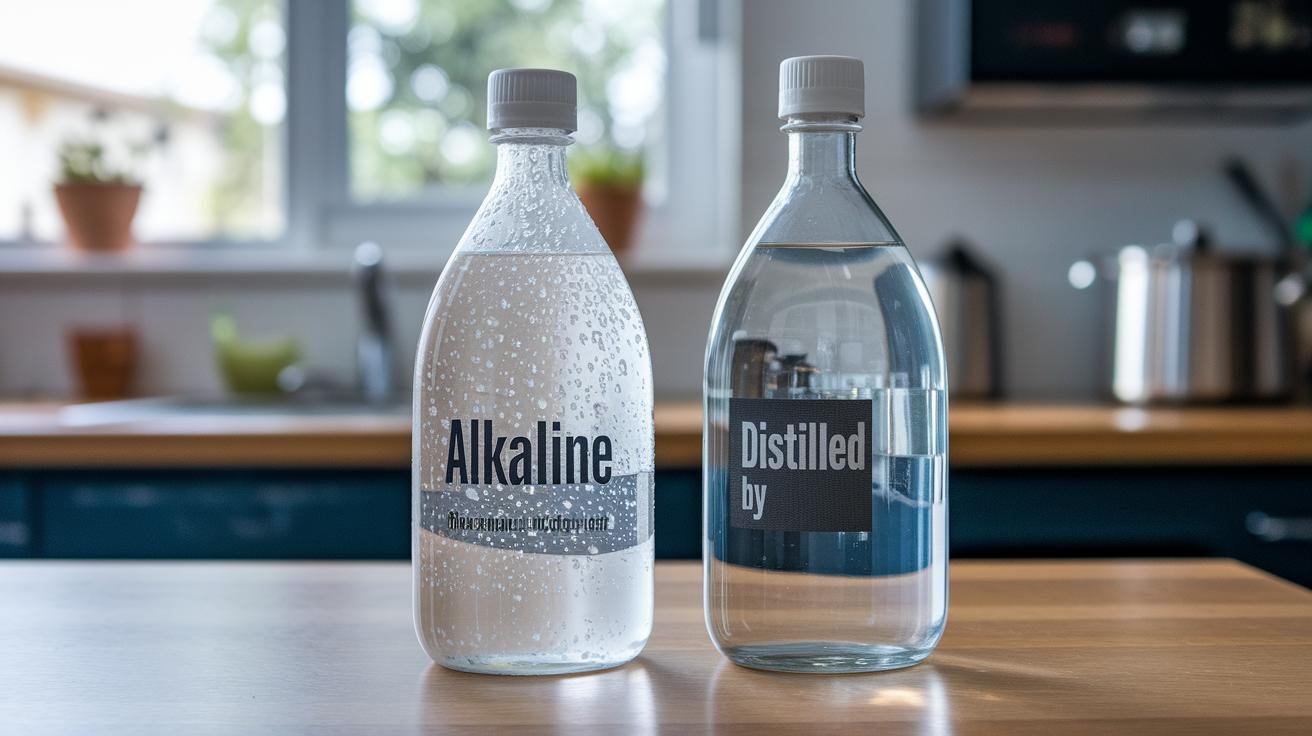
Pick alkaline ionized water for daily drinking and after workouts. It’s got a smooth, crisp taste and often a little extra hydrogen (a mild antioxidant). That makes it easy to sip and helps you stay hydrated. Use it when you want brighter flavors in cooking, think steaming rice or making soups, and for gentle skin rinses or a quick facial spritz. Pure refreshment.
Alkaline ionized water (alkaline means higher pH, which is less acidic; ionized means it’s been processed by electrolysis, splitting water into different pH streams).
Choose distilled water when you need zero minerals. It’s what you want for irons, humidifiers, CPAP machines, lab work, preparing batteries, or topping off an aquarium where extra minerals cause trouble. It’s also the go-to for precise plant nutrient mixes because there’s nothing extra to interfere.
Distilled water (pure H2O with minerals removed) keeps appliances and experiments predictable.
Quick decision tip: ionized for drinking, taste, and everyday hydration. Distilled for equipment, labs, and any situation that’s sensitive to minerals.
Example: After a run I reach for a crisp, cool glass of ionized water. It tastes clean and I end up drinking more of it.
Choosing Between Alkaline Ionized Water and Distilled Water
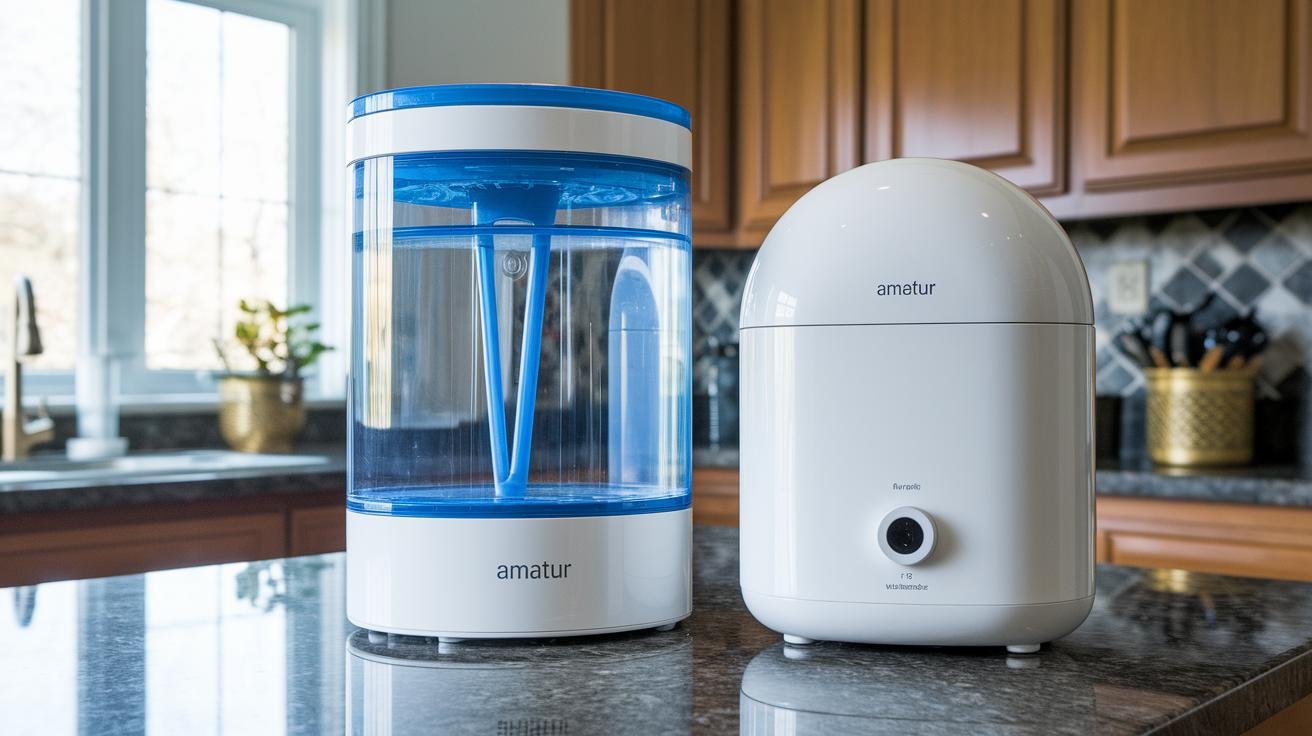
If you drink most of your water at home and want something quick and tasty, pick an ionizer. It makes hydrogen-rich water (more dissolved hydrogen) on demand, with a steady pH (how acidic or alkaline something is) and instant flow. Imagine that crisp, cool sip straight from the tap. Ever notice how that first glass wakes you up?
If you need mineral-free batches for appliances, lab work, or certain recipes and don’t mind waiting, go with a distiller. Distilled water is blank and mineral-free (boiled and recondensed to remove minerals), so it’s ideal for sensitive uses. Think of a clear, neutral glass ready for precise tasks. Wait, let me rephrase that, perfect for anything that needs no minerals at all.
See the comparison, cost, maintenance, and best-applications sections above for details. In short: ionizer for daily drinking, cooking, skincare, and instant flow; distiller for appliance or lab needs and recipes that require no minerals. Which sounds like your routine?
| System | Typical energy use (kWh/L) | Estimated running cost per gallon (at $0.15/kWh) | Recommended use-cases |
|---|---|---|---|
| Alkaline ionizer | ~0.01 | ~$0.006 per gal (about 0.6¢) | Daily drinking, cooking, skincare, instant flow |
| Distiller | ~0.8 | ~$0.45 per gal (about 45¢) | Appliance or lab needs, mineral-free batches, certain recipes |
Final Words
We ran a quick side-by-side of alkaline ionized water and distilled water, pH, minerals, TDS, taste, top uses, and pros and cons.
You also saw how each is made (electrolysis vs distillation), what the chemistry means for health, and real-world costs and care.
If you're focused on post-workout rehydration, pH-balanced hydration, and clearer, hydrated skin, alkaline ionized water may suit you. For lab work or appliances, distilled water fits best.
When weighing alkaline ionized water vs distilled water, pick what matches your routine and enjoy better hydration and faster recovery.
FAQ
How does alkaline ionized water compare to distilled water, and which is better?
Alkaline ionized water typically has pH 8–9, contains minerals (TDS ~30–90 mg/L), a crisper taste, and some antioxidant properties. Distilled water is pure (0 TDS) with a flatter taste and is best where no minerals are allowed (labs, some appliances). Which is better depends on the use—drink preference versus appliance or lab requirements.
Can I use alkaline water instead of distilled water for CPAPs, humidifiers, or drinking?
Do not use alkaline (or other mineral) water in CPAP machines or humidifiers—minerals can leave deposits. Use distilled for appliances. For drinking, alkaline water provides minerals and a smoother taste; distilled water is mineral-free.
Is distilled alkaline water safe to drink and what is distilled alkaline water used for?
“Distilled alkaline water” is a confusing term. Distilled water is safe to drink but is mineral‑free and not alkaline. If you want alkaline drinking water, choose ionized or remineralized water for taste and electrolytes.
What are the disadvantages of alkaline ionized water?
Disadvantages include higher upfront cost, routine filter and plate maintenance, possible mineral scaling in appliances, and some people may notice mild stomach upset when first switching.
Can alkaline water reduce creatinine?
There is no proven evidence that alkaline water reduces creatinine. Small studies hint at possible effects, but it is not an approved medical treatment. Talk with your doctor before using alkaline water to manage kidney markers.
What is the #1 healthiest water to drink?
The healthiest water is clean, contaminant‑free water suited to your needs: filtered or properly treated alkaline water for daily hydration, and distilled water for lab or appliance use where minerals are not allowed.
Why do I feel weird after drinking alkaline water?
Feeling odd can occur as your body adjusts to a higher pH or different mineral levels. Sip slowly, note any symptoms, and consult a clinician if symptoms persist.