Vinegar And Baking Soda Drain Cleaner Clears Clogs
Think you need harsh chemicals or a plumber to clear a clogged sink? Not always. Wait, let me rephrase that… you can often fix small clogs yourself.
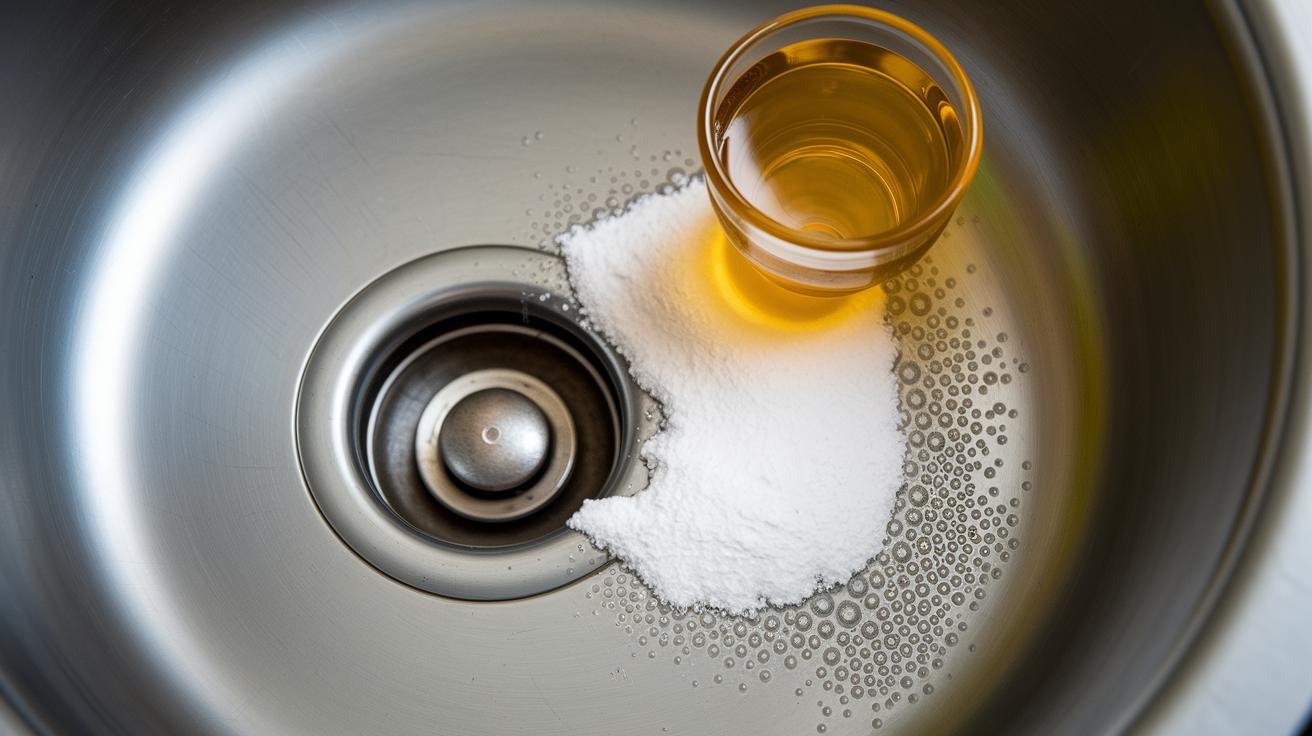
Here’s a simple kitchen trick. Pour 1/2 cup baking soda (sodium bicarbonate) into a dry drain. Slowly add 1 cup white vinegar (the regular cooking kind) and listen as it fizzes. Let it sit 15 to 30 minutes, then flush with boiling water.
It usually costs under $1 and is easy to do. It works well on light grease, soap scum, and soft food bits, so it’s perfect for quick fixes and regular upkeep. It won’t clear standing water or hair-packed traps, so call a plumber for those.
You can almost hear the fizz. So satisfying.
Vinegar And Baking Soda Drain Cleaner Clears Clogs
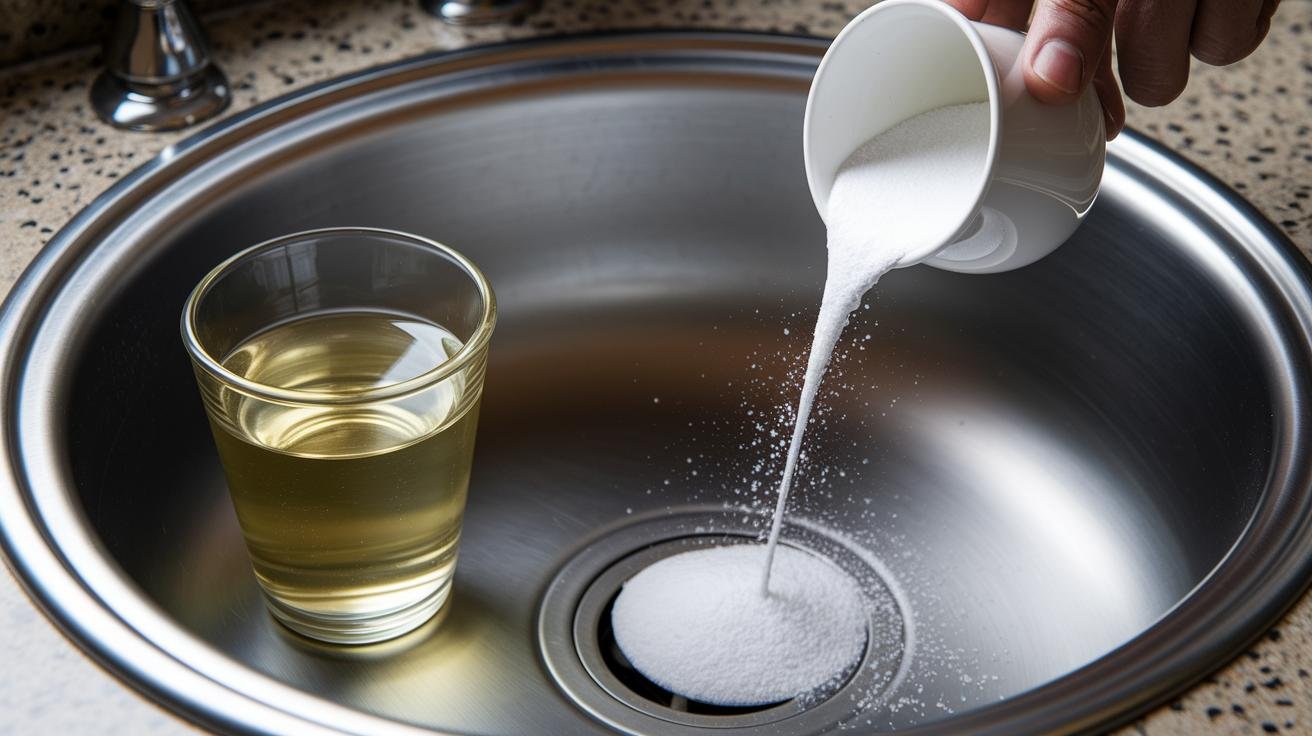
Follow these four easy steps, no standing water, no pricey chemicals, to clear a small clog with baking soda and vinegar.
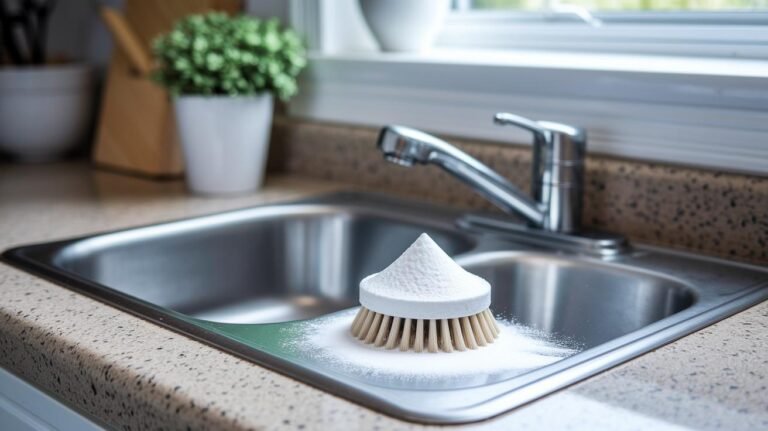
- Pour 1/2 cup baking soda into a dry drain.
- Slowly add 1 cup white vinegar and let it fizz.
- Wait 15 to 30 minutes.
- Flush with boiling water.
This trick is cheap and simple. It works best on light grease, soap scum, and soft organic bits like food scraps. The 1 cup vinegar to 1/2 cup baking soda ratio makes that classic fizz people mean when they ask how to unclog with fizz. The bubbling helps loosen surface gunk and freshens the pipe. You can almost hear it working.
Don’t skip the hot water rinse. Boiling water washes away what the fizz lifts, so give it a good pour after the wait. I keep a kettle ready for this, super handy.
Cost? Usually under $1 per try. Great for quick fixes and routine upkeep. But if you’ve got standing water, a stubborn FOG clog (fats, oils, grease), or hair-packed traps, this method might not clear it. Then try a plunger, a snake, or an enzyme product (breaks down organic matter).
Worth a shot. Low-risk, wallet-friendly, and easy to keep on hand. Ever notice how a simple fizz can do so much?
Preparing Your Drain and Safety Precautions for Baking Soda and Vinegar Cleaning
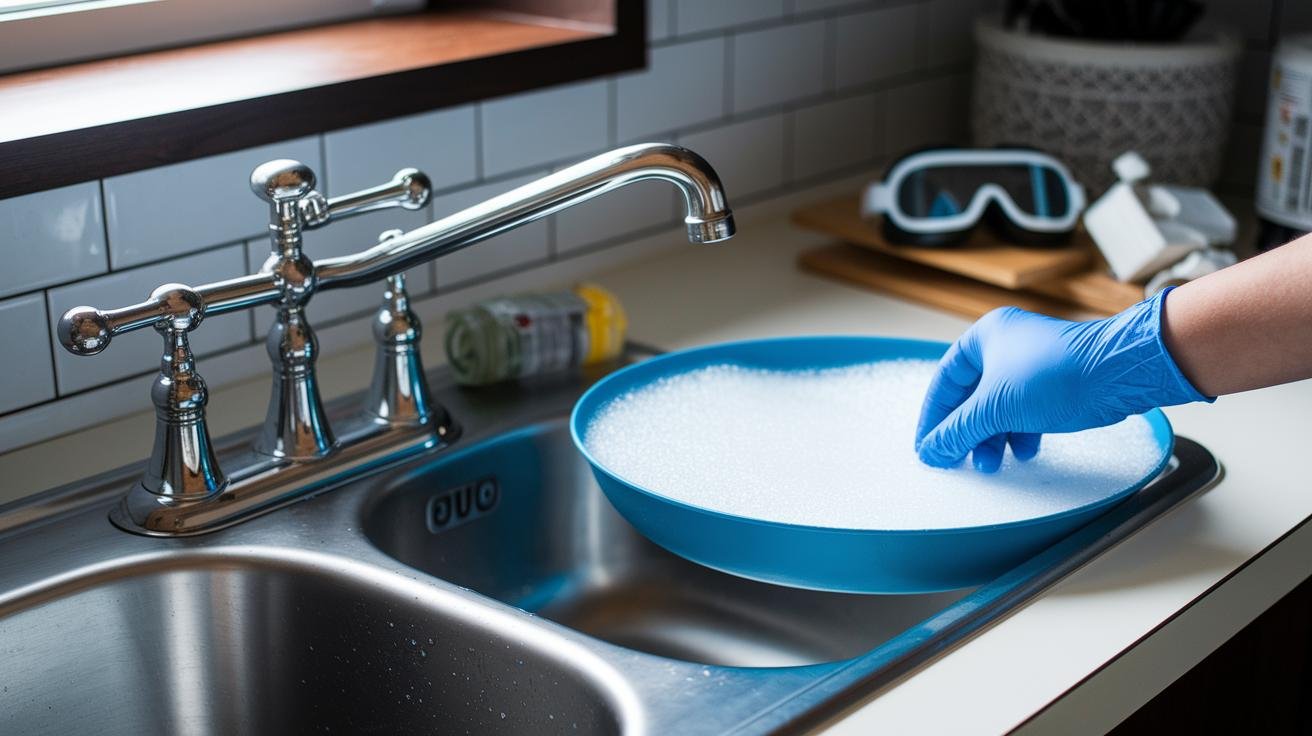
First, get rid of any standing water so the baking soda and vinegar can hit the clog directly. Bail it out with a small bucket or use a wet/dry vacuum. A clear sink gives you a better shot at unclogging things.
Remove the sink stopper, strainer, or pop-up assembly so you can see straight into the drain. If you plan to open the P-trap (the curved pipe under the sink) to inspect or scoop out gunk, slide a shallow pan underneath to catch spills. That way you won’t end up with a mess on the cabinet floor.
Put on rubber gloves and eye protection. Vinegar fumes can sting, and splashes happen, um, more often than you’d expect. Open a window or run the exhaust fan so fumes move away. If you use tools to pull hair or debris, gloves save your nails and make cleanup less gross.
Be careful with hot water. Do not pour boiling water into PVC plumbing; water above 175°F (79°C) can soften or deform some plastics. Copper and cast iron pipes tolerate hotter water, so if you rinse with hot water aim for very hot but not scalding when you suspect plastic pipes. Cover nearby counters or set a pan to catch overflow, foam, and drips while the mixture fizzes and rinses away. Watch the foam, pleasant to watch, but it can make a surprise splash.
Vinegar And Baking Soda Drain Cleaner Clears Clogs
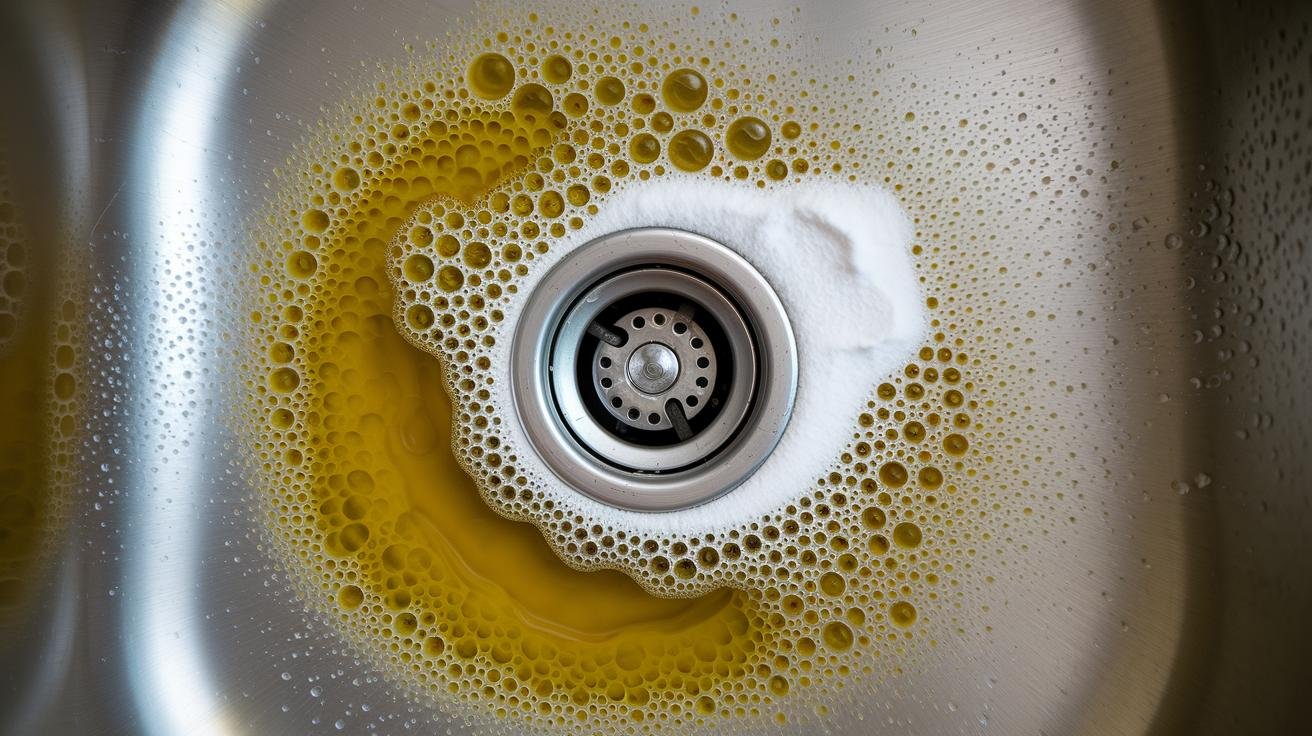
The fizz you see is just an acid-base reaction: vinegar meets baking soda and they make water, carbon dioxide gas (CO2), and a tiny bit of salt. It looks dramatic and the bubbling stirs up loose gunk. But it doesn’t actually break down grease the way soap does.
No surfactant – the reaction doesn’t create soap-like molecules (surfactant = a molecule that helps water mix with oil), so it won’t emulsify or carry away fats and oils.
Open-system fizz escape – the CO2 just bubbles out into the air. Drains aren’t sealed, so there’s not enough pressure to push a stubborn grease plug loose.
Neutralized acidity – mixing them cancels the vinegar’s acid, so you lose the vinegar’s ability to dissolve mineral scale and reduce odors.
For tougher, grease-heavy clogs try enzyme-based cleaners that actually digest organic matter. Brands like Earth Enzymes, Biokleen, and Green Gobbler use bacteria and enzymes (enzymes = tiny proteins that break down stuff) to eat grease over time. They’re gentler on pipes and the planet than harsh chemical drain cleaners.
For fresh FOG (fats, oils, grease) a hot-water plus dish-soap rinse still works best. Think of it like melting butter in a pan: pour very hot water, add a squirt of dish soap, let it sit, then flush. It melts and carries grease away quickly.
Enzymes are slower, but they win at long-term build-up. Hmm, I once let an enzyme product work for a week and my stubborn kitchen drain finally stopped backing up. Simple and quiet.
Vinegar & Baking Soda vs. Hot Water and Detergent for Greasy Clogs
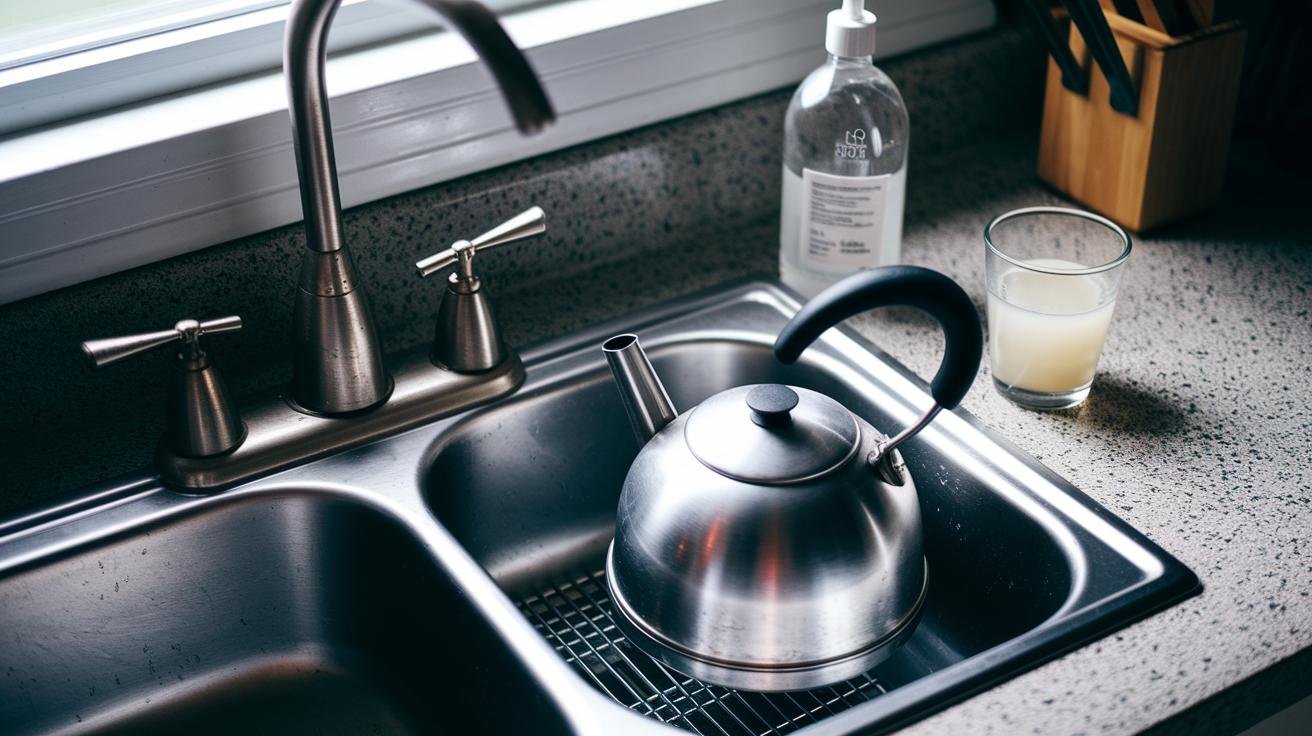
Hot water with dish soap is the quickest way to clear FOG (fats, oils, and grease). Use very hot water, but don’t go above 140°F (60°C) if your plumbing is PVC. That temp keeps the pipes safe and still melts grease.
Enzyme cleaners work slower, but they’re kinder to pipes and the planet. They use enzymes (microbes or biological agents that break down organic stuff) to eat buildup over time. Great for regular maintenance.
Baking soda and vinegar are best for light gunk and deodorizing. They fizz and loosen residue, but they won’t dissolve heavy grease. Ever notice your sink smelling weird after frying bacon? This combo helps with that quick, small job.
Try this little demo: pour 1/2 cup baking soda into the drain, then follow with 1 cup white vinegar. Listen for a soft fizz, pure refreshment. Wait, let me rephrase that… it’s more like a fizzy hiss that helps lift odors and light grime.
| Method | Ingredients | Effective Against | Pros | Cons |
|---|---|---|---|---|
| Baking soda + vinegar | 1/2 cup baking soda; 1 cup white vinegar | Light grease, soap scum, odors | Cheap; natural and non-toxic; deodorizes | Won’t remove heavy grease; fizz mainly loosens residue |
| Hot water + dish soap | Very hot water (keep ≤140°F / 60°C for PVC) + 1/4–1 cup dish soap per gallon | FOG clogs; melts butter and solidified grease | Fast and inexpensive; hot water emulsifies and carries grease away | Not for hair clogs; watch PVC temperature limits |
| Enzyme cleaners | Commercial enzyme formula (follow label) | Organic buildup; long-term FOG control | Eco-friendly; gentle on pipes; prevents recurring clogs | Slower acting (hours to days); usually pricier than DIY |
Quick tip: For immediate grease clogs, flush with hot water and dish soap, imagine pouring a warm cup of tea down the drain to melt the grease. For ongoing care, run an enzyme cleaner regularly. And for deodorizing or tiny build-ups, baking soda plus vinegar does the trick. Um, you’ll find what works best depends on how nasty the clog is.
Vinegar And Baking Soda Drain Cleaner Clears Clogs
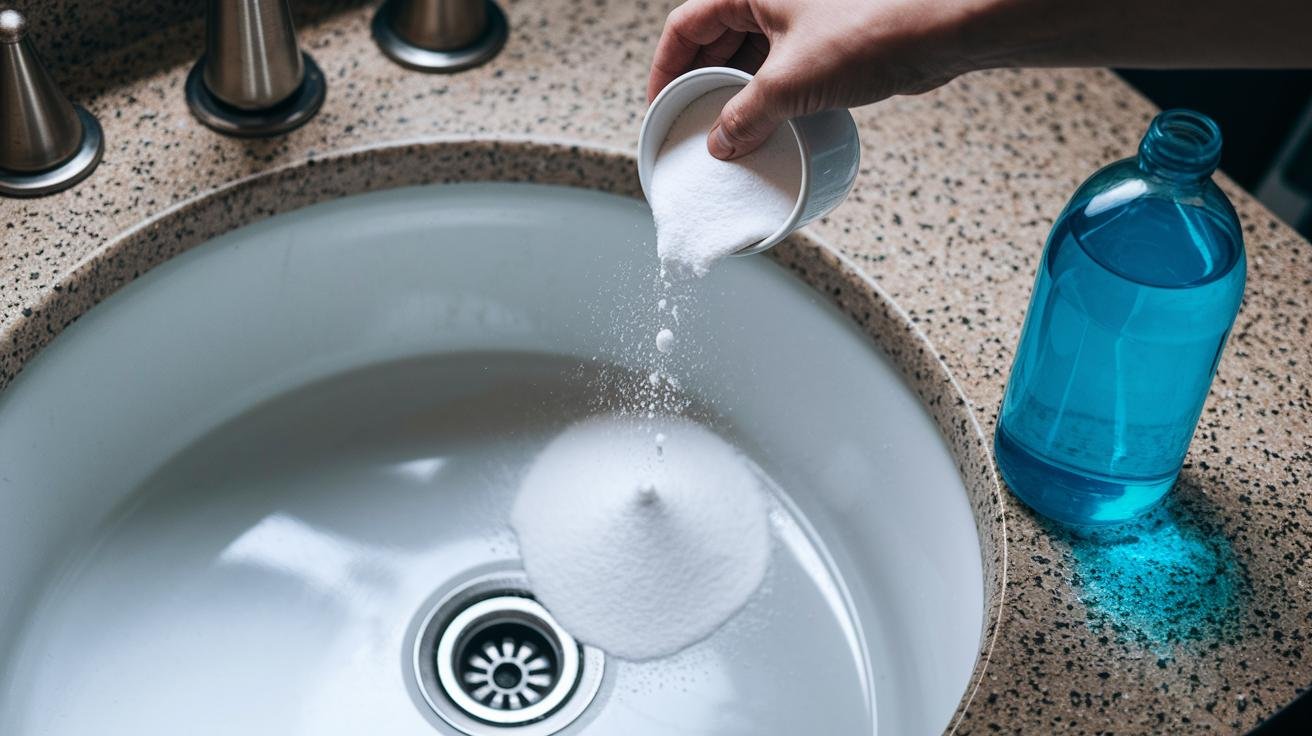
A tiny routine can keep your pipes happy and your kitchen smelling fresh. These little treatments cost mere pennies and often stop grease and smells before they get bad. Ever notice your sink slowing down after a big dinner? This helps.
Weekly maintenance
- Pour 1/2 cup baking soda (sodium bicarbonate) into a dry drain.
- Follow with 1 cup hot vinegar (acetic acid) , heat it carefully, don’t boil in the microwave.
- Listen for the fizz. That bubbling lifts grime and loosens gunk.
- Flush with very hot water for about 2 minutes to wash it all away.
Good for light grease and everyday buildup. Simple. Reliable.
Monthly deep clean
- Add 3/4-1 cup baking soda to the drain.
- Pour in 1/2 cup vinegar and immediately cover the drain to trap the action. Wait 30 minutes.
- Then flush for 2-3 minutes with boiling water to rinse out what’s been loosened.
Think of this as your monthly reset. It gets deeper than the weekly rinse.
Seldom-used fixtures
- Mix 1/2 cup baking soda with 1/4 cup table salt. The salt gives a little abrasive help.
- Pour it down the drain, then add 1 cup heated vinegar. Let sit 15 minutes.
- Finish with a 30-60 second flush of hot water.
Perfect for guest bathrooms and basement sinks that sit idle.
Got odors?
Run the weekly rinse whenever your sink starts to smell; the fizz lifts odors and the hot-water flush carries them away. After heavy cooking or anything greasy, give drains a hot-soap or hot-water rinse to stop FOG buildup (fats, oils, grease) from forming. You’ll notice the difference, cleaner smell, faster drain.
A couple quick tips: don’t mix vinegar and bleach. And if a clog’s stubborn or you smell rotten eggs, call a pro. Wait, let me rephrase that… if you’re unsure, it’s safer to get help. Overall, small regular care goes a long way.
Vinegar And Baking Soda Drain Cleaner Clears Clogs
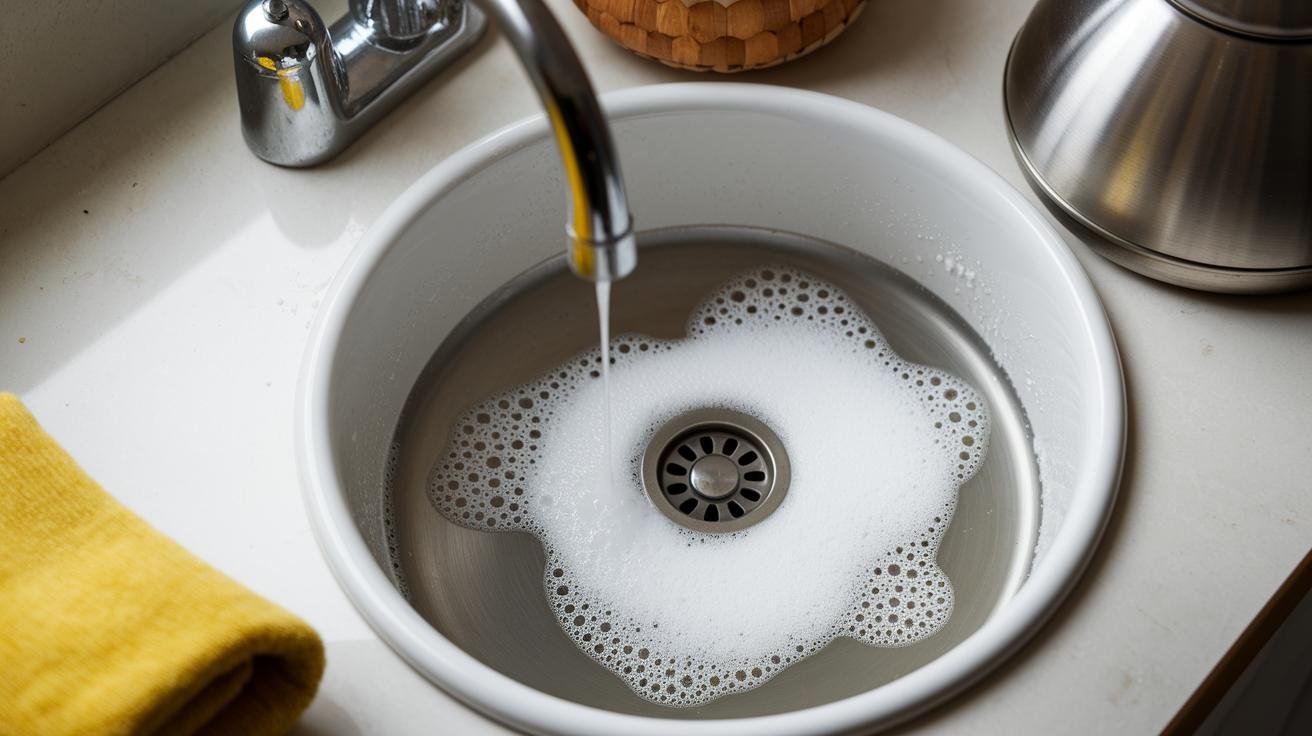
If the vinegar and baking soda fizz trick doesn’t do the job, try the full sequence one more time. If the drain is still slow or clogged, switch to a plunger (the rubber cup tool) or a drain snake (a long flexible tool that reaches deeper clogs).
Example: "I tried the fizz once, tried it again, then used a plunger when it stayed stubborn."
Mind your pipes. For PVC (a common plastic pipe), keep rinse water below 140°F (60°C) so the plastic won’t soften. Copper and cast iron are metal and can take hotter water, so match your rinse temperature to the pipe material.
Example: "For PVC, aim for water about as hot as a strong hot tap, around 140°F (60°C)."
When to call a plumber? If a plunger or snake can’t clear the line, or if the drain starts to give off a rotten, persistent smell, it’s time to call a pro. Um, don’t wait too long, smells usually mean something’s wrong down the line.
Example: "I snaked the line and it still smelled rotten. Time to call a plumber."
Final Words
in the action, you walked through four simple steps: ½ cup baking soda, 1 cup vinegar added slowly to fizz, wait 15–30 minutes, then flush with boiling water. Quick, cheap, and chemical-free.
You prepped drains, wore gloves, and learned the fizz chemistry. It helps with odors and light soap scum but won’t beat stubborn grease. For fatty clogs, hot water plus detergent or enzymes work better.
Keep weekly maintenance and troubleshooting tips handy, and store a vinegar and baking soda drain cleaner for fast fixes. Clean drains, less worry.
FAQ
Vinegar and baking soda drain cleaner recipe and ratio — what amounts should I use?
Pour 1/2 cup baking soda into a dry drain, then slowly add 1 cup white vinegar to create fizz. Wait 15–30 minutes, then flush with boiling water.
Is it safe and effective to use baking soda and vinegar to unclog drains, and why do plumbers warn against it?
It’s generally safe for mild cleaning and odor control but isn’t effective on heavy grease or solid blockages. Plumbers warn it can leave residue and may delay proper mechanical fixes like snaking the drain.
How long do you let vinegar and baking soda sit in a drain?
Let the mixture sit 15–30 minutes so the fizz can loosen light buildup. You can repeat once if needed, then flush thoroughly with boiling water to clear residue.
Can I use baking soda and vinegar to unclog or clean a toilet?
You can use them for mild odors and small clogs, but avoid adding them to deep standing water. Persistent toilet blockages require a plunger or an auger.
Does Dawn dish soap really unclog drains?
Dawn dish soap can help with greasy drains when used with near‑boiling water—its surfactants break down fats. For FOG (fats, oils, grease) clogs it’s often faster and more effective than baking soda and vinegar.